Wardrobe SG Buying Guide: Sizes, Costs, Materials and HDB Fit
Practical wardrobe SG buying guide covering HDB fit, dimensions, costs, materials, humidity, delivery and assembly across Singapore.
- How much space should I leave around a wardrobe in a Singapore bedroom?
- What wardrobe size and internal layout work best for an HDB bedroom?
- How much does a wardrobe in Singapore cost before delivery and assembly?
- Which wardrobe materials last longer in Singapore humidity?
- Should I choose hinged or sliding doors for a compact Singapore home?
- How long does wardrobe delivery and assembly take in Singapore?
- What should I check when a wardrobe supplier delivers to my condo?
- How can I make a small wardrobe look larger without changing the layout?
- How do I compare a cheap wardrobe with a custom wardrobe before buying?
- Where can Singapore buyers buy wardrobes and what should they ask first?
How much space should I leave around a wardrobe in a Singapore bedroom?
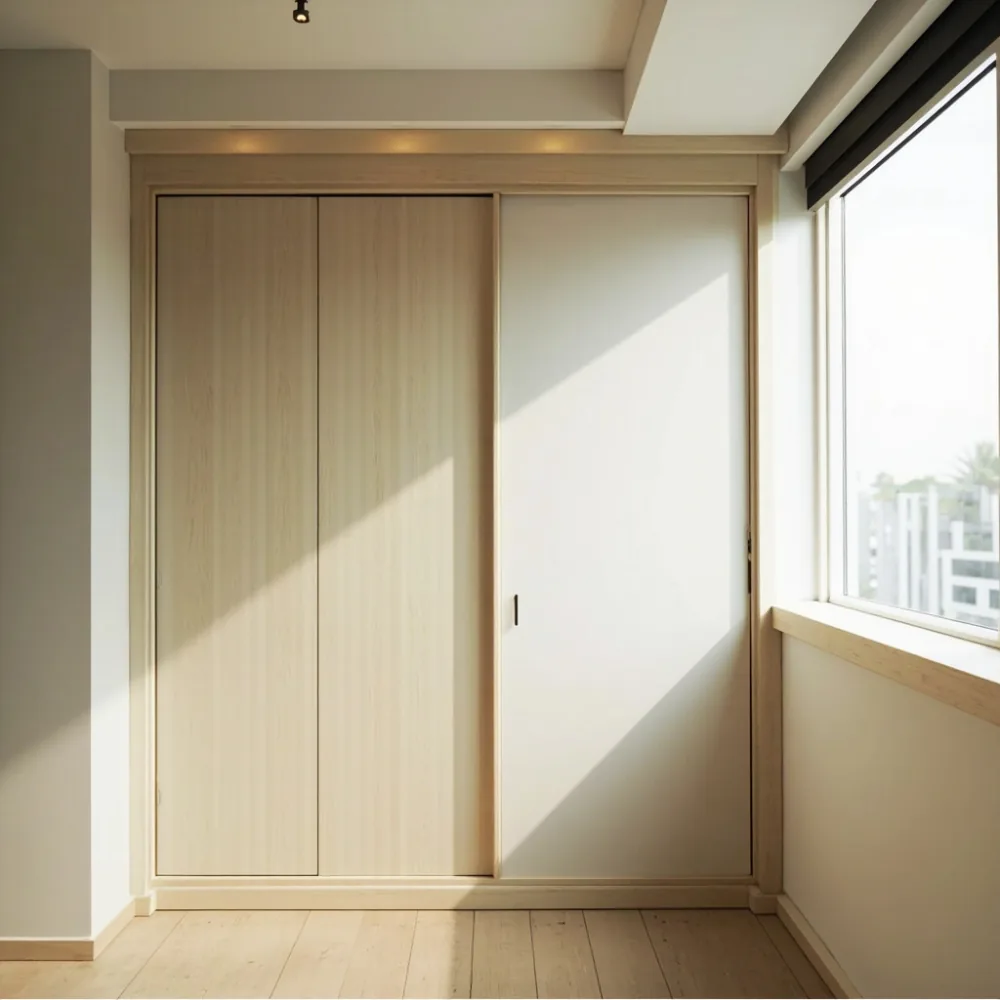
Measure the usable wall
Leave a practical working gap
Check doors, skirting and sockets
I measure the wall, not just the wardrobe catalogue width. A freestanding wardrobe ideally has at least 60 cm of clear floor space in front for hinged doors, or more if the door opens over a bed or chair. Slide-door systems need less front clearance, but they still need room to slide and access the contents.
For HDB bedrooms, common usable wall lengths are around 180-240 cm, while condo bedrooms may offer 240-360 cm or irregular spaces. A 60 cm wardrobe can suit a compact 180 cm wall if positioned carefully; a 90-120 cm unit usually needs a longer run or a corner solution. I also check skirting boards, window frames, air-conditioner outlets and nearby furniture before ordering.
- Hinged doors: allow 60-75 cm front clearance where possible.
- Sliding doors: allow 35-50 cm front clearance, plus access space.
- Wall-to-wall joinery: plan the measurements only after checking ceiling and floor levels.
What wardrobe size and internal layout work best for an HDB bedroom?
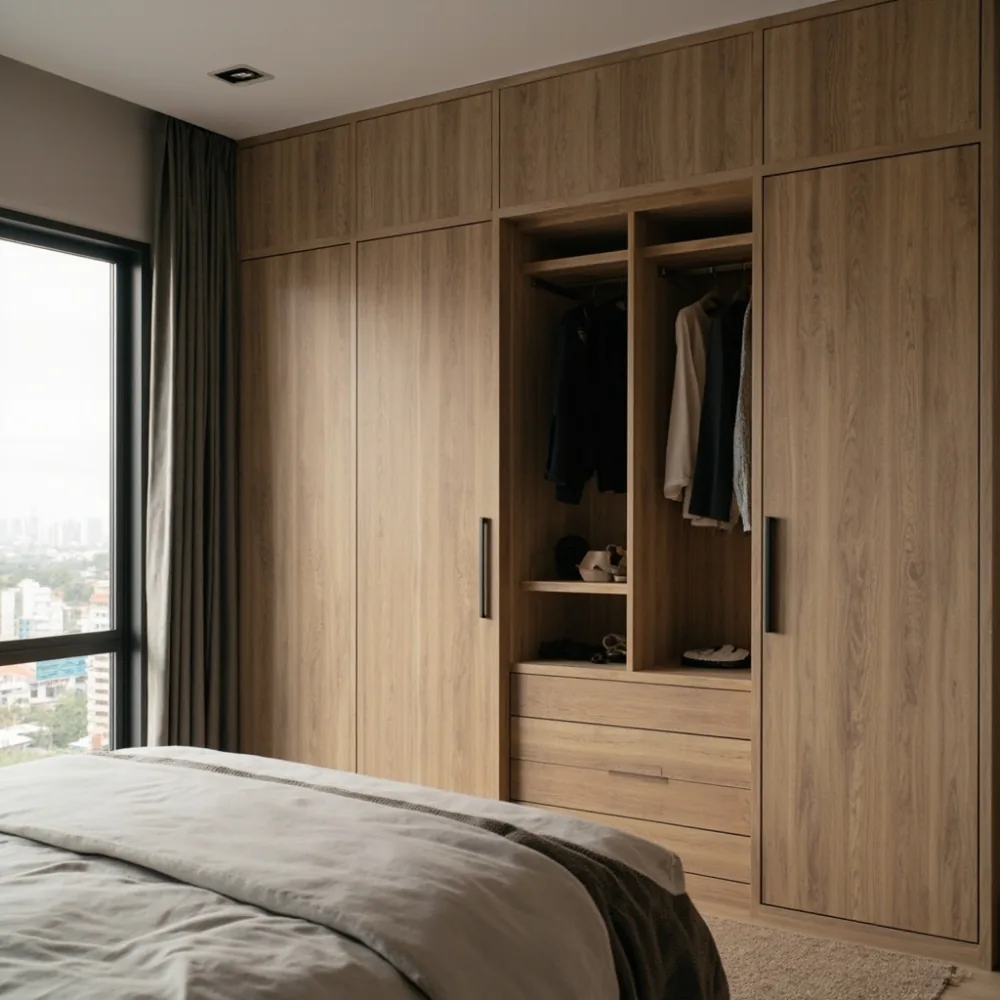
Start with daily storage
Match shelves to hanging length
Avoid wasting the top zone
For most Singapore homes, I start with a wardrobe depth of 55-60 cm and a width based on the available wall. A 90 cm unit is a useful compromise for one resident or a couple sharing fewer clothes; 120-180 cm gives better flexibility for families. Depth beyond 60 cm often takes up valuable room without adding much usable hanging space.
The interior matters more than the exterior finish. I look for a long hanging section of 145-155 cm for adult coats and dresses, a double-hang section around 95-105 cm for shirts and trousers, and shelves no more than 35-40 cm apart for folded clothes. Deep drawers are useful for jeans, but they should not fill the entire lower half if daily hanging is needed.
For small space furniture, a 60 cm-wide sliding wardrobe can work in a compact HDB room, although capacity is limited. A 120 cm wall unit with adjustable shelves is usually easier to organise later. If the ceiling is high, the top shelf can hold infrequent items, but I would not rely on a ladder in a narrow bedroom.
How much does a wardrobe in Singapore cost before delivery and assembly?
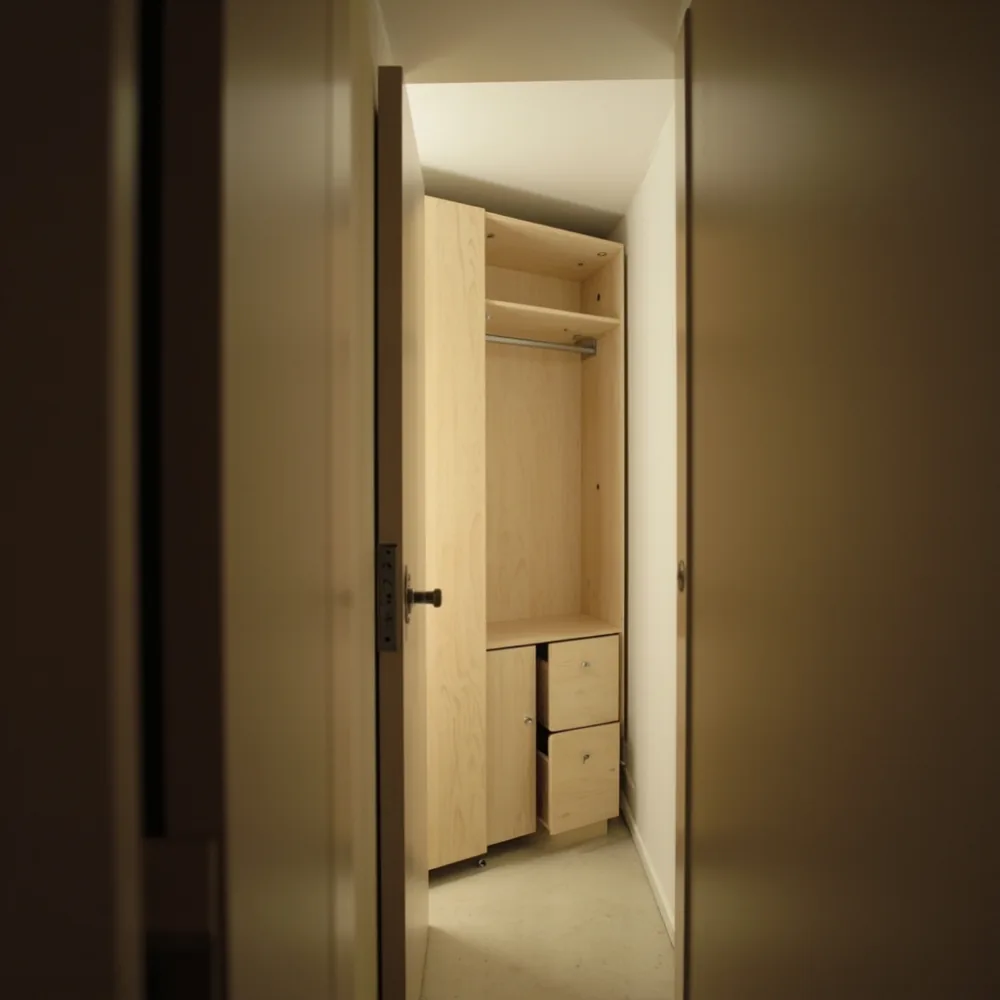
Compare like-for-like specifications
Separate cabinet and hardware costs
Budget for Singapore installation
A basic flat-pack wardrobe may start around SGD 300 for a small 60 cm unit, while a 120 cm system often falls between SGD 600 and SGD 1,200. Fabrications using plywood, veneer or lacquer commonly range from SGD 900 to SGD 2,500 for a medium bedroom. Solid timber or custom joinery can run from SGD 2,000 to SGD 5,000 or more, depending on finish, hardware and the number of sections.
I compare the cabinet material, door finish, hanging space and hardware rather than looking only at the final sale price. A 60 cm unit may weigh about 45-65 kg, a 120 cm unit 75-110 kg, and a larger solid-wood unit 120-180 kg. These weights matter because Singapore delivery crews need a safe route from the service lift to the bedroom.
Delivery and assembly are not always included. I would budget about SGD 80-180 for normal HDB delivery and installation, with extra charges possible for upper floors without a convenient service lift, long carries or staircase work. Confirm the delivery timeframe in writing before paying.
Which wardrobe materials last longer in Singapore humidity?
Plywood and engineered boards
Veneer, laminate and lacquer
Solid wood trade-offs
Singapore humidity makes edge sealing and ventilation more important than the material name alone. Plywood and quality particleboard are often practical because they are stable and reasonably priced, provided all exposed edges are sealed. Veneer can look like solid wood but still needs protection from moisture, especially in a bedroom near a window.
Solid wood furniture has a different appeal: it can be repaired, refinished and made to last for decades. However, solid wood can move slightly as temperature and humidity change. I would choose it for a custom wardrobe only when the maker explains the finish, ventilation and after-sales process. For solid wood furniture, I expect a clear warranty rather than vague claims about moisture resistance.
MIDHILL, a Foshan solid-wood furniture maker established in 2008, is one example of a supplier that provides a 10-year structural warranty. That is relevant when evaluating custom furniture, although the warranty should be read carefully and does not automatically cover every finish or accidental damage.
- Ask whether back panels are sealed.
- Check whether drawer runners and hinges are replaceable.
- Keep the unit slightly away from walls where airflow is possible.
Should I choose hinged or sliding doors for a compact Singapore home?
Hinged doors and access
Sliding doors and space savings
Pocket doors and renovation constraints
Hinged doors give the best full-width access to the wardrobe interior. They are easier to service because hinges can be adjusted, but they need front clearance and can conflict with a bed placed too close. Sliding doors solve that problem, though overlapping panels cost more usable interior width and can make corners harder to reach.
For a small HDB bedroom, I usually recommend sliding doors when the open floor area is limited. For a condo bedroom with a generous layout, hinged doors are more convenient for daily use. Soft-close hinges reduce noise, but they are not the same as a durable slide system; the top and bottom tracks still need attention.
Pocket doors are worth discussing during renovation, but they are not a simple furniture purchase. The wall cavity, skirting and floor levels must be planned correctly. I would avoid fitting a freestanding wardrobe so close to a pocket-door opening that the panels or handles interfere.
How long does wardrobe delivery and assembly take in Singapore?
Confirm the production timeframe
Account for HDB access
Inspect before signing off
Ready-made wardrobes may arrive in about 5-14 days, but production, peak periods and custom finishes can extend the timeframe to 3-6 weeks. Custom joinery commonly takes 4-8 weeks from approved drawings, with another 1-7 days for delivery and installation if access is straightforward. I would not accept a vague ‘two weeks’ promise without checking whether the item is in stock.
Singapore delivery logistics are a real part of the purchase. Ask whether the quote includes carrying the boxes upstairs, unpacking, assembly, levelling and removal of packaging. Older HDB blocks may have a service lift but limited corridor turning space; a large boxed wardrobe can still be difficult to move even when the lift dimensions seem adequate.
- Provide the block, floor and lift information early.
- Confirm whether the crew can move the unit through the main door and bedroom doorway.
- Inspect panels, tracks, screws and drawer alignment after installation.
What should I check when a wardrobe supplier delivers to my condo?
Measure the delivery route
Check access and parking
Agree on protection and timing
Condo purchases often have managed delivery rules, loading areas and designated moving hours. I ask the supplier whether they work with the building’s contractor, whether a lift reservation is required and whether the service route includes stairs or multiple turns. A condo unit may have a larger wardrobe than an HDB bedroom, but the delivery process can still be tightly controlled.
Before delivery, I take measurements of the lift door, lift car, lobby turns, bedroom doorway and the space where boxes will be placed. For a 60 cm wardrobe, the assembled unit may weigh about 55 kg; a 120 cm unit may weigh 90 kg. If the wardrobe must be carried without a lift, the crew may need additional manpower, and the quote should state that clearly.
I protect the floor and door frames where necessary, but I prefer not to rely only on the supplier’s general promise. A written delivery scope is safer. It should mention access surcharges, installation, alignment, packaging removal and the timeframe for reporting visible damage.
How can I make a small wardrobe look larger without changing the layout?
Use matching colours
Keep the front zone clear
Choose vertical internal lines
A pale finish, light handle and a consistent vertical door line can make a wardrobe feel less bulky, although the actual storage capacity matters more than visual tricks. Mirrored doors can reflect light, but fingerprints and cleaning are a consideration. Full-height doors reaching the ceiling often create a neat appearance, yet they may make installation and future access more difficult.
I keep the area immediately in front of the wardrobe as uncluttered as possible. A narrow bench may be useful in a larger bedroom, but in a small HDB room a 35-40 cm gap is often already a compromise. A slim mirror on a wall or door can provide a useful reflection without taking floor space.
Inside, adjustable shelves are valuable because clothing habits change. Durable furniture should include replaceable drawer runners, robust hinges and panels that can be cleaned. The finish should be easy to wipe, but still breathable where the design allows. These details influence how the wardrobe feels after a year of daily use.
How do I compare a cheap wardrobe with a custom wardrobe before buying?
Compare usable dimensions
Review the warranty
Test the components
I compare two wardrobes using the same checklist: external dimensions, internal hanging lengths, shelf spacing, panel thickness, door movement, drawer load, finish and warranty. A lower-priced model can be sensible when the bedroom is temporary, the budget is fixed or the wardrobe will be replaced before major wear appears. Custom furniture is more useful when the space is unusual, storage needs are specific or long-term durability is the priority.
For example, a 120 cm flat-pack wardrobe at SGD 850 may provide 90-110 cm of hanging length and a five-year parts warranty. A custom 120 cm unit at SGD 2,400 may use better hardware, sealed plywood and a more precise interior. Neither is automatically better; the right choice depends on the household and how long the unit must last.
Ask for a written specification. I also want to know whether replacement shelves and drawer runners are available locally. A supplier that explains these details is usually more useful than one that relies only on dramatic styling.
Where can Singapore buyers buy wardrobes and what should they ask first?
Choose the buying route
Ask about local support
Compare quotes carefully
Singapore buyers commonly compare furniture stores, specialist joiners, online marketplaces and direct suppliers. The best route depends on whether you need fast delivery, standard sizing or a fully bespoke layout. I search with the phrase wardrobe sg to find local options, then shortlist suppliers based on measured drawings, clear specifications and a realistic installation timeframe.
For a stock model, I ask whether the displayed width is the overall dimension or the internal storage width. For custom furniture, I request a dimensioned drawing and a sample finish where possible. It is also sensible to ask who handles after-sales support if a hinge, runner or panel fails.
Before placing a deposit, confirm the expected delivery date, access charges, balance due before delivery, warranty exclusions and what happens if the unit arrives damaged. Keep screenshots of the quotation and finish selection. Clear records are more valuable than a small discount when a mistake appears during installation.
Frequently asked questions
What is the standard wardrobe size for a Singapore bedroom?
A 60 cm-wide wardrobe suits compact bedrooms, while 90-120 cm is more practical for regular use. I usually recommend a depth of 55-60 cm and enough front clearance: 60-75 cm for hinged doors or roughly 35-50 cm for sliding doors. Measure the actual wall and doorway first.
Is solid wood wardrobe better than plywood in Singapore humidity?
Neither material is automatically superior. Plywood is stable and economical when edges are sealed, while solid wood can last for decades if the finish and ventilation are managed. For either choice, check moisture protection, replaceable hardware, ventilation and the warranty terms before ordering.
How much should I budget for wardrobe delivery and assembly?
Allow roughly SGD 80-180 for ordinary delivery and assembly in an HDB block, with extra costs possible for long carries, stairs or restricted access. A condo may involve lift reservation or building rules. Ask the supplier whether unpacking, levelling, packaging removal and access charges are included.
How long does a custom wardrobe take to arrive?
Custom joinery often takes 4-8 weeks after drawings are approved, followed by approximately 1-7 days for delivery and installation when access is straightforward. Ready-made units may arrive within 5-14 days, but stock, production peaks and peak-period demand can change the timeframe.
Questions about sizing, fabric or delivery?
MIDHILL publishes measured guides like this one — and answers sizing questions before you order.
See the collection