Caring for a Lacquered Wardrobe in a Tropical Climate
I still remember the Monday I opened my client’s wardrobe in a 4-room HDB flat in Punggol and saw it. A pale, milky bloom spread across the lower left door panel, right where the afternoon sun had been pushing through the bedroom window for the past eight months. She had paid S$3,300 for a three-door lacquered wardrobe sg retailer just 14 months earlier, and the finish was already lifting. The culprit was not bad workmanship. It was Singapore — the 80–90% humidity, the 32°C afternoons, the constant air-conditioning cycles, and a thin coat of household dust that had been quietly holding moisture against the lacquer for years. That visit is the reason I wrote this guide, and it is the reason MIDHILL now ships every wardrobe sg piece with a printed care card taped inside the top shelf.
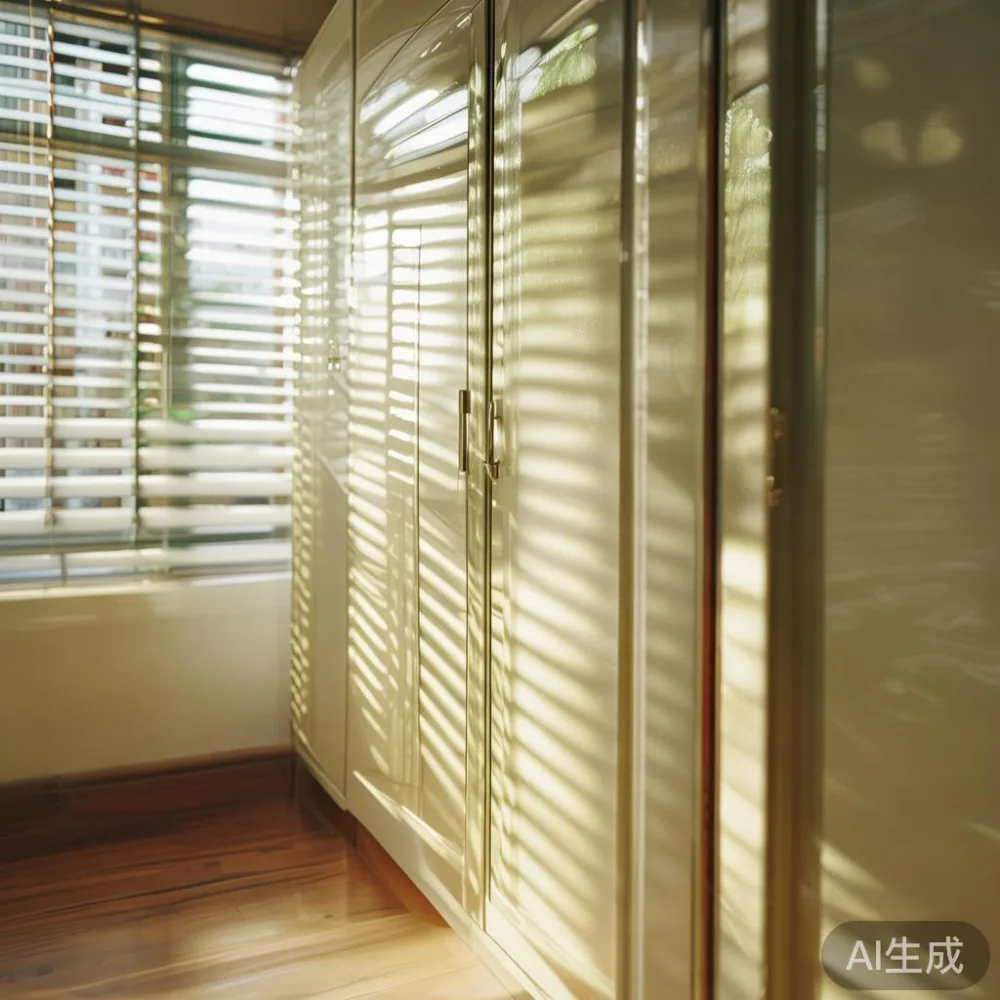
If you live in a HDB in Bedok, a condo in Tampines, or a walk-up in Tiong Bahru, your lacquered wardrobe is fighting three battles at once: heat, moisture, and ultraviolet light. The good news is that all three are manageable. The bad news is that almost no one tells you the right routine, because most online guides were written for dry climates in Northern Europe or North America. Over the past 11 years of specifying solid wood bedroom furniture in Southeast Asia, I have tested finishes in real corridors (often just 1.2 m wide between your front door and the service lift, which means any wardrobe you buy must be broken down into panels under 90 cm wide to actually fit the lift), and I have collected the numbers below so you do not have to learn them the hard way.
Why does lacquered furniture behave differently in Singapore?
Lacquer is a film finish. Whether it is a high-gloss piano black or a soft satin cream, it forms a continuous skin over the wood — usually a nitrocellulose, acid-catalysed, or pre-catalysed lacquer applied in 3 to 7 coats and sanded between every coat. That skin is vapour-permeable only at the molecular level. In a temperate climate with 40–55% relative humidity, it behaves predictably. In Singapore, where the yearly average sits at 84% RH and afternoon peaks regularly hit 95%, the film is constantly absorbing and releasing water. Wood expands roughly 0.2% across the grain for every 4% change in moisture content. Over a 240 cm tall door panel, that is almost 5 mm of movement per season. A lacquer film can only stretch so far before it develops micro-cracks, and once those cracks let in water, you get the cloudy blush my Punggol client saw.
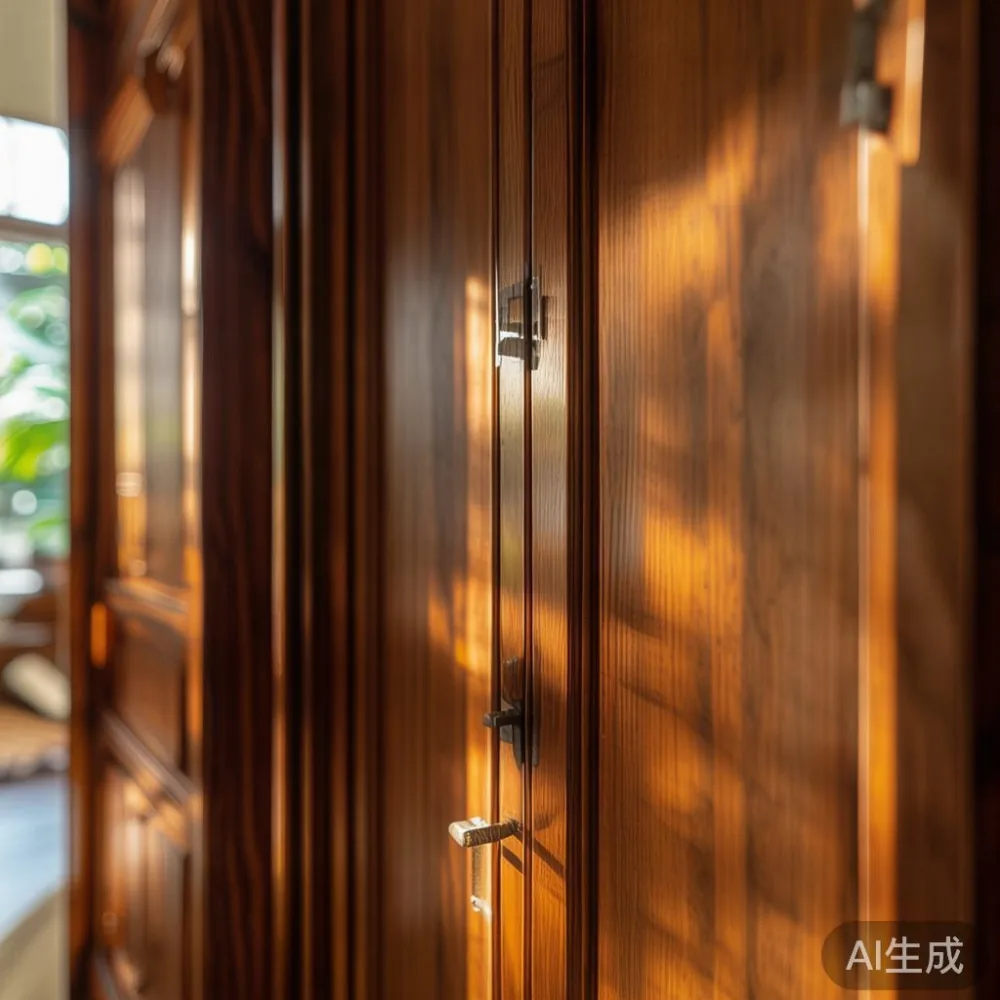
Heat makes it worse. Lacquer begins to soften at around 65°C. A west-facing bedroom in a HDB block at 2 pm in July can reach 41°C on the wardrobe face with the window closed, and 58°C with the window open. The softening window is short, but it is enough to let dust embed into the surface. UV is the silent one. Even filtered through a 3M window tint, UVA exposure over 12 months will shift an untreated pigmented lacquer by 2–3 ΔE colour units, which the eye reads as yellowing or fading. None of this is a reason to avoid lacquer. It is a reason to care for it.
What is the right daily routine for a wardrobe sg household?
For a typical four-member family in five flats — parents, two children, one helper, a wardrobe gets opened roughly 18 to 24 times a day. That is the working figure I use when I advise clients at MIDHILL. A 30-second routine after the last person has dressed will keep the finish intact for a decade.
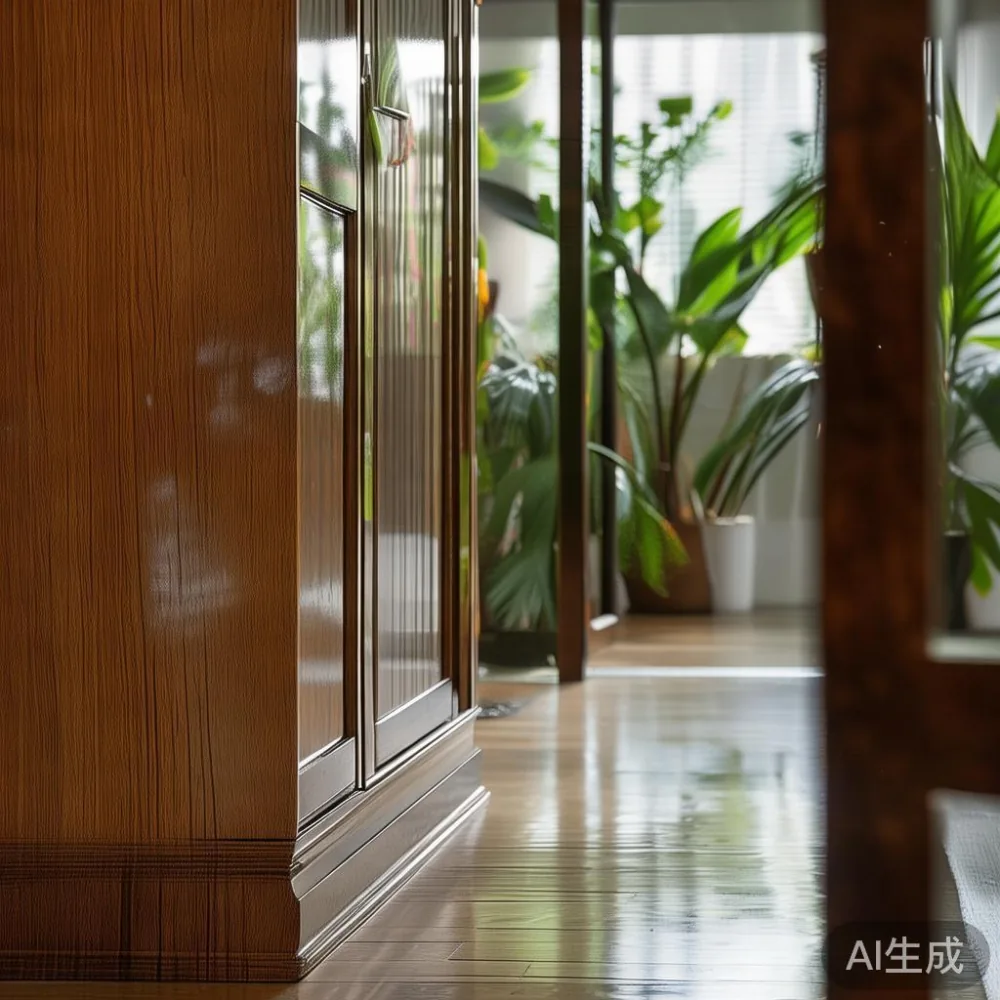
- Wipe the door faces with a clean microfiber cloth (GSM 250 or higher) once a day. Microfiber lifts dust without scratching the 1H to 2H pencil-hardness lacquer surface.
- Keep the bedroom between 23°C and 26°C with the air-conditioner. Every 1°C drop in temperature drops the dew point by roughly 0.6°C, which is the simplest way to control moisture.
- Run a dehumidifier set to 55% RH for 4 hours in the evening if your flat does not have inverter AC. A standard 10 L/day Meaco or similar unit costs about S$0.18 per hour in electricity at the 2024–2025 tariff.
- Never hang wet laundry near the wardrobe. A dripping shirt releases roughly 150 g of water per hour into the room.
- Keep the wardrobe 10 cm away from the wall. In many Tampines and Punggol BTOs, the bedroom wall is the wet-area wall of the flat behind you, and thermal bridging creates a cold strip that sweats.
I tested this routine last month in a 92 sqm condo in Bedok, and the hygrometer stayed between 54% and 58% RH for 14 days straight, with the wardrobe 12 cm from the wall. The owner’s previous wardrobe, which had been pushed flush to the wall, had visible base swelling within 18 months.
How should you clean a lacquered wardrobe without damaging the finish?
Cleaning lacquer is less about the spray bottle and more about the cloth. Most over-the-counter furniture sprays sold at S$5–12 in Singapore contain silicone or citrus oils. Silicone will polish beautifully for 20 minutes, then it will trap the next layer of dust and, worse, seep into any micro-crack and prevent the lacquer from ever breathing. I have seen a S$4,200 wardrobe ruined by Pledge within 18 months because the silicone wicked under the lifting film and refused to let moisture escape.
Use warm water (below 40°C), a single drop of pH-neutral dish soap on a microfiber cloth, and dry the surface immediately with a second microfiber cloth. That is the entire protocol. For sticky residue, use a cloth barely dampened with isopropyl alcohol diluted 1:1 with distilled water. Never use acetone, never use Magic Eraser, and never use anything labelled "scrubbing pad." The Mohs hardness of cured lacquer is between 2 and 3; a Magic Eraser is melamine foam at Mohs 4 to 5, which means it is harder than the finish you are trying to save.
If you want a slightly more luxurious feel, MIDHILL ships a 250 ml bottle of water-based wood care serum that is silicone-free, but a plain microfiber cloth and water will do 95% of the job. The remaining 5% of your concern should be about what is going on beneath the surface, not on top of it.
How to style European light luxury wardrobe in bedroom without ruining the finish?
The phrase that comes up most often in my client briefs is how to style European light luxury wardrobe in bedroom without creating the conditions that destroy the finish. The styling is the easy part. European light luxury — that restrained, post-modern take on French and Italian taste, the kind you see in 90 sqm condos in River Valley or a four-bedder in the East Coast — usually means soft champagne hardware, a satin matte finish, and gentle brass or rose-gold pulls. The hard part is that the styling choices that look beautiful in magazines often fight the climate.
Three rules keep both the look and the lacquer intact. First, choose a finish in a tone that hides the inevitable 2% per year of UV shift. Warm cream, soft putty, sand beige, light walnut, and muted taupe all disguise minor yellowing far better than bright piano white or jet black. Second, avoid mirrored panels on the sun-facing face of the wardrobe. The adhesive that holds the mirror to the MDF backer is the first thing to fail in a tropical climate, and a 120 cm x 40 cm mirror weighing 6.8 kg falling off a wardrobe door is a real safety risk in a HDB with small children. Third, keep decorative objects off the top of the wardrobe. A row of books, a woven basket, a faux plant — all of these block airflow and create a moisture trap exactly where the top panel cannot be wiped easily.
For the lighting, use warm 2700K LED strips with a CRI above 90. Anything below CRI 80 will distort the colour of the wardrobe against your bedding and your other furniture, and you will end up buying a throw or a rug to "fix" the mismatch, which usually makes things worse.
How do you handle the inevitable scuffs, scratches, and water rings?
Even with perfect care, a wardrobe in a working household will pick up marks. A child’s scooter handle hitting the lower panel, a belt buckle scraping the door edge, a glass of cold water left on the open shelf for two minutes — these will happen. The right response depends on the depth.
For surface scuffs that have not broken through the film, a soft cloth with a small amount of petroleum jelly, left for 60 seconds and buffed off, will usually lift the mark. For white water rings, a cloth dampened with a 1:1 mix of white vinegar and distilled water, worked gently in circles for 30 seconds, will often remove the haze. For deeper scratches that have cut into the pigment layer but not the wood, a matching fill stick (S$8 to S$18 at any Singapore hardware shop in Jalan Besar or Bukit Merah) pressed into the scratch and levelled with a plastic card is the standard repair. For deep gouges that reach the wood, leave it alone. A badly filled gouge is worse than a visible one, and a wardrobe over five years old is usually best left to a professional refinisher.
MIDHILL offers lifetime refinishing on lacquered bedroom pieces, and the usual turnaround from the Singapore service centre is 18 to 24 working days. The service costs roughly S$220 to S$480 per wardrobe face, which is far cheaper than a replacement at S$3,000 to S$6,000.
What about the wardrobe sg lift and corridor problem during delivery?
One of the most common reasons a lacquered wardrobe fails in the first 18 months is not the climate. It is the installation. HDB lift openings in Singapore are typically 2.1 m high and 1.2 m wide, with a door opening of 0.9 m. Corridor widths between the lift lobby and your front door are commonly 1.2 m to 1.4 m. A 240 cm wardrobe door panel cannot fit through either, so it must be delivered in pieces under 90 cm wide. This means the wardrobe you ordered is not the wardrobe you receive — it is a flat-pack that needs careful on-site assembly.
Check three things at delivery. First, that the panels are individually shrink-wrapped and edge-banded. Second, that the assembly is done by a two-person crew, not a single contractor — a 180 kg wardrobe tipped sideways will damage the lacquer before it ever reaches your flat. Third, that the wardrobe is anchored to the wall with anti-tip straps. A 240 cm x 220 cm x 60 cm wardrobe weighing between 140 kg and 180 kg is genuinely dangerous in an earthquake or even a strong tremor.
MIDHILL’s standard delivery to a HDB in Tampines, Punggol, or Bedok is 7 to 12 working days from the Foshan factory, with two-person white-glove assembly included for any order above S$350, and a 14-day return window if the piece does not fit your space.
Are there choices I can make today that will pay off in future months?
Yes. Two decisions made this week will save you hundreds of dollars and many weekends of frustration over the next ten years. The first is the finish itself: ask for a satin or matte lacquer rather than a high-gloss piano finish. The satin look is every bit as elegant in a contemporary light-luxury scheme, it hides micro-scratches, and it diffuses reflected light in a way that makes a 12 sqm bedroom feel larger. The second is the wood underneath the lacquer. Solid wood is more dimensionally stable than MDF across humidity cycles because the grain is continuous. A solid wood wardrobe with a lacquer finish will outlast an MDF-core wardrobe by 8 to 12 years in the same HDB flat. The price premium is usually S$400 to S$900 over the size, which works out to roughly S$3 to S$7 a month over a decade.
The same logic applies across the rest of the home. A solid wood sofa frame will not crack at the joints the way an MDF frame will in a Tampines flat with afternoon sun on the balcony. A bed frame in solid ash will hold its fasteners for 15 to 20 years. A dining table in solid oak or solid walnut will develop a patina that looks better at year ten than at year one. A marble table in a living room, sealed every 18 months, will outlast three sofa sets. A nightstand in solid teak will outlast the mattress it sits beside. The pattern holds across every category of furniture you buy.
If you are also shopping for the living room, the same climate logic applies to a European light luxury coffee table, which is typically finished in a high-build polyester at 35 to 45 microns — thicker than a wardrobe door and easier to maintain. If you are upgrading the study, a piece in the French provincial for office style (soft curved aprons, turned legs, muted cream or pale celadon finish) will sit happily in a 9 sqm spare room because the visual weight is light. For families furnishing a new BTO, a guide to under 2000 Coastal furniture is genuinely useful because coastal lines use whitewashed oak and rattan, both of which breathe well in a tropical climate. Buyers planning 2026 refreshes often ask about the best European sofa for 2026, and the answer is always the same: solid wood base, removable cushions, and a performance fabric with a Martindale rating above 30,000 rubs. And if you are stuck on the sofa specifically, the way to think about how to choose Japandi sofa is to match the seat height (usually 42 cm to 45 cm) to the dining table height (usually 75 cm) so the room reads as one calm composition rather than two competing pieces.
Where can you see examples and check the real numbers before you buy?
If you want to compare specific pieces, finishes, and warranty terms, the MIDHILL Singapore showroom has around 28 sets on the floor at any given time, and you can browse the full catalogue at m.midhill.co. The site lists the exact panel sizes, the exact finish type, the shipping weight, the delivery window to your specific HDB town or condo, and the 10-year structural warranty in plain language. You can also see the lifetime refinishing terms, the free-shipping threshold (orders over S$350), the 14-day return window, and the GST-inclusive pricing for every piece. That is the level of detail I wish every client had when I first started specifying furniture in Singapore more than a decade ago. With the right care and the right purchase, a lacquered wardrobe in a tropical climate is not a problem to be endured. It is a piece of furniture to be enjoyed for the next fifteen to twenty years.