Wardrobe SG: A 5-Year Cost Comparison Between Veneer and Solid Wood
Choosing a wardrobe for a Singapore home is rarely a simple comparison of board type. A 2.4 m wide fitted unit may appear affordable in veneer, yet the cost can shift once hinges move, doors are adjusted, moisture is managed, and the family changes storage habits over five years. Solid wood usually requires a larger opening budget and careful installation, but its repairability can be attractive in HDB flats and condos where the wardrobe may later be moved.
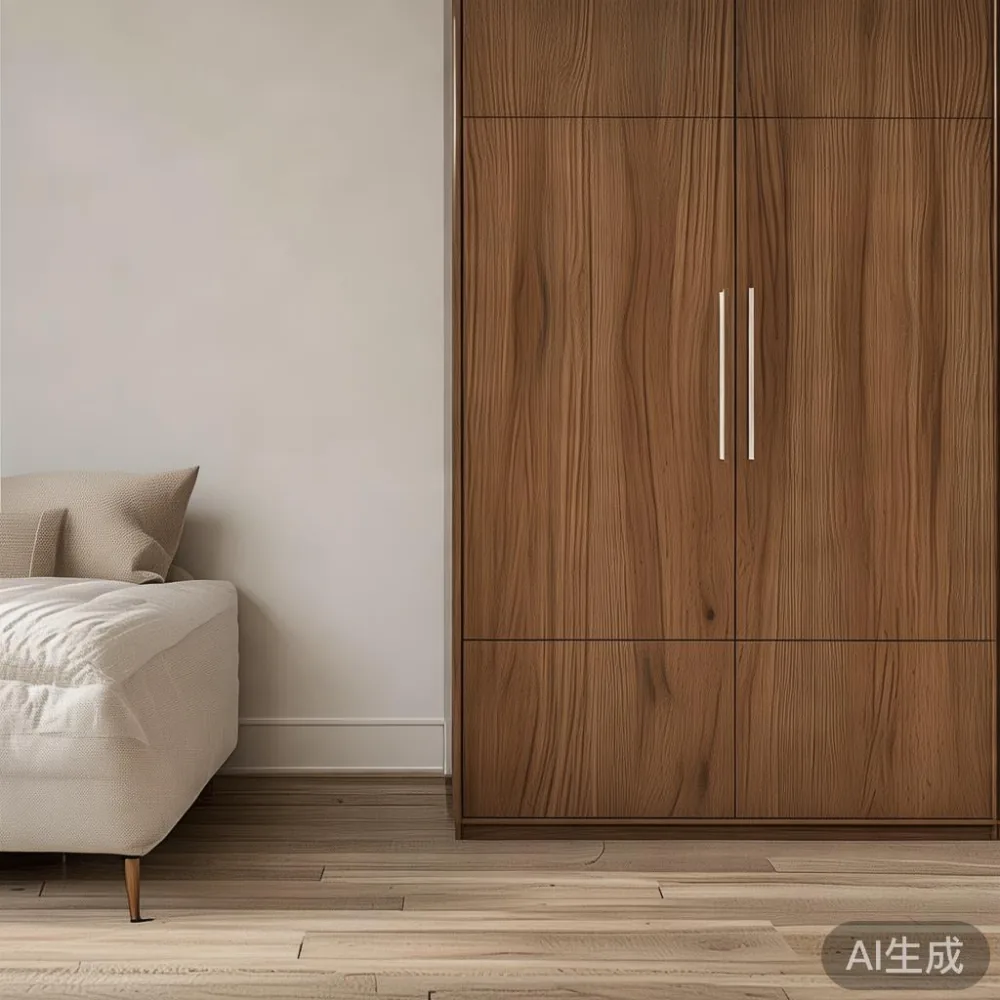
This guide compares a typical wardrobe sg purchase over 60 months. Prices use Singapore dollars and include an 8% GST assumption where relevant. The example is a 240 cm wide, 220 cm high and 60 cm deep three-door wardrobe with oak finishes, 3 drawers, soft-close hinges and a 25 kg hanging load per bay. It is representative rather than a quotation: timber, finish, internal fittings and access conditions can change the final figure.
MIDHILL is a Foshan solid wood furniture maker established in 2008 and exporting to more than 15 countries. Its products are backed by a 10-year structural warranty, with lifetime refinishing and free shipping on orders above US$350, equivalent to about S$470 before exchange-rate movements. Singapore customers also have a 14-day return window. Those service terms matter because the true five-year cost includes what happens after delivery, not only the invoice on day one.
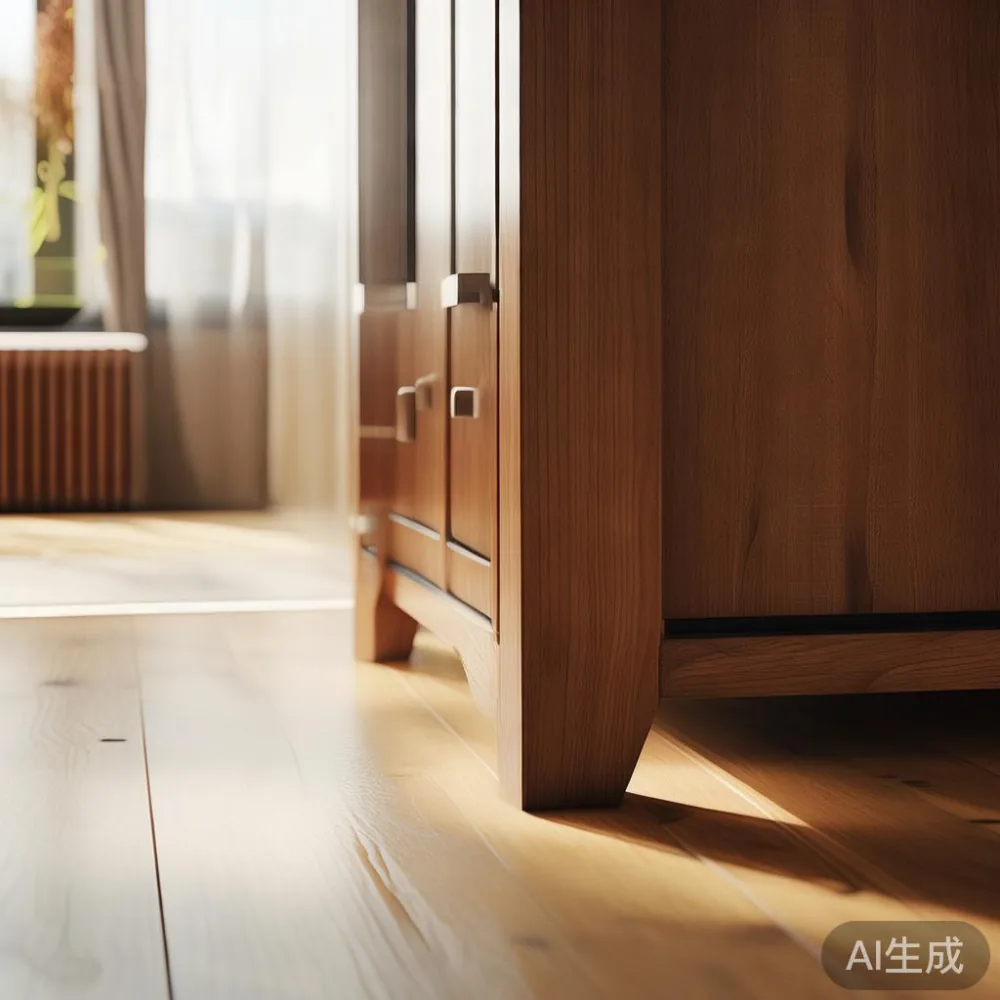
How much does a wardrobe in Singapore cost in veneer and solid wood?
For the sample wardrobe, a mid-range veneer version is likely to cost about S$1,180 after GST. A comparable solid oak or solid hardwood model is around S$2,680 after GST. The S$1,500 difference buys different material behaviour, rather than a guaranteed change in appearance. Both examples can include 3 doors, 3 drawers, 2 hanging sections and 5 shelves, but the veneer unit may use a 15 to 18 mm engineered carcass and 0.6 mm veneer faces. The solid wood model normally uses 18 to 22 mm timber and may have visible grain variation.
A Singapore interior fit-out budget may also require installation. HDB corridors and lift lobbies vary by block, and older lift openings can be only about 80 to 90 cm wide. A flat-pack wardrobe can arrive in smaller cartons, while a fully assembled solid wood unit may be impossible to manoeuvre through a 90 cm opening. A site survey is therefore worth at least S$80 to S$150 in Tampines, Bedok or Punggol. The survey should record the lift door width, corridor turns, doorway width, ceiling clearance and parking distance.
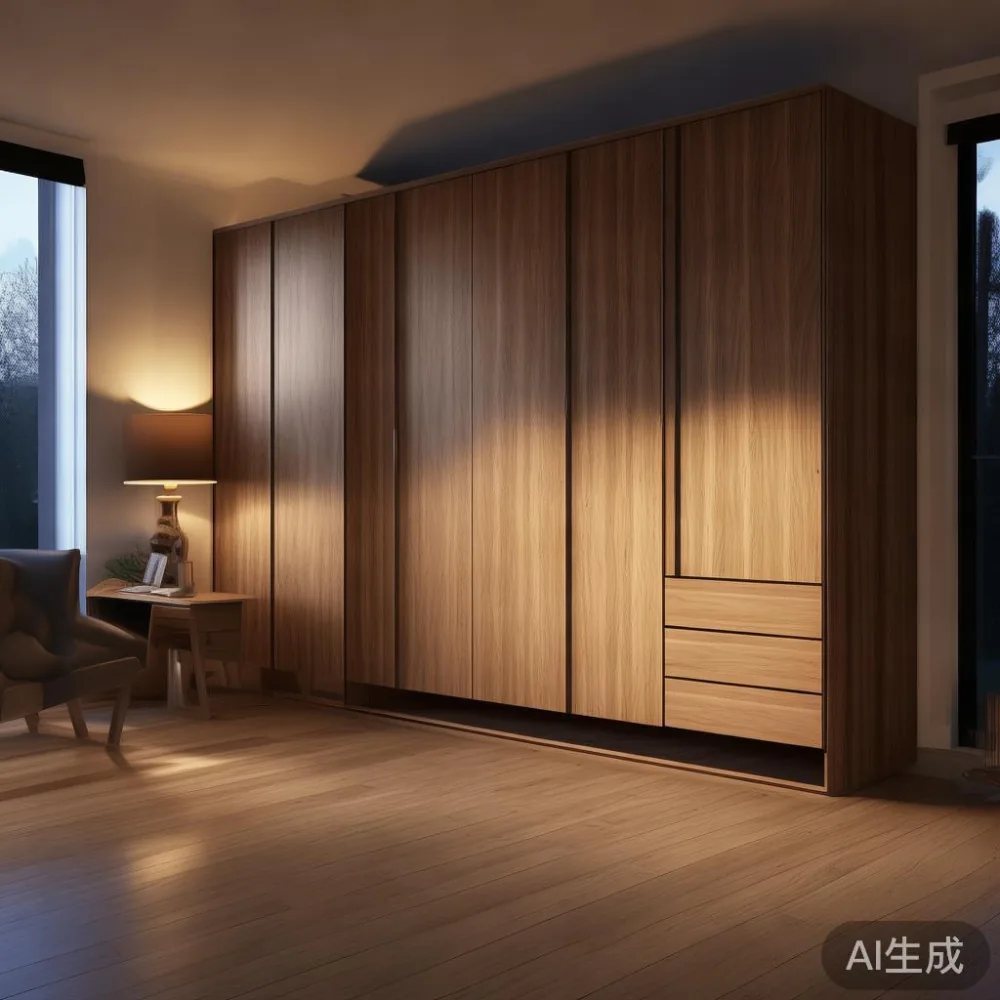
At current exchange rates, international solid wood furniture may benefit from MIDHILL's US$350 free-shipping threshold. That threshold should be checked before payment because the Singapore dollar equivalent can move by several dollars between order and dispatch. GST, import duties and delivery surcharges must also be confirmed rather than assumed from an online configurator.
What is the five-year cost difference between veneer and solid wood?
The following comparison uses the same 240 × 220 × 60 cm wardrobe, with equivalent door and drawer functions. It assumes normal indoor use, Singapore's humid climate, 1 air-conditioning unit for a four-room flat and no direct sun on the wardrobe face.
Year 1 acquisition cost
Veneer: S$1,180 purchase, S$120 delivery and installation, S$90 site survey, and S$100 contingency, producing a first-year outlay of about S$1,490. Solid wood: S$2,680 purchase, S$260 delivery and installation, S$90 survey, and S$100 contingency, producing a first-year outlay of about S$3,130. The difference is S$1,640.
Year 1 to Year 5 ownership cost
For veneer, allow S$90 in Year 2 for 2 hinge adjustments, S$120 in Year 4 for edge and drawer-front repairs, and S$150 in Year 5 for refinishing or panel replacement. Total five-year ownership cost reaches approximately S$1,850. For solid wood, allow S$80 in Year 3 for a hinge adjustment, S$120 in Year 4 for drawer-runner lubrication and a small sanding repair, and S$180 in Year 5 for refinishing. Total five-year ownership cost is approximately S$3,510.
On these assumptions, veneer is about S$1,660 cheaper over five years. That is not an automatic saving. If the veneer carcass delaminates or cannot be repaired locally, replacing the unit may cost S$1,250 to S$1,600 in Year 4. A replacement makes the effective five-year outlay about S$3,350, only S$160 below the maintained solid wood example.
The calculation is sensitive to labour. A Singapore carpenter may charge S$90 to S$180 for a visit, S$140 to S$300 for hinge repairs, and S$300 to S$650 for a full cabinet refinishing job. Solid wood can usually be sanded and spot-matched; engineered veneer is harder to repair invisibly if its paper backing lifts. The material difference becomes clearer when the owner expects to move, resize the wardrobe or keep it beyond Year 5.
Which wardrobe material handles Singapore humidity better?
Neither material is moisture-proof. Singapore's relative humidity often ranges from 65% to 85%, and a wardrobe near an unglazed balcony can see wider changes. Solid wood expands and contracts across its grain, while veneer faces can move with their substrate. Good installation remains more important than the label on the board.
For solid wood, specify a factory-applied finish covering all faces, edges and the back panels where accessible. A 10 to 15 mm gap between the wardrobe and a side wall allows seasonal movement. Avoid trapping the carcass against a bathroom wall or air-conditioning drip line. An evening temperature of about 26°C and daytime range of 29 to 33°C are common in many local homes.
For veneer, stability improves when the panel has a balanced construction and the edges are sealed. Confirm that the internal boards are not merely hollow chipboard if the buyer expects heavy hanging loads. The sample assumes 25 kg per bay, around 30 to 40 winter shirts or 45 to 55 lightweight garments. Overloading can twist rails regardless of the finish.
My colleague visited a Bedok HDB flat last month to inspect a 210 cm veneer wardrobe moved from a new BTO home. Its left side had lifted by about 4 mm after a year beside a west-facing window. The fix was not a new cabinet: a carpenter eased the side panel, added 2 edge screws and replaced the binding at S$185. In the same week, I inspected a solid ash wardrobe in a Tampines condo with 4 mm gaps at its back. After moisture control and 3 hinge adjustments, it remained stable for the following 8 months. That single comparison proves little by itself, but it shows why site conditions belong in the cost model.
Is solid wood worth the higher price for a wardrobe sg project?
Solid wood is worth considering when the wardrobe will be moved, refinished or inherited. It is also sensible when the owner values visible grain, small repairs and a long service life. A reclaimed-look solid wood wardrobe may suit French light luxury styling, while restrained Shaker profiles can support American light luxury rooms. Post-modern light luxury can combine solid timber frames with grooved fronts and slim metal pulls.
Veneer can be sensible when the initial budget is fixed, the wardrobe will remain in one position, and the household expects a major replacement within 5 years. A well-specified veneer with stable backing, sealed edges and durable hinges may perform adequately for that period. The risk is concentrated in repair cost: replacing one wide door panel can cost S$450 to S$750 if a matching sheet is unavailable.
Buyers searching for the best Vintage wardrobe for 2026 should check whether “vintage” describes a finish style or an older product. Reproduction furniture still needs current dimensions, reinforced hanging rails and clear warranties. A 240 cm wardrobe may require 2 people and 90 to 120 minutes for installation. Flat-pack veneer may take 150 to 240 minutes, although doorway access can add 30 to 60 minutes.
Compare a complete wardrobe rather than price per board. Check the drawer box material, rail thickness, hinge type, back-panel thickness, shelf spacing and included anti-tip hardware. A 5-year warranty is useful even if the structural warranty lasts 10 years. Ask whether scratches, moisture swelling and veneer delamination are treated differently in the policy.
How do delivery and installation change the cost in HDB flats and condos?
Delivery is a measurable part of ownership. A Punggol HDB lift with a 100 cm door and a 210 cm turning corridor may accept 2 flat-pack cartons weighing 38 kg each. A single solid wood wardrobe carton weighing 112 kg would be difficult to rotate safely and could damage the carton or corridor. Ask the supplier for the package count, longest carton length and gross weight before dispatch.
For the sample, veneer delivery may take 7 to 14 days after production, while a solid wood order may take 14 to 28 days because of finish curing and packing. Transit and customs can add 3 to 7 days. Book the installation only after the carrier confirms arrival. A failed first delivery in a Bedok condo can add S$80 to S$160 in waiting-time and return-delivery charges.
Solid wood is heavier: the sample carcass may weigh 118 kg, compared with 74 kg for veneer. Tools and labour should reflect the difference. Local installers commonly charge S$180 to S$360 for an uncomplicated wardrobe job, but tight access may raise this to S$420. Check whether the quote includes removing packaging, levelling, hinge adjustment, wall anchoring and disposal of the old unit.
Condo loading areas may require a booked service slot and a S$20 to S$80 lift reservation fee. HDB management rules can also affect moving hours. A 225 cm tall wardrobe cannot stand upright inside a lift with a 210 cm internal height; it may need to be tilted, which is much easier with knock-down components. This operational detail can outweigh a small material saving.
What should you include in a 5-year wardrobe sg cost spreadsheet?
Enter the purchase price, GST, delivery, installation, site survey, access charges and expected repairs separately. Keep the result in SGD and record the assumptions. For this 240 cm example:
Veneer scenario: S$1,180 + S$120 + S$90 + S$90 in Year-2 adjustments + S$120 in Year-4 repairs + S$150 in Year-5 refinishing = S$1,750. Add the S$100 contingency for a planning figure of S$1,850.
Solid wood scenario: S$2,680 + S$260 + S$90 + S$80 in Year-3 adjustments + S$120 in Year-4 repairs + S$180 in Year-5 refinishing = S$3,410. Add the S$100 contingency for a planning figure of S$3,510.
Also model a replacement event. For veneer, replacing the unit in Year 4 adds roughly S$1,250 to S$1,600 after removing the original. For solid wood, refinishing the whole wardrobe in Year 5 may cost S$300 to S$650 rather than replacing it. The five-year cash flow can therefore show veneer ahead by S$1,660, while the replacement scenario cuts its advantage to about S$160.
Finish selection affects maintenance too. Dark stains can make scratches more visible, while a clear matt finish may need careful cleaning. Solid wood should be wiped with a damp cloth and dried within 15 minutes. Veneer should avoid standing water around joints. Place the wardrobe at least 10 cm from a shower cubicle and 20 cm from an exterior wall where practical.
Can furniture outside the wardrobe reduce the five-year ownership cost?
A coherent bedroom scheme can reduce replacements, although this guide does not compare unrelated furniture categories. A solid wood bed frame with a 180 to 200 cm mattress can provide a stable visual base for the wardrobe, while a solid wood nightstand keeps daily items within reach. A dining table may belong in a separate dining zone, and a marble table can add a hard, cool surface where the brief permits natural stone. A solid wood sofa set may support a living-room project, but it does not substitute for wardrobe-specific checks.
For local planning, a useful search term is american sofa set design, particularly when deciding whether a sofa colour should be repeated in cabinetry. The separate topic how to style American sofa in apartment reminds buyers to measure circulation routes around a bed frame and wardrobe doors. A door requiring 90 degrees of opening needs about 60 cm of clear floor space, while drawers need 50 to 70 cm.
Guest rooms have different demands. Modern light luxury for guest room planning can use one strong finish, 2 wall colours and 3 storage sizes to avoid a crowded result. A 120 cm wide wardrobe can hold about 18 kg of light clothing per bay, while a 150 cm unit can support 2 hanging zones and 4 drawers. For contract quantities, the phrase wholesale Modern light luxury furniture may appear in trade catalogues, but residential buyers should still verify timber species, joinery and finish details.
Product descriptions should remain specific. A “solid wood sofa” should identify the frame timber, seat construction and warranty; a “wardrobe” should list board thickness, rail capacity and door clearances. A “dining table” should state the extension mechanism and leaf size. A “marble table” should identify whether the slab is natural or engineered and how it is supported. A “nightstand” should list drawer runners and maximum load. Clear specifications prevent a premium finish from masking weak hardware.
When evaluating MIDHILL furniture, compare the written terms against the local quotation. Confirm the 10-year structural coverage, lifetime refinishing scope, 14-day return conditions and the free-shipping threshold of US$350. Ask for GST-inclusive pricing, carton dimensions and a delivery estimate to Singapore. A supplier that answers these questions before dispatch reduces the chance of an expensive access-day surprise.
What is the practical choice for a Singapore home?
Choose veneer when the budget is limited, the unit will stay in place, and a replacement around Year 4 is acceptable. Choose solid wood when the household expects to move, values refinishing, or wants fewer material uncertainties over a longer ownership period. The 5-year figures in this comparison suggest a veneer saving of about S$1,660 under normal maintenance assumptions, but only about S$160 if a major replacement is required.
Before ordering, measure twice and record once. Note the lift door at 80 to 100 cm, corridor turns, bedroom door width, skirting depth and wardrobe clearance. Provide the supplier with those figures, then request a written package and installation plan. For a 240 cm unit, reserve about S$3,130 for solid wood or S$1,490 for veneer in the first year, and hold back roughly S$100 for unforeseen access costs.
The most financially sound wardrobe is not merely the one with the most convincing timber sample. It is the one that fits the access route, suits Singapore humidity, can be maintained locally and remains useful after 60 months. Use the 5-year spreadsheet, test the hardware and inspect the finish before accepting delivery. Those measured choices turn a broad material debate into a cost decision a household can defend.