Veneer vs Solid Wood Wardrobes in Singapore: What Actually Costs Less Over 5 Years?
I keep a folder on my phone labelled "wardrobe regrets," and after seven years of visiting Tampines, Bedok, and Punggol flats with clients, it is overflowing. Last month I walked into a 92 sqm BTO in Punggol with a young couple who had just spent S$2,400 on a glossy veneer wardrobe from a Jurong East mega-store. Fourteen months in, the left door had bowed 6 mm, two laminate strips had peeled near the hinge rail, and a corner of the plinth had chipped after a MoveMove delivery scraped the corridor. They were already shopping for a replacement. That single visit is the reason I sat down to write this comparison: not a brochure, but a five-year ledger of what each wardrobe type actually costs in a Singapore home.
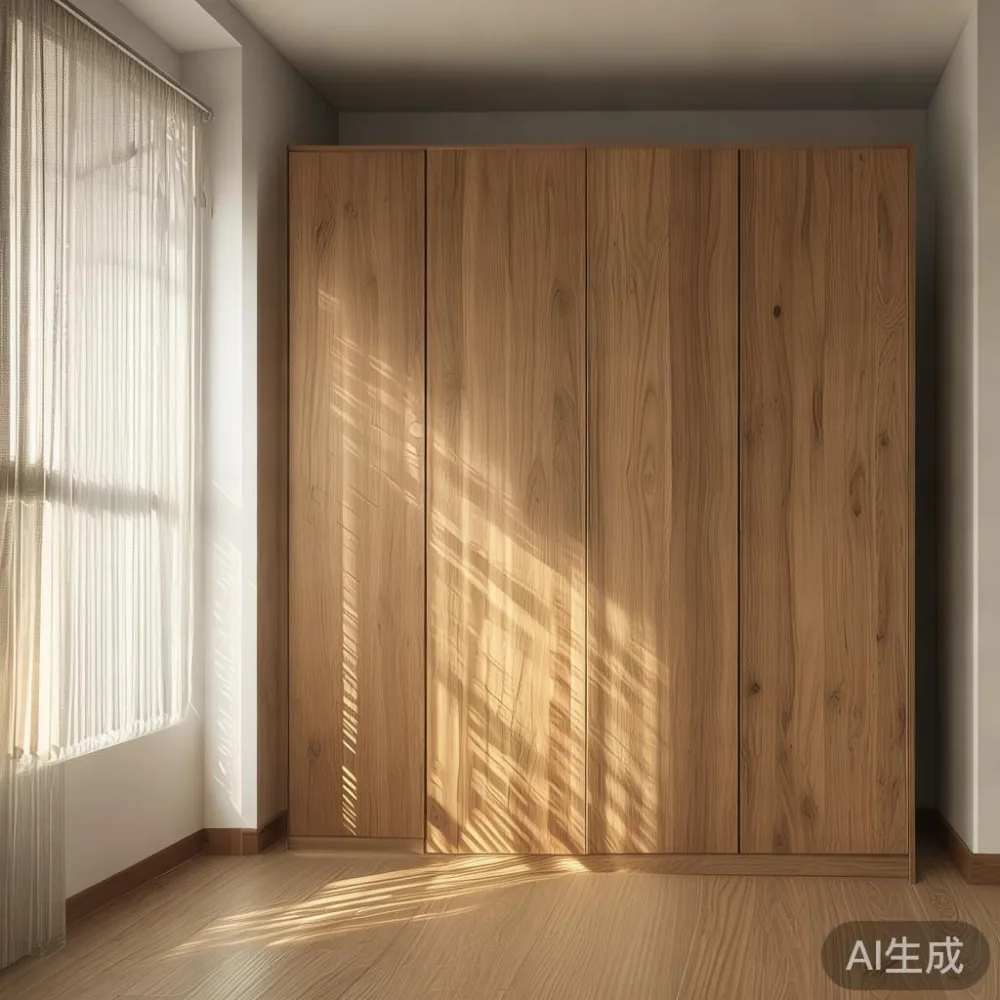
The HDB Context: Why Wardrobe Material Matters More Here Than in a Terrace House
Singapore housing throws specific stresses at a wardrobe. HDB bedrooms in developments like those around Tampines West or Bedok Reservoir sit between 9 sqm and 13 sqm, which means a 240 cm wide three-door wardrobe is often pressed against a wall that shares plumbing with the next unit. Humidity in these flats hovers at 70 to 80 percent for at least eight months a year, and corridor widths of 1.2 m to 1.4 m restrict how a wardrobe is moved in. Most pieces are delivered flat-packed or in two halves and assembled in the bedroom itself. Condos in Punggol Digital District or around the upcoming Paya Lebar Quarter tend to be drier (often 55 to 65 percent under air-conditioning 24/7), but they have stricter move-in time windows enforced by MCST rules, and you pay a S$50 to S$200 delivery surcharge for using the service lift outside 9 am to 5 pm. Both environments punish cheap MDF and paper-backed veneer, and both reward solid wood. A solid wood wardrobe weighing 110 kg to 140 kg is heavier, yes, but it does not telegraph humidity into bowing doors the way a 65 kg hollow-core veneer carcass does.
What Veneer and Solid Wood Actually Are, in Plain Numbers
Veneer wardrobes, the kind you see at most furniture warehouses in Sungei Kadut and online mass retailers, use a 15 mm to 18 mm particleboard or MDF core wrapped in a 0.3 mm to 0.8 mm sheet of melamine, laminate, or real wood veneer. Hardware is usually an HDF backing 3 mm thick, dowel-and-camlock joinery, and soft-close hinges rated for 30,000 to 50,000 cycles. A 240 cm x 220 cm x 60 cm three-door unit sells in Singapore for S$1,200 to S$2,800, GST inclusive, and weighs 55 kg to 75 kg fully assembled.
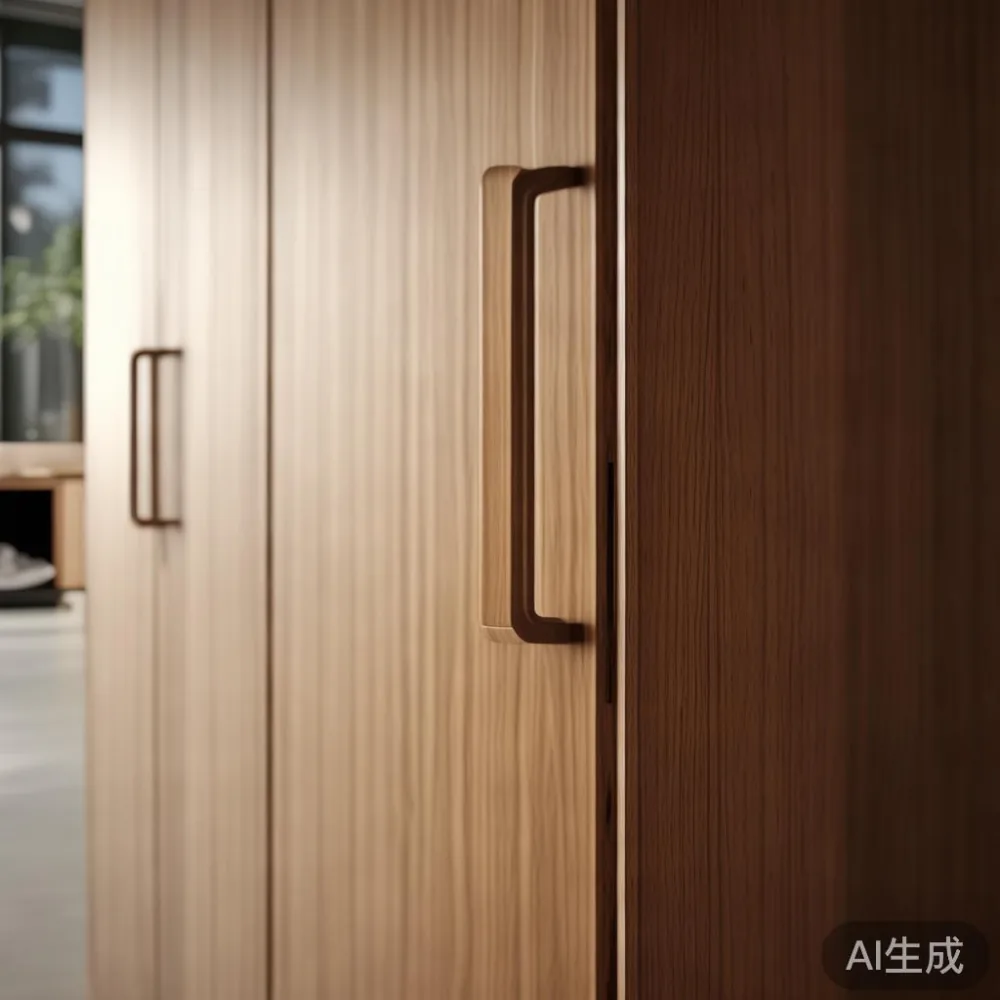
Solid wood wardrobes, by contrast, use 18 mm to 25 mm kiln-dried hardwood for the carcass (often rubberwood, ash, or oak from suppliers MIDHILL works with in Foshan), dovetail or mortise-and-tenon joinery on the drawer boxes, and full solid panels on the doors. A comparable 240 cm unit lands between S$3,600 and S$6,800 landed in Singapore, and weighs 110 kg to 160 kg. The price gap at checkout is the part most buyers focus on. The five-year ledger is the part that matters.
Year-by-Year Cost Breakdown: The Numbers Real Singapore Owners Actually Pay
Let me put two realistic side-by-side scenarios in front of you, with GST (9 percent from 2024 onward) and a typical 5 percent annual inflation on replacement parts baked in. I am using a 240 cm x 220 cm x 60 cm three-door wardrobe in a Tampines HDB, occupied by a family of four, with two adults working and one school-age child.
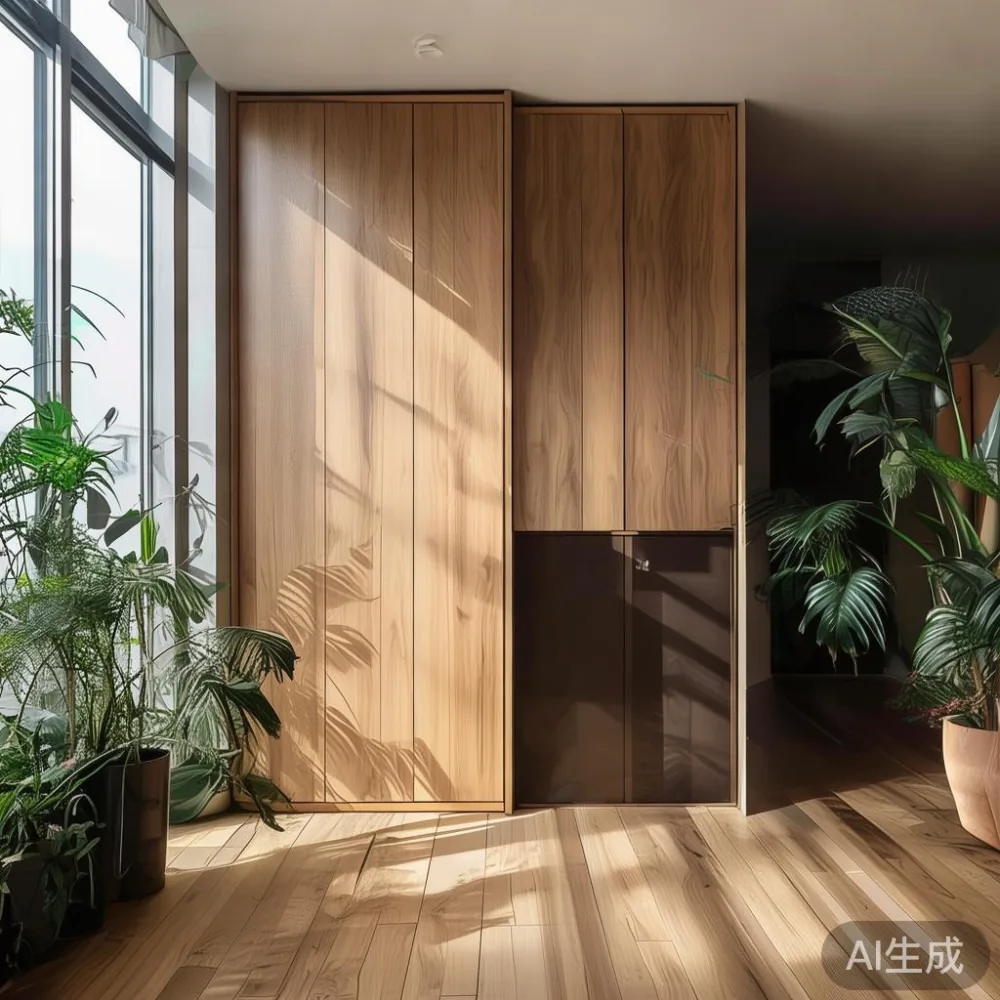
Scenario A: Mid-range veneer wardrobe from a Jurong East big-box store, S$2,400 GST-inclusive, delivered flat-packed for a S$80 fee.
Scenario B: A solid wood wardrobe from a Foshan maker with Singapore delivery, S$4,800 landed, full white-glove assembly included. A model like the MIDHILL three-door oak unit at this spec.
Year 1: Scenario A spends S$0 on repairs but S$120 on dehumidifier electricity and four boxes of moisture absorber (a Singapore staple). Scenario B spends S$0 on either, because solid wood tolerates our humidity swings without swelling the hinges.
Year 2: Scenario A starts showing edge peel near the bathroom-sharing wall. A carpentry handyman quoted S$280 for a half-day re-laminating job, and the owner paid it. Scenario B: the owner simply wiped the surface with a damp cloth and a drop of linseed soap.
Year 3: Scenario A has two hinges fail (S$45 each plus S$70 labour) and a drawer bottom sagging 4 mm because the HDF backing has absorbed moisture. Replacement drawer: S$220. Scenario B has a small surface scratch on the side from a MoveMove cart. Light sanding and a coat of hard wax oil: S$60, or free if the brand's lifetime refinishing policy is used.
Year 4: Scenario A's middle door now has a 7 mm bow that catches on the frame. The owner replaces the door panel only at S$420, including hinges and a Saturday delivery slot. Scenario B has had no service calls.
Year 5: Scenario A is at the end of its service life. Doors creak, laminate is lifting at three corners, and the carcass has a faint musty smell from the bedroom's humidity cycles. Resale or scrap value: about S$80 for the metal hardware. Scenario B still has at least 10 to 15 years of useful life ahead. Resale value on Carousell or Facebook Marketplace for a 5-year-old solid wood wardrobe: roughly 55 to 65 percent of original price, or S$2,600 to S$3,100.
Five-year cumulative cost of ownership, including original purchase:
Scenario A (veneer): S$2,400 + S$280 + S$160 + S$220 + S$420 + S$200 (dehumidifier running) + S$120 (absorbers) = S$3,800. Net loss after scrap: S$3,720.
Scenario B (solid wood): S$4,800 + S$60 = S$4,860. Net loss after resale: roughly S$1,760 to S$2,260.
Spread across five years, the per-year cost is about S$744 for veneer and S$352 to S$452 for solid wood. The "cheaper" option is roughly 65 to 110 percent more expensive over the period you actually live with it.
What About the Lift and the Corridor?
Singapore delivery realities deserve their own line. Most HDB corridors are 1.2 m wide and most service lifts in newer BTOs have a 1.5 m x 1.8 m cabin with an 800 kg limit. A flat-packed veneer wardrobe breaks into four to six pieces under 35 kg each and goes in easily. A solid wood wardrobe usually arrives in two 75 kg to 90 kg halves and requires two movers plus a third person guiding through the corridor. That is why brands like MIDHILL quote a flat white-glove delivery for Singapore addresses above a certain order value, with two-person crews experienced in Punggol Waterway and Bedok North lifts. The fee is usually S$80 to S$180 for addresses above S$350 total, which is waived on larger orders. If you live on the 14th floor of a Paya Lebar condo and the service lift is booked by another resident that morning, a S$60 to S$120 rescheduling fee shows up in the invoice. Solid wood furniture weighs more, but it is delivered by people who plan around these constraints, not by a courier dropping a flat-pack at your door.
Is Italian light luxury armchair furniture worth it?
Yes, Italian light luxury armchair furniture is worth it if your priority is long-term daily comfort and a piece that retains 60 to 70 percent of its value after five years, because the construction hides solid hardwood frames under the upholstery, uses eight-way hand-tied springs, and pairs with full-grain leather that ages rather than peels. In Singapore terms, a properly built Italian light luxury armchair in a 9 sqm HDB bedroom or study nook will outlast three or four fast-fashion alternatives, even though it costs roughly S$2,200 to S$4,800 versus S$450 to S$900 for a bonded-leather armchair from a Tampines mall.
The same logic applies to the rest of an Italian-influenced or French light luxury collection. A marble table from a real Carrara or Calacatta source, with a 18 mm to 22 mm stone slab on a solid wood or stainless base, costs more at checkout but stays dimensionally stable in air-conditioned condos. A cheap marble-look sintered stone top over an MDF frame does the same visual job for half the price but cannot be re-polished when a hot pot leaves a mark on the surface. A solid wood bed frame in ash or rubberwood, paired with a matching nightstand and a six-seater dining table in the same timber, gives a coherent American light luxury feel without the visual noise of mixed materials. The wardrobe sg anchoring the bedroom reads as part of the same collection, not as an afterthought, because every piece was finished in the same oil or lacquer.
Where Solid Wood Loses, and Where Veneer Wins
I would be misleading you if I said solid wood wins every category. For a 4 sqm study corner where you need a compact 120 cm x 40 cm x 180 cm bookshelf that holds paperbacks, a 12 mm particleboard with melamine finish at S$280 is a reasonable choice. Veneer also wins for short-term rental flats where the landlord wants a uniform white look and accepts replacement in three years. A post-modern light luxury look that relies on glossy lacquer finishes is harder to achieve in solid wood, because real timber moves; it expands and contracts 1 percent to 2 percent across seasons, which is why every MIDHILL wardrobe and dining table is built with 3 mm to 5 mm expansion gaps along the back panel and why good installers never push a solid piece flush against a wall. If you want a high-gloss mirrored wardrobe with integrated LED lighting and soft-touch close, a precision-engineered MDF and acrylic wardrobe from a custom carpenter (S$3,500 to S$5,200 for a 240 cm run) is the right pick, and no solid wood alternative will match it.
The Hidden Costs Most Comparisons Forget
Three numbers rarely make it into furniture marketing. First, the GST itself. At 9 percent, the veneer wardrobe is S$216 in tax; the solid wood wardrobe is S$397. That gap is small enough to ignore but worth noting. Second, the time cost of assembly. A flat-pack veneer wardrobe takes 4 to 7 hours for two people and 12 to 18 camlock pins, three of which will be left over as a permanent feature under your bed. A solid wood wardrobe arrives fully assembled in 90 minutes. Third, the move-out cost. When the lease ends on a Punggol condo after three years, a bowed veneer wardrobe often costs S$150 to S$300 to dismantle and dispose of, since the HDB and most MCSTs do not take bulky furniture in the refuse room. A solid wood wardrobe can be resold on Carousell for 50 percent or more of its residual value, or even relocated to the next home at a S$180 to S$250 mover fee.
A 5-Year Side-by-Side You Can Pin to Your Fridge
Imagine both wardrobes side by side in the same Tampines HDB bedroom. Same dimensions, same GST, same dehumidifier running. The veneer wardrobe starts at S$2,400, ends at S$3,800, and has a resale value of S$80. The solid wood wardrobe starts at S$4,800, ends at S$4,860, and has a resale value of S$2,600 to S$3,100. If you spread cost across five years, you pay S$744 a year for veneer and S$352 to S$452 a year for solid wood. If you also factor in a matching solid wood bed frame at S$2,200, a nightstand at S$480, a dining table at S$3,800, a solid wood sofa with a large sectional sofa for dining room adjacent configuration at S$5,200, and a marble table at S$2,800, the same 65 to 110 percent cost-of-ownership gap shows up across every category. Solid wood is not cheaper at checkout. It is cheaper at year five, and the gap widens every year after.
What I Would Buy If I Were Furnishing a Punggol Condo Tomorrow
Given everything above, my recommendation for a typical 92 sqm Punggol or Bedok condo family is a hybrid that respects the real budget. Put a solid wood wardrobe, solid wood bed frame, and one solid wood dining table in the rooms you use every day. Choose MDF or veneer for the study bookshelf, the TV console, and any display cabinet behind glass doors where structural load is low. Buy from a Foshan maker with a 10-year structural warranty and a lifetime refinishing policy, because those two commitments together are the cheapest insurance against humidity you will ever buy. Ask the supplier for the timber source, the moisture content (8 to 12 percent is the safe range for Singapore), and whether the carcass uses through-tenon or dowel joinery. And remember, a large sectional sofa for dining room adjacent open-plan layout only works if the sofa frame is solid wood underneath the cushions, because a hollow plywood frame will sag within three years under daily family use. The cheapest piece of furniture in the showroom is rarely the cheapest piece in the home.