Wardrobe SG: A 5-Year Cost Comparison Between Veneer and Solid Wood
A wardrobe in a Singapore HDB flat or condo is not merely a place to hang clothes. It must survive humid rooms, narrow lift lobbies, frequent moves and at least 5 years of daily use. For buyers comparing wardrobe sg options, the decision often comes down to two construction methods: veneer or solid wood. The showroom price tells only part of the story.
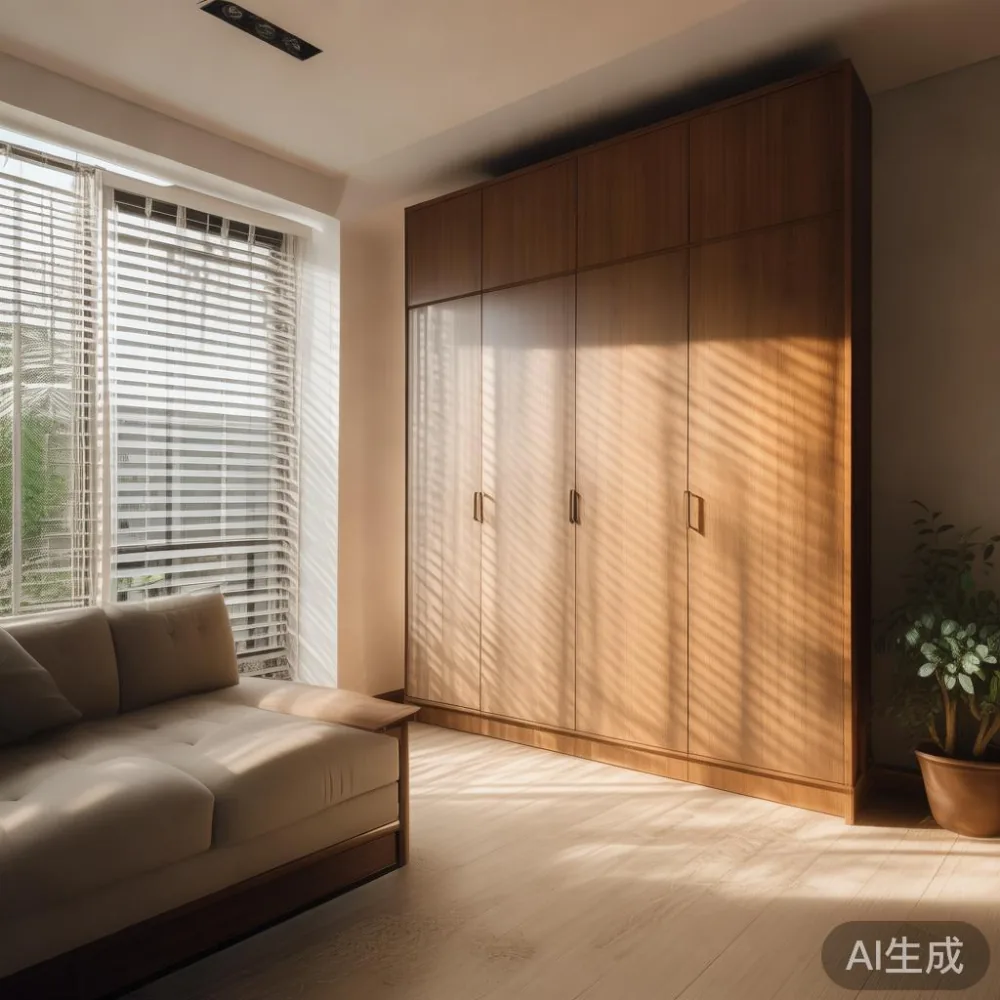
This comparison uses realistic Singapore figures for a 180 cm wide, 210 cm high and 60 cm deep wardrobe with hanging space, shelves and drawers. Prices are indicative before GST because drawer runners, hardware, door profiles and internal fittings can change the final quotation. Shipping is free above US$350 on qualifying MIDHILL orders, though local delivery arrangements should be confirmed.
What is the 5-year cost of a veneer versus solid wood wardrobe?
A representative HDB wardrobe installed in Bedok or Tampines might cost S$1,250 for engineered-wood panels with natural wood veneer, plus S$120 for delivery and installation. A comparable solid hardwood model may cost S$2,050, plus S$160 for delivery and installation. At a 9% GST rate, those figures become approximately S$1,509 and S$2,409 respectively.
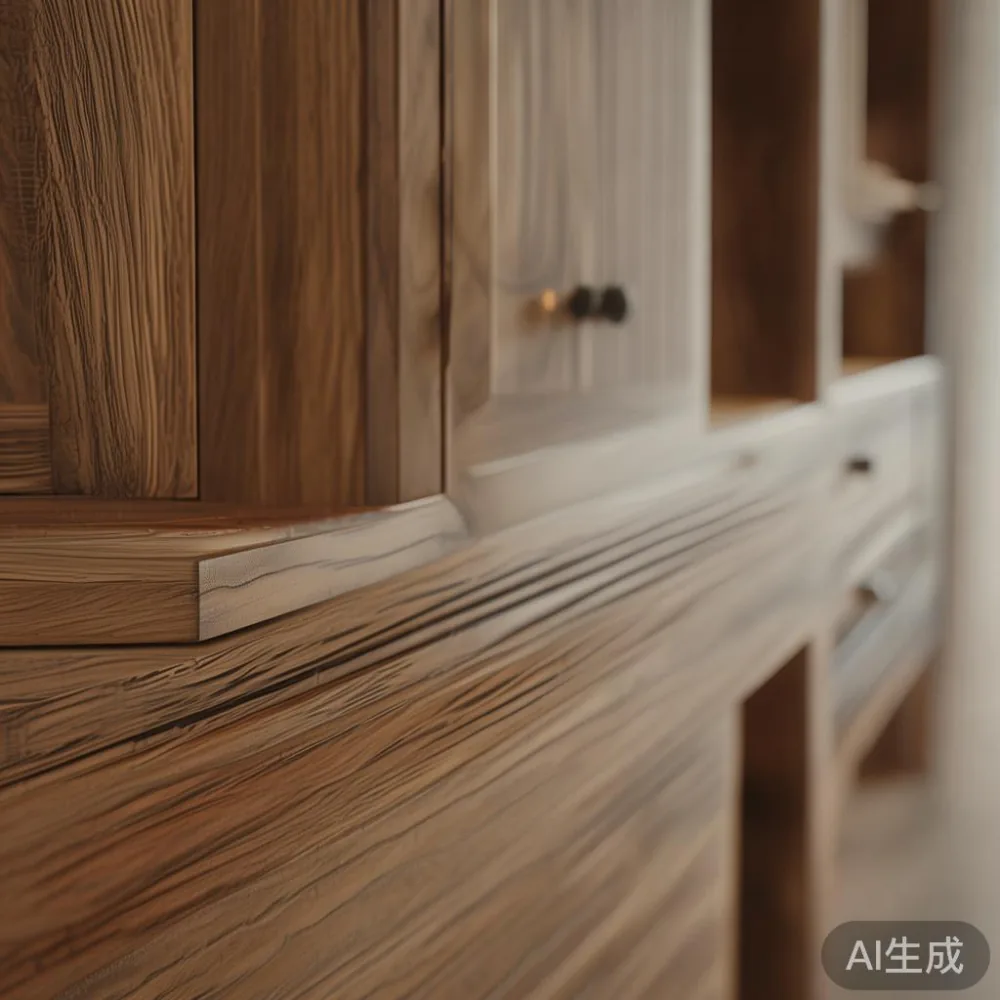
Over 5 years, assume one minor repair in year 3 costing S$80 for veneer and S$140 for solid wood, plus a refinishing or touch-up allowance of S$150 for veneer and S$110 for solid wood. Maintenance time is 12 hours for veneer and 8 hours for solid wood. The arithmetic gives a five-year wardrobe expenditure of about S$1,859 for veneer and S$2,659 for solid wood, including GST and local costs. Solid wood starts at roughly S$800 more, although this gap narrows if veneer requires a full reskin near the end of the period.
This example is not a universal price guide. A flat-pack veneer wardrobe may cost less than S$900, while a custom solid wood wardrobe with framed doors may exceed S$3,500. Condo owners choosing premium hardware, curved corners or wall-to-wall cabinetry will also see different totals.
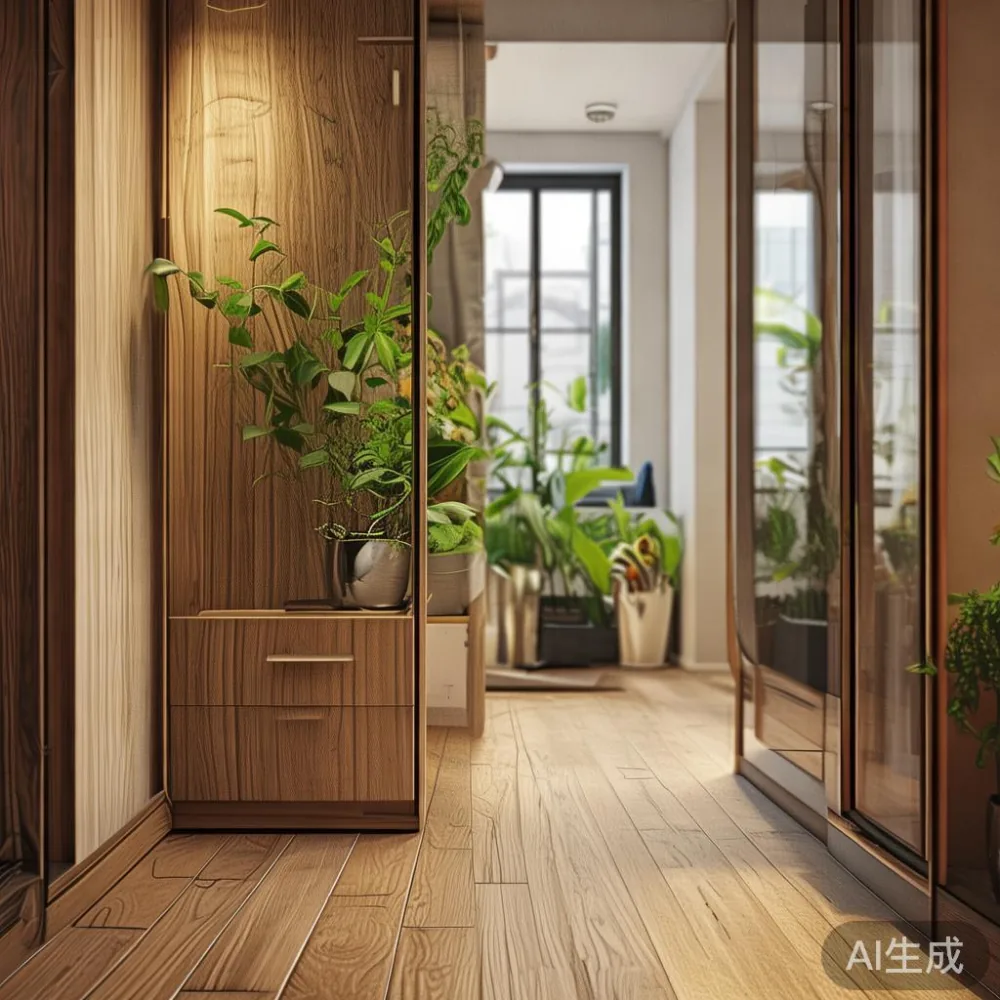
What does veneer mean for a Singapore wardrobe?
Veneer is a thin layer of timber, commonly 0.6 mm to 1.2 mm, bonded to an engineered substrate. A typical cabinet might use 18 mm particleboard or MDF panels weighing 22 kg to 30 kg per section. The exact weight depends on dimensions and density, but it is manageable for two movers using a 15 kg-rated dolly and a 91 cm internal lift door.
The attraction is price and weight. A 3-door veneer wardrobe can fit into a standard HDB service lift more easily than a rigid solid wood carcass. This matters in older Tampines blocks where a lift opening measures about 90 cm by 140 cm, while corridors can narrow to 105 cm. A 62 cm deep wardrobe should turn through those dimensions if it is transported as flat panels or in modular sections.
Veneer also offers more stable movement in Singapore’s humidity because the substrate moves less than solid timber. It can provide convincing grain continuity on bedroom doors and coordinate with a solid wood sofa, bed frame or dining table elsewhere in the home. The compromise appears at edges, shelf ends and places where children or renters expose the surface to impact.
Ask the supplier to show the panel core, back panel thickness, edge banding and water-based finish. Confirm whether the doors are real veneer rather than printed laminate, and obtain a written warranty. MIDHILL provides a 10-year structural warranty on qualifying solid wood furniture, which offers a different repair commitment than a generic cabinet warranty.
What does solid wood change in daily use?
A solid hardwood wardrobe can use 18 mm to 25 mm boards and weigh 55 kg to 90 kg for a 180 cm unit. It may require more planning because it cannot be forced through a narrow turn or lifted by one person. For a Punggol condo with a private lift measuring 110 cm by 210 cm, the larger dimensions are less troublesome, but building-management rules still matter.
Solid wood is more demanding to install. Panels need careful alignment, fixings into suitable walls and protection for tiled corridors. A carpenter may need 3 to 5 hours on site. Veneer installation can take 2 to 4 hours if the site is level and the lift is available.
The benefit is repairability. Scratches can be filled and sanded; edges can be refinished; parts can sometimes be reattached. MIDHILL supports lifetime refinishing for qualifying solid wood pieces, which makes long-term ownership easier to plan. A veneer wardrobe may need a new veneer sheet or complete reskin, and matching natural grain is not always straightforward.
Solid wood can also expand or contract with humidity. Quality furniture accounts for this with suitable joinery and finishes, but no material is immune to dampness. Place a wardrobe against a dry wall, maintain at least 30 mm of ventilation space where practical and avoid direct contact with air-conditioning condensation.
How much do hinges, drawers and finish repairs cost over 5 years?
Hardware often separates two wardrobes that look similar at the point of sale. A veneer wardrobe may use standard 35 mm cup hinges, while a premium solid wood model may use concealed hinges from better-known hardware ranges. Soft-close drawer runners improve use in a master bedroom and can add S$180 to S$420 before GST.
For a medium-use household, allow S$160 for replacement hinges over 5 years in either category. Drawer repairs may cost S$90 to S$180 each, with one event in years 3 to 5 adding S$130 to the veneer estimate and S$90 to the solid wood estimate. If no drawer is damaged, both examples retain the totals shown earlier.
Finishing costs depend on the treatment. A wipe-clean lacquer touch-up may cost S$60 to S$120. Re-edging a veneer door can cost S$140 to S$260, while local sanding and refinishing of solid wood may cost S$180 to S$350. Timber repair quality and colour matching should be agreed before work begins.
A realistic ownership reserve is 5% of the purchase price for veneer and 4% for solid wood, unless a warranty explicitly covers those services. Keep receipts, warranty documents and finish samples. Photograph the wardrobe every 6 months, including corners, drawer fronts and the back edge nearest the wall.
Is solid wood worth the higher wardrobe price in Singapore?
Solid wood is worth the premium when the wardrobe will remain in the same home for 8 years or more, the household values repairability, and the room receives moderate use. It is also sensible where appearance is coordinated with a solid wood bed frame, nightstand or dining table. The premium buys longevity potential, not a guarantee that the cabinet will never move, scratch or swell.
Veneer can be the more rational choice for a rental flat, a child’s room or a HDB home due for renovation within 5 years. A S$1,200 saving can fund a second mattress, a new desk lamp or repairs to an existing solid wood sofa. The lighter panels also reduce trolley and labour charges.
The buyer should compare total installed cost rather than timber label alone. Add GST, delivery, installation, hardware, top-up boards, skirting cuts and likely repairs. In a Tampines HDB flat, a S$2,400 installed solid wood wardrobe may have a five-year cost of S$2,659, while veneer may reach S$1,859. That is a difference of S$800, not the full purchase-price difference.
For inspiration, anyone searching for where to buy coffee table from MIDHILL can compare the timber tone with other living-room pieces before ordering. The wardrobe finish should relate to the room without making every item identical.
How do delivery constraints change the value of each wardrobe?
Measure the route before ordering: lift door, lift car, corridor turns, staircase width and the bedroom doorway. Record the narrowest point in centimetres and photograph it. Allow 10 cm to 20 cm of working clearance where panels are handled upright. Confirm whether the quotation includes carrying to the bedroom or only curbside delivery.
Local delivery may cost S$80 to S$180 for an HDB unit and S$150 to S$320 for a condo requiring lift reservation. If a lift is unavailable, a solid wood wardrobe may need 2 additional movers for 1 hour, adding roughly S$120 to S$200. Veneer may add S$60 to S$100 under the same condition.
Lead time is another practical number. A standard wardrobe can take 4 to 8 weeks to produce after approval, with delivery arranged within 3 to 7 days in Singapore. Custom solid wood work may take 8 to 12 weeks. A rushed order can add S$150 to S$400 and may compromise joinery if the production window is too short.
Check the return policy carefully. MIDHILL offers 14-day returns on eligible items, but a made-to-measure wardrobe with installed handles, custom dimensions or a special finish may sit outside standard return conditions. Ask for those exclusions in writing before production starts.
Which wardrobe style suits HDB flats and modern condos?
How to choose American wardrobe is partly a question of proportion. Full-height framed doors can look substantial in a 3.2 m HDB bedroom, while a 220 cm unit may suit a condo with a higher ceiling. American light luxury often uses warm oak, restrained crown moulding and integrated storage rather than excessive decoration.
How to choose French provincial wardrobe calls for curved edges, lighter timber and carefully placed profiles. The French provincial look can become busy in a compact Tampines bedroom, so 2 plain door panels with 2 profiled panels may balance appearance more effectively than 3 heavily carved doors. Confirm that door handles remain within reach and do not reduce usable hanging width.
For a coordinated modern apartment, the phrase luxury Modern light luxury furniture can describe a calm mix of stone, pale timber and metal details. A marble table in a dining area, a solid wood dining table nearby and a lighter wardrobe can create continuity without matching every edge.
Wardrobe finishes also affect the room’s light. Pale oak can reflect daylight and make a 9 sqm bedroom feel wider; dark walnut absorbs more light and can visually reduce a narrow space. Before committing, request finish samples of about 10 cm by 10 cm and view them in the morning and evening.
If the question is how to style European light luxury wardrobe in bedroom, pair the cabinet with one deliberate material contrast. For example, use a solid wood bed frame with a linen headboard, a marble table with slim metal legs, or a solid wood sofa with neutral cushions. Avoid placing a second visually heavy object directly opposite the wardrobe.
What should I ask before placing a wardrobe order?
Ask whether the price includes GST, local delivery, carrying, installation and removal of packaging. Request the external and internal dimensions in centimetres, the board thickness, the drawer runner load rating in kilograms, and the number of shelves. A 3-door unit should normally provide at least 120 cm of hanging space for double garments, with long-item hanging near 150 cm.
For solid wood, ask which species are used in the carcass, doors and drawer fronts. Some components may be solid timber while others are engineered, so precise wording matters. Confirm the finish type, expected colour variation and whether a replacement board is available after 5 years.
For veneer, request the substrate, veneer thickness, back-panel construction and edge-sealing method. Also ask whether natural veneer has been booked to reduce visible patches. A supplier able to explain these details can quote from actual drawings rather than vague package sizes.
Buyers comparing a minimalist sofa for 2026 can use the same material logic. A low-profile solid wood sofa with washable upholstery complements a solid wood bed frame, while a marble table introduces a harder surface and a nightstand completes the bedside zone. These companion pieces need not be purchased together; they are examples of coherent material choices.
Last month I visited a colleague’s three-bedroom HDB flat in Bedok and inspected a 180 cm veneer wardrobe that had been installed for 4 years. Its lower edge had lifted slightly after prolonged air-conditioner condensation. The supplier patched and re-sealed it in 2 hours, and the repair cost S$95. My colleague also showed me an older solid wood nightstand from the same household; sanding and recoating a scuffed corner took 1 hour and cost S$70. The comparison was small, but it showed why finish care and access to repair matter as much as the material category.
How do I calculate the actual 5-year wardrobe cost?
Use this formula: purchase price + GST + delivery + installation + hardware upgrade + repairs + finishing allowance + disposal or removal cost. For the opening example, veneer reaches S$1,859 and solid wood reaches S$2,659 over 5 years. Divide each result by 60 months to see the monthly provision: approximately S$31 for veneer and S$44 for solid wood.
Also record the expected life and what happens after year 5. A veneer wardrobe moving to another room may need edge and surface work worth S$200 to S$500. A solid wood wardrobe that can be refinished may carry a smaller visual and financial transfer cost, although moving can still cost S$180 to S$450.
For a 7-year ownership horizon, solid wood becomes more compelling. For a 3-year horizon, veneer usually protects the budget better. Between 3 and 7 years, compare the resale or reuse value, the warranty terms and the condition of the doors and drawers rather than assuming one material wins automatically.
The practical answer for wardrobe sg shoppers is therefore not whether veneer or solid wood is inherently superior. Veneer gives a lower installed cost and lighter delivery. Solid wood gives greater repair flexibility, a distinctive tactile quality and a stronger fit with enduring solid wood furniture. Measure the route, define the five-year budget, and treat the wardrobe as furniture that will be used every day for thousands of hours.