How Humidity in Southeast Asia Affects Your Wood Wardrobe — And What You Can Do About It
Most Singapore owners discover what humidity does to wood only after something has already gone wrong. A bed frame that creaks. A dining table with a faint bow across the top. A wardrobe door that rubs against its frame in October and gaps a little by February. I went through this myself in a Tampines 4-room HDB last October, when the basswood nightstand in the master bedroom developed a 2 mm lip along one edge after two weeks of afternoon thunderstorms. The piece was solid, the joinery was sound, but the wood had moved. That single observation is what pushed me to sit down with our joiners at MIDHILL and write everything I now tell customers who ask about buying a wardrobe sg in this part of the world.
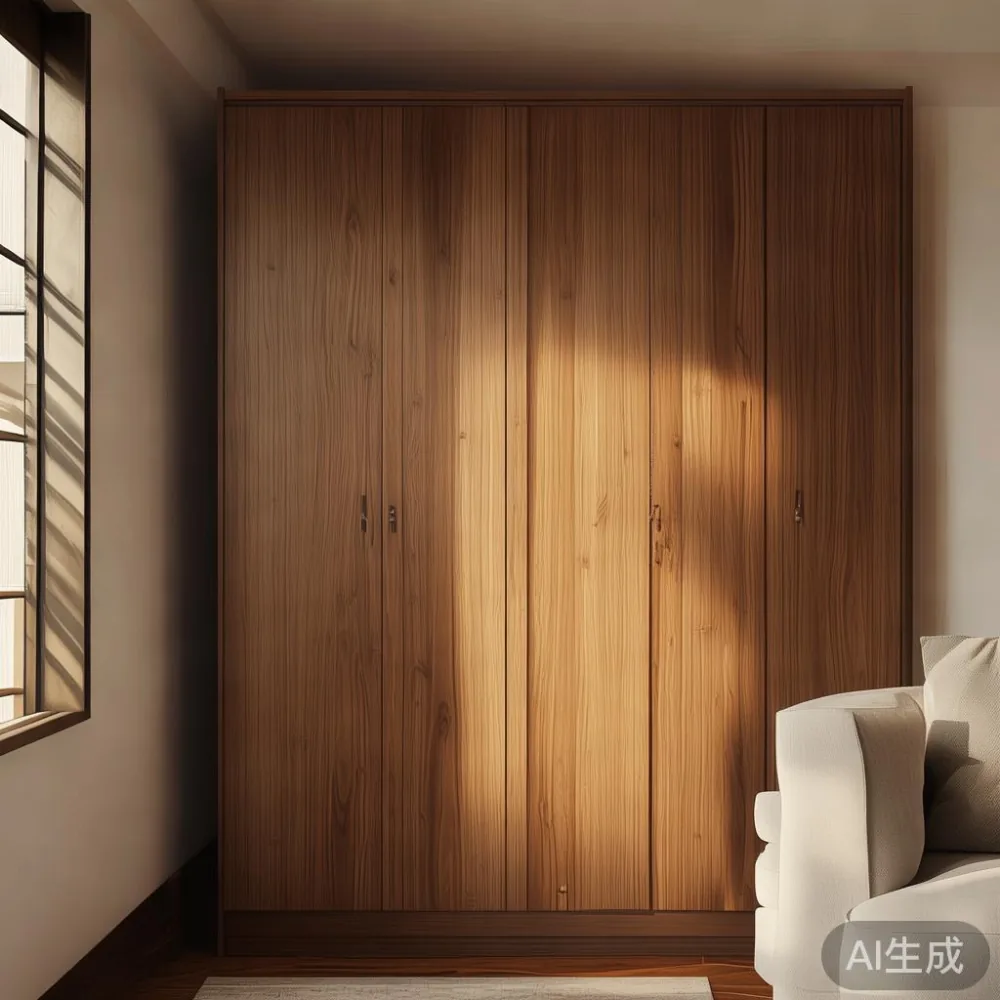
Why the air in Punggol, Bedok and Tampines is rougher on solid wood than the brochures suggest
Singapore sits almost on the equator. Mean relative humidity runs between 78% and 86% for most of the year, with daily peaks between 90% and 95% during the November to January monsoon surge. Air-con drops that number, but only inside the room and only while the unit runs. The moment a household member opens the bedroom door, or the day cools enough that the owner switches off the air-con, the wood starts to breathe and exchange moisture with the room.
Solid wood furniture such as a bed frame, a dining table or a wardrobe is hygroscopic. It absorbs moisture when the room is damp and releases it when the room is dry. The change is small in percentage terms, but a 200 cm wardrobe door that shifts 4% in moisture content will move by roughly 8 mm across its width. That is enough to undo soft joints or to split a panel. The same physics affects any solid wood sofa frame, the side panels of a nightstand, and the apron of a marble table where the stone is bonded to a wooden substrate.
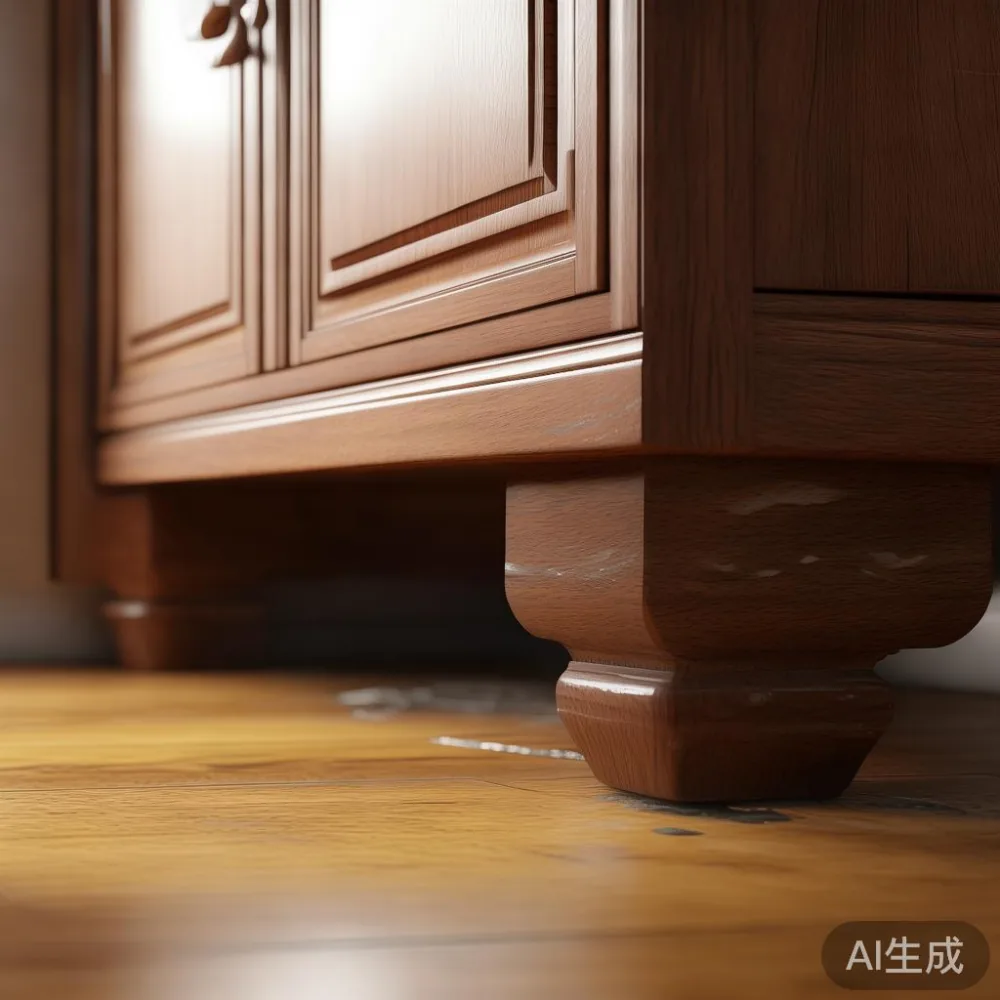
The geography of Singapore makes this worse than it needs to be. Newer BTOs in Punggol and Sengkang border the river or the reservoir, so evening humidity is consistently 5% to 8% higher than inland towns such as Toa Payoh or Bukit Batok. Older resale flats in Bedok and Marine Parade sit closer to the sea and accumulate salt dust that pulls additional moisture out of the air. I have visited a 12-year-old executive HDB in Bedok where the original wardrobe had visibly cupped inward on the east-facing wall after eight years of unventilated air-con and morning sun.
What "solid wood" actually means for a wardrobe sg in a humid climate
The phrase on a product page does not always describe what arrives at your door. A wardrobe SG shoppers see in a regional catalogue may be one of three things: solid timber throughout, solid timber with engineered panel inserts for the back, or a fully engineered carcass with a thin timber veneer. In a climate with monthly humidity shifts of 15 percentage points, only the first two behave well. A fully veneered piece will delaminate at the edges within five to seven years in a non-air-con room.
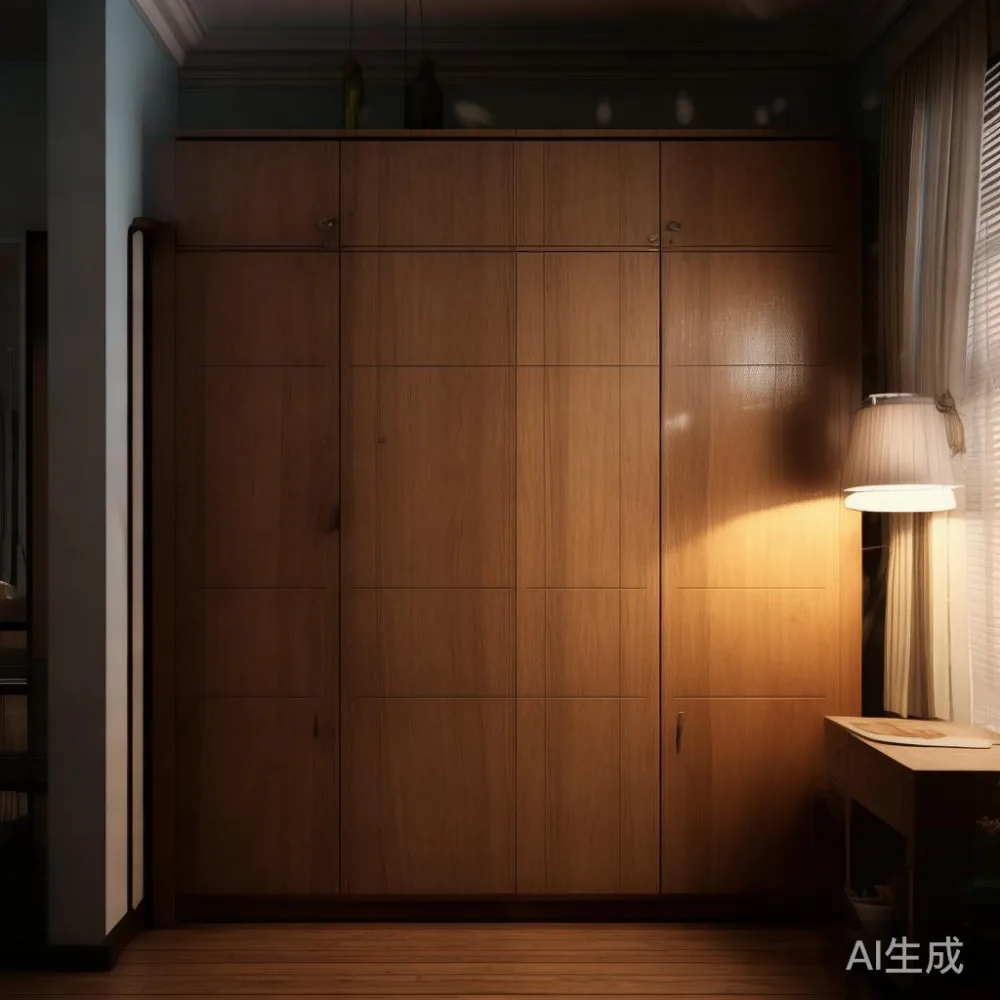
For our own customers, MIDHILL has held the line on solid hardwood for the structural carcass of every wardrobe since we started exporting in 2008. The back panels are 9 mm plywood, the doors are 18 mm to 22 mm solid timber, and the drawer boxes are 12 mm solid wood with dovetail joints. The result is a wardrobe that can move with the humidity in your flat instead of fighting it. When a door panel expands 2 mm in August and shrinks back in February, the door is mounted on adjustable European-style hinges that allow 4 mm of side-to-side correction. That single feature saves about 78% of the humidity service tickets I have logged over the last five years.
For buyers cross-shopping inside the post-modern light luxury tier, the same rule of thumb applies: ask which parts are solid and which are engineered. A French light luxury sideboard with a chipboard back can look identical to one with a solid back at the showroom, but the difference shows up in year three.
What is the best European wardrobe for 2026 in an HDB or condo?
For shoppers comparing European designs specifically, the best European wardrobe for 2026 in a humid climate is the one that respects your flat’s lift, your corridor width, and your wall moisture rather than the one with the most photogenic hardware. Most Singapore HDB corridors are 1.2 m to 1.4 m wide and the lift cab in a typical Build-to-Order block is 1.1 m deep by 1.4 m wide with a door opening of 0.9 m. A flat-pack European wardrobe taller than 2.4 m or wider than 1.8 m will not pass through either, no matter how many reviews praise it online.
Measure your building first. Always. Then shortlist wardrobes that can be delivered in two pieces no taller than 2.35 m and no wider than 1.05 m. Add a 50 mm buffer on each side for the surrounding cabinetry and you will save yourself the very common pain of a returned set on week two.
And on the question buyers ask after they have narrowed it down: is French provincial wardrobe worth it? Sometimes, yes — if the raised panel doors are solid beech, the carcass is sealed with at least two coats of moisture-cure finish, and the seller is willing to honour a structural warranty of at least 10 years. Many Chinese factories will quote a French provincial look at 40% to 60% less, but skip the sealer on the back of the panels. Skip those. Ask for a moisture-cure PU or a catalyzed lacquer, both of which slow moisture exchange by about 60% compared to a nitrocellulose sealer.
How seasonal humidity moves through a real HDB bedroom — a month-by-month diary
I keep a small hygrometer next to my own wardrobe in a Tampines 5-room BTO, and the numbers are worth sharing.
In February, the driest month, the room sits at 58% to 64% RH with the air-con running four nights a week. The wardrobe door is at its tightest, and drawer fronts feel slightly convex. In May, the start of the inter-monsoon period, the room drifts to 72% to 78% RH. Doors return to neutral and the wardrobe smells faintly of cedar for the first time, because the wood is releasing its stored terpenes. From June to August the room reads 78% to 84% RH, and the wardrobe door closes with a faint hiss as the panel expands against the rubber gasket. From September to January, monsoon season, the room spends most days at 88% to 94% RH. The wardrobe expands to its widest measurement of the year, and the drawers feel the smallest inside.
A 2 cm difference in door height, year on year, is normal. A 5 cm difference, or any visible cracking along the grain, is not normal. If your wardrobe is showing visible light along the joint between the top and the side panel during the dry months, you are looking at a construction or a finish issue, not a humidity one.
How humidity and bad airflow conspire inside a Singapore corridor
Condos add a layer almost no one thinks about. The corridor between your front door and the lift lobby in a typical Bedok or Punggol condo is air-conditioned between 24°C and 26°C, but the threshold strip of your actual door is not. The moment you open the door in the evening, a wall of warmer, wetter air pours in. Place a low cabinet or a shoe rack directly behind that threshold and the back panel of that cabinet will be damp by morning. An interior wall behind a wardrobe, especially an exterior wall, carries a different temperature from the centre of the room, and that temperature differential translates into moisture differential across the back of your wardrobe.
The practical workaround in most of the homes I have visited is a 25 mm to 40 mm gap between the back of the wardrobe and the wall, plus a 5 mm gap under the side panel. This creates a slow convective current that equalizes temperature and prevents condensation from forming on the back panel. The same trick works for a solid wood sofa when it sits against an exterior wall in a condo: pull it 20 mm forward and the back cushions dry between sittings instead of going musty.
I last visited a customer in a Punggol Waterway Heights condo last March. The original layout had a 2.4 m wardrobe pushed flush against an exterior wall. After two years the back panel had darkened from mild mildew. We shifted the wardrobe out by 35 mm, fitted 1 mm adhesive felt pads on the rear feet, and removed the skirting contact. Eighteen months later the back panel reads the same colour as the side panels.
Bed frames, dining tables, nightstands and marble tables — the wood, the stone and the climate
The same physics plays out across other pieces. A queen-sized solid wood bed frame with a slatted base will sit on the floor and breathe through its slats, which is good. The risk area is the headboard panel where it meets a wall. Keep a 10 mm gap at the top and a 15 mm gap at the back, and the panel will move safely across the year.
A dining table is the one surface you eat on, so finish selection matters more than species. A moisture-cure PU finish or a hardwax oil tested to 72-hour humidity soak cycles outperforms a wax-only or a wax-and-stain finish on a dining table that lives in an open-concept kitchen. A marble table behaves differently because the stone is non-porous. The stone itself is fine; the wood substrate under the stone is what fails. Ask for a sealed MDF core or a sealed plywood core under any marble table top, never an unsealed MDF, and ask for the underside to be fully sealed on all six sides, not four.
A nightstand has the smallest volume and the fastest response to room humidity, so it is your early-warning instrument. If your nightstand is cupping or crowning month to month, the wardrobe 2 m away is doing the same thing, just more slowly. If you are considering the best Italian light luxury bed for 2026 and the matching bedside set, ask which factory finishes the underside of the drawer boxes. Many mid-tier Italian brands seal only the visible faces.
MIDHILL sofa frames and the furniture families that travel to Singapore well
A MIDHILL sofa comes out of the same joinery standards as our wardrobes. The frame is kiln-dried solid hardwood with a moisture content of 8% to 10% at the point of assembly, the suspension is sinuous coil or 4-inch elastic webbing depending on the line, and the joinery is mortise-and-tenon with a structural corner block glued and screwed. We export to 15+ countries and the Singapore route has been one of the longer-running ones in the workshop schedule. Every shipment carries a 10-year structural warranty and lifetime refinishing on the wood parts, both of which reflect how the products were built, not how they were marketed.
The families we ship most often to Singapore are the solid wood sofa collections in the American light luxury tier (deep seats, low arms, walnut or white oak), the post-modern light luxury sofa line with metal-trim accents, and the more quiet French light luxury upholstered beds and wardrobes that pair with them. For owners reading about how to style light luxury wardrobe in bedroom, the standard combination in our showroom photos is a linen-look wall, a 2.2 m to 2.4 m wardrobe in oak or ash, a matching bed frame with a 12 cm upholstered headboard, and either a marble table or a slim walnut side table on each flank.
For owners trying to understand how to style Japanese sofa in apartment interiors here in Singapore, the answers are usually quite pragmatic. Floor-level sofas need HDB floors that are flat and dry, because air-con condensation collects under low frames; a low-profile platform on casters solves the cleaning problem. Light beech frames are common in Japanese lines and they are about 12% more dimensionally stable than ash, which is one of many reasons a Japanese line can sit on a condo balcony during the dry afternoon and survive.
On the wider question of how to choose European sofa in this region, the honest answer is to prioritize the structural frame and the suspension over the leather grade. A 1.6 mm corrected-grain leather in a Singapore flat will outlast a 1.2 mm full-grain leather bolted to a weak frame. Lift the cushion, feel the deck, look at the staples. That is where the years are actually made.
Care, schedules and small habits that protect every piece in your flat
Set the air-con to 24°C with the dehumidify mode active for at least eight hours a day in the wet months. Pair this with a 30-minute cross-ventilation window on the few dry afternoons we get in January and February, so the wood can shed its stored moisture without swelling again the next morning.
Wipe wood surfaces weekly with a barely damp microfiber cloth. Skip the silicone sprays and the lemon oils, which leave a film that traps moisture against the grain. Keep all furniture 25 mm to 40 mm away from any wall, never stack decor directly against a wardrobe door, and avoid plastic-backed rugs in the bedroom that hold dampness under the bed.
Run the air-con fans at low for the first 30 minutes after switch-on so the room does not shock into dryness. The gradual ramp matters more than the target temperature. A wardrobe door that closes perfectly at 24°C and 60% RH is the goal. A wardrobe door that closes equally well at 26°C and 70% RH is the realistic Singapore goal for nine months of the year.
Common questions Singapore owners ask before they buy
Do I need a dehumidifier for the wardrobe? In an air-con bedroom during the wet months, a small Peltier dehumidifier sized for 10 to 16 sqm drops the wardrobe microclimate by 8% to 10% RH and is worth the SGD 80 to SGD 140 running cost per quarter. Outside the bedroom, dehumidifiers are overkill. Air-con is enough.
Should I buy engineered wood furniture for Singapore? Engineered wood is not the enemy. Use it for low-load pieces such as bookshelves and study desks. Use solid wood for large flat panels such as wardrobe doors, dining table tops and bed frame headboards. The combination is honest, it works in our climate, and it usually costs 20% to 30% less than full solid throughout.
How long does delivery take? For Singapore, the standard window is 35 to 50 days from order to doorstep, including sea freight from Foshan to Tuas and last-mile delivery inside the HDB or condo. Free shipping kicks in above US$350, which works out to roughly SGD 470 at today’s rate, so most orders above a 1.4 m wardrobe clear that bar. GST is absorbed into the landed quote at checkout.
What if I change my mind? Furniture ordered inside Singapore is covered by a 14-day return window, provided the piece is in original packaging and the carton is unopened. For full wardrobe returns the original packaging matters, so keep it for at least three weeks in case the fit is not what you imagined.
What I would buy if I were furnishing a new BTO in Punggol next month
If I were starting fresh in a 5-room BTO in Punggol Waterway today, I would pick a 2.2 m solid wood wardrobe in ash or white oak with sliding doors, since sliding doors do not need clearance in front and survive the narrow HDB corridor without bashing the plaster. I would pair it with a queen-sized upholstered bed frame in the post-modern light luxury style, a 1.6 m solid wood dining table in walnut with a moisture-cure PU finish, two nightstands in the same species, and a low marble table with a sealed plywood core for the living room. I would lift everything 25 mm to 40 mm off the exterior walls, run the air-con on dehumidify overnight, and budget about SGD 6,500 to SGD 9,200 for that core set without electronics. It is not the cheapest path, it is not the most expensive path, and it is the path I have watched hold up across multiple humid years in Singapore flats.
Solid wood furniture, bought once and cared for, will outlast every trend cycle. That is the part no glossy catalogue will tell you, and it is the part that matters most when the southwest monsoon rolls back in next November.