How Southeast Asian Humidity Affects Solid Wood Furniture in Singapore
Singapore’s equatorial climate can keep relative humidity above 70% for much of the year, while air-conditioned HDB flats and condos may become much drier within a few hours. For solid wood furniture, that repeated change in moisture can cause swelling, shrinkage, joint movement and surface marks. The risk is not limited to traditional Singapore shophouses: wardrobes in Tampines, bed frames in Bedok and dining tables inside Punggol condos experience the same seasonal and daily fluctuations.
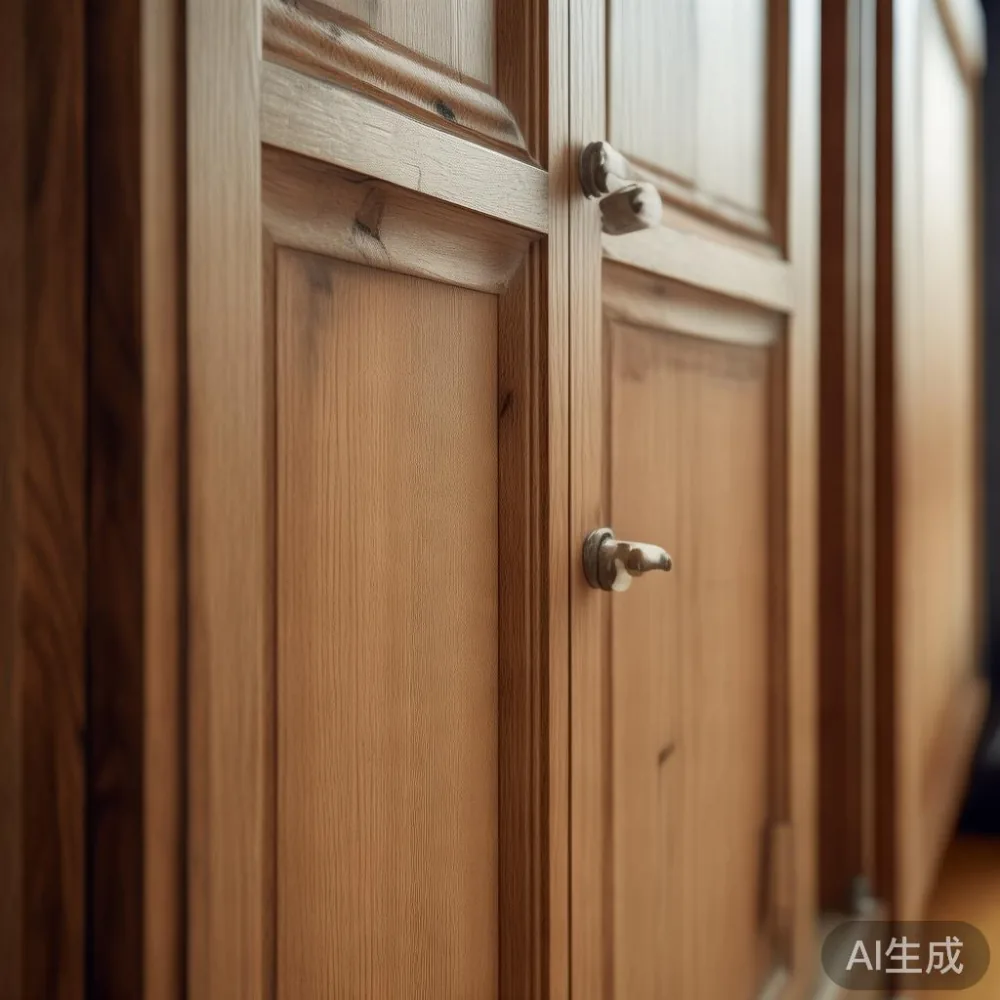
At MIDHILL, we treat humidity control as a material-care issue rather than a decorative afterthought. A 10-year structural warranty protects the underlying construction, while lifetime refinishing addresses cosmetic wear and surface restoration over the product’s working life. Neither promise replaces sensible placement, so the following guidance explains how moisture moves through timber, which Singapore homes are most exposed and what buyers should check before delivery.
Why Singapore humidity changes solid wood
Wood is hygroscopic: it continually exchanges moisture with the surrounding air. In practical terms, solid wood contains water in two forms. Free water sits in the cell cavities, while bound water is held in the cell walls. When relative humidity rises, the cell walls take up moisture and the board expands across its grain. When humidity falls, the board gives up moisture and contracts. The dimensional movement is small in percentage terms but visible over a 180 cm wardrobe panel or a 200 cm dining table top.
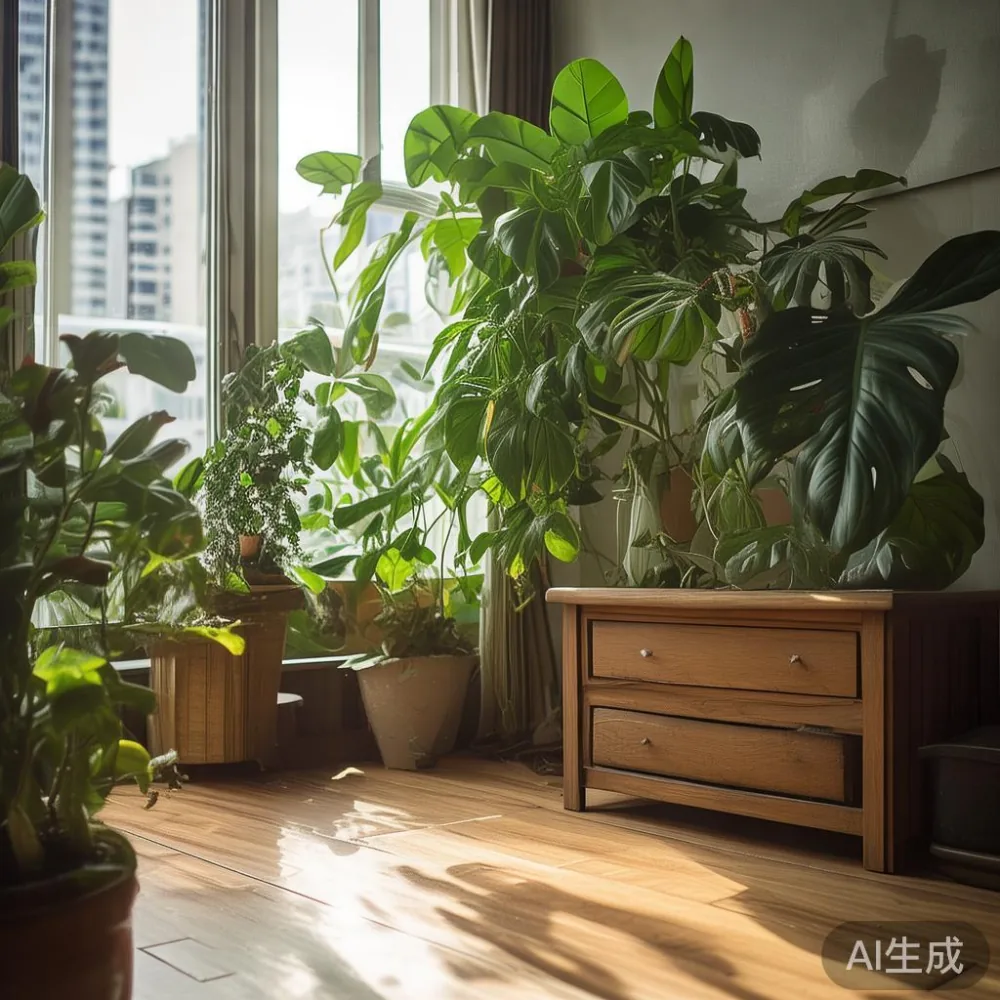
For example, a 180 cm-long oak board expanding by 0.4% would increase by roughly 7 mm along its length. That movement must be distributed through rails, joints and panels. If a wardrobe is pinned tightly between two walls, has fixed fillers that were fitted too tightly, or uses drawer runners with insufficient clearance, the timber has nowhere to move. The result may be sticking drawers, bowed doors or a gap along one edge.
Singapore’s outdoor relative humidity commonly ranges from about 65% to 90%, with heavier rain, monsoon periods and windless afternoons pushing it higher. Indoor readings can be much lower. An HDB flat running air conditioning at 22–24°C may fall below 50% relative humidity overnight, especially when the bedroom door remains closed. A wardrobe beside a window can therefore swell after a humid afternoon and contract by the next morning.
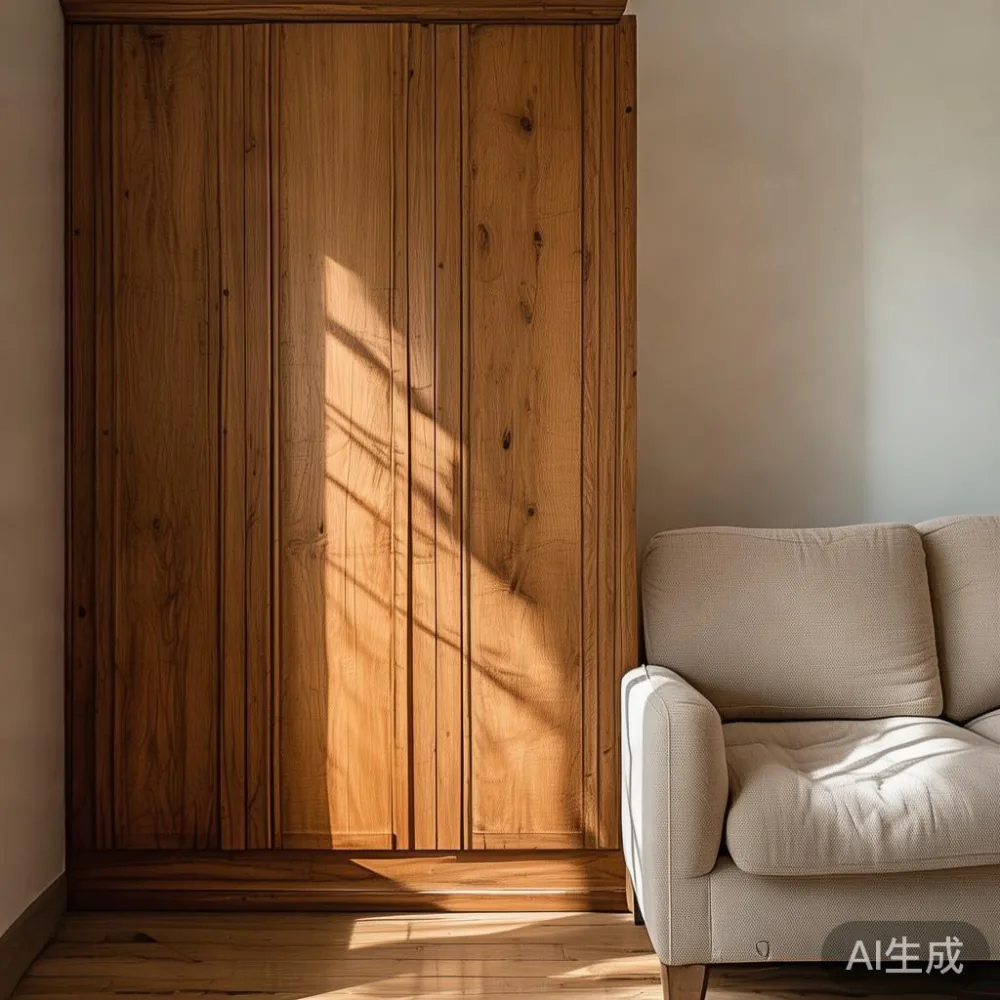
Condensation is another concern. A cabinet near an uninsulated glass wall may develop a cool surface when room air contains more moisture than the timber can hold. The same cabinet placed against an interior partition usually experiences more stable conditions. In a 3-room HDB living room, the practical zone for a freestanding wardrobe is often a wall away from the window, not directly beneath the air-conditioner vent or against a bathroom wall.
Which furniture needs the closest attention?
A wardrobe is usually the largest continuous timber surface in a Singapore bedroom, so its movement is easier to notice than that of a small nightstand. A 210 cm-wide solid wood wardrobe in an HDB master bedroom needs air on its sides and rear, even if the visible front is tight against fitted walls. Allow approximately 30–50 mm of clearance behind movable units, subject to the manufacturer’s installation instructions.
Look at how doors and drawers are built. Dovetail joints, mortise-and-tenon connections and properly fitted solid wood drawers can accommodate normal seasonal movement. Particleboard cores covered with wood veneer may show smaller surface movement, but they can chip along repeated edges and are less suitable where clients want long-term repairability. In a wardrobe sg comparison, ask for board thickness, drawer construction, back-panel fixing and the type of moving hardware rather than judging only by the front elevation.
A solid wood sofa and bed frame should also be inspected for movement around legs and rails. A bed frame normally carries less visible timber than a wardrobe, yet its headboard and side rails may expand differently. A dining table with a 200 × 100 cm top needs a stable base and even load distribution. Marble table tops respond differently because marble has very low moisture absorption, although the timber frame around one can still expand or contract.
The finish matters too. A factory-applied matte or low-sheen coating can slow moisture exchange, but it does not make timber moisture-proof. French light luxury furniture often emphasizes pale oak, ash or walnut tones, making small checks and cloudy patches more noticeable under warm white lighting. American light luxury designs with broader profiles need careful control because thick panels can move more visibly along their edges.
How humid is an HDB flat or condo?
A cheap hygrometer is useful, and a digital model typically costs about SGD 18–45. Place one in the bedroom for 7 days and record readings at 8 a.m. and 8 p.m. before making a purchase. Aim for a relatively stable indoor range, ideally around 40–65% relative humidity. This is a practical monitoring target, not a guarantee against every seasonal change.
Singapore’s built environment adds heat that a hygrometer alone does not show. A bedroom at 29°C and 75% relative humidity contains more absolute moisture than the same room at 24°C and 65%. Air conditioning removes water as it cools the air, while dehumidifiers extract moisture directly. Running a dehumidifier for 4–6 hours after rainy afternoons can bring a damp bedroom into a safer range, provided the unit has a drain hose and adequate airflow.
Condo owners with west-facing windows in Tampines, Bedok or Punggol may face greater afternoon heat and a stronger temperature swing. Use thermal curtains with a light-coloured lining, keep furniture at least 30 cm from glazing where space allows, and avoid positioning a wardrobe over an external wall that remains warm after sunset. For north-facing HDB rooms with steadier light, ventilation remains important because persistent dampness can affect both timber and the wall behind it.
Do not place a solid wood dining table directly under an air-conditioning vent. The airflow may lower the top’s surface moisture faster than its underside, encouraging uneven movement and a visible crown. A distance of roughly 60–100 cm is sensible, subject to the table’s height and the air stream. A nightstand should have contact only on its base, not on all four corners if the floor is uneven.
What should I check before a Singapore delivery?
Delivery day is often the first time a large wardrobe reaches its final position, so measurements and access should be checked before the truck arrives. A standard HDB lift may have a door opening of about 80–90 cm and a car depth of roughly 130–140 cm, although older blocks vary. A condo freight elevator may offer a larger car but require booking through the building manager. Confirm lift dimensions, turning radius, parking distance and the number of flights rather than relying on a general “lift available” note.
For corridor delivery, remove shoes, planters and shoe racks before the movers arrive. Protect the route with rigid cardboard or floor covering. A wardrobe carton may measure 220 × 65 × 25 cm and weigh 75–130 kg depending on construction; it cannot always be tilted upright in a narrow corridor. Verify the packaged dimensions and weight of each component.
MIDHILL provides delivery support, including free shipping on qualifying orders above US$350. International prices may be shown in another currency, while Singapore transactions include GST where applicable. Allow roughly 3–7 business days for stock-ready Singapore deliveries and 14–35 days for made-to-order or consolidated shipments, with the order confirmation controlling the exact schedule.
Inspect the package before accepting it. Photograph the carton, check for crushed corners and look at boards, rails and joints under light. Do not sign that a unit is completely undamaged if moisture marks are already visible. A finish repair is different from structural damage, but both should be recorded before the unit is installed.
Can humidity damage a white or French provincial finish?
Yes, but the visible effect depends on the finish and the amount of moisture exposure. Pale lacquer can develop a cloudy haze when moisture is trapped beneath the surface, while open-grain oil finishes often deepen in colour as the wood swells. French provincial dressing table designs with carved edges and layered profiles are particularly revealing because moisture can collect in recesses. Ask for the exact finish system and its expected maintenance interval.
When comparing 2026 French provincial furniture, check whether exterior panels are solid wood, whether back panels are veneered or solid, and whether the maker will refinish rather than replace the surface later. MIDHILL’s lifetime refinishing service gives owners a route for restoring colour and sheen after years of use. Keep the original finish notes and product invoice, because the refinisher will need to know whether the surface was oiled, lacquered or coated with a thin veneer.
Two market phrases require a closer product inspection: under 2000 Boho furniture may describe a complete room set rather than the quality of one cabinet, while for sale Industrial furniture often refers to workshop-style pieces with mixed timber and metal. For a primary wardrobe or dining purchase, confirm that the wording corresponds to actual solid wood construction. The same discipline applies to for sale European light luxury furniture and the broader for sale European light luxury furniture category, which can combine genuine solid wood, veneer and engineered components.
How should a solid wood wardrobe be installed?
Let new timber acclimatise in the room before tightening or fixing it. A freestanding wardrobe should remain free to move slightly and should not be glued rigidly to a wall or floor. If wall fixing is required for safety, use the designated brackets and fixings while allowing the carcass to expand in the intended direction. Follow the product instructions rather than creating custom notches that restrict movement.
Leave space around movable panels. A hinged wardrobe door normally needs about 90–110 degrees of opening clearance, while a sliding door saves floor space but requires a straight, stable track and enough room in front for clothing to hang. In an HDB master bedroom, a 150 cm-wide wardrobe can work if the ceiling height is at least 245 cm and the hinged door’s swing does not conflict with the bed. Measure the skirting, sockets and air-conditioner pipes before ordering; do not base the width only on the room’s dimensions.
For built-in-looking wardrobe sg installations, check the top and side fillers carefully. They should allow the carcass to move while still closing the visible gap. If a gap opens after 3 months of alternating air-conditioning and humid weather, inspect whether the fillers are compressed, the runners are binding or the carcass has been fixed too tightly. Small seasonal gaps can often be corrected, but forced sanding or planing can damage the finish and joint.
Place anti-tip restraints where the unit is tall enough to require them, particularly in homes with young children. A 220 cm wardrobe can be top-heavy, and a 40 kg child pulling on a drawer could create a serious tip-over risk. Fit the restraint even if humidity is low, and check it every 6 months.
What can I do when humidity has already affected the wood?
First, identify whether the issue is temporary movement or damaged finish. A door that closes in humid weather and binds in dry weather may simply need adjustment. A sticky drawer should be checked for swollen rails, debris and binding hardware rather than treated immediately with solvent. Lift the drawer’s base slightly while pulling, then inspect the runner clearance. Excessive force can damage the runner or split the drawer side.
Cloudiness, dull patches and minor checking are finish issues. Do not apply generic polish over an unknown coating, because silicone, wax, oil and lacquer respond differently. Wipe lightly with a soft cloth, keep the room in the 40–65% range and consult the maker’s care guidance. If the surface needs sanding or recoating, remove only the affected layer and feather the repair into the surrounding finish.
For deep splits or loose joints, stop using the affected component until it is assessed. A wardrobe panel that has separated from its rail needs structural attention, not a coat of oil. This is where a 10-year structural warranty becomes relevant: it provides a clear process for reviewing eligible construction problems, although impact, misuse and uncontrolled moisture are separate from manufacturing defects.
At MIDHILL, lifetime refinishing supports a different response for cosmetic wear. Rather than replacing a well-built carcass solely because the surface has aged, the timber can be restored to its intended appearance. Clients should bring clear photographs and measurements when requesting advice, and they should not attempt to remove a hinge or dismantle a large unit without confirming the correct procedure.
How do I maintain furniture across Singapore’s seasons?
Clean with a slightly damp cloth and immediately dry the surface. Use about 2 drops of mild soap on a 500 ml damp cloth, but avoid soaking joints, drawer bottoms and carved edges. Wipe spills within 10 minutes, especially around dining areas. Coasters and placemats should sit beneath hot dishes and damp objects; a 200 × 100 cm dining table can stain locally even when its finish is sound.
Inspect the bedroom every 3 months for condensation, insect debris and loose fittings. On a solid wood bed frame, check the slats, centre support and leg joints. On a marble table, examine fixings and the timber subframe, since the stone may remain unchanged while the supporting frame moves. Vacuum a wardrobe’s tracks and keep floor vents unobstructed by at least 15 cm where possible.
During the November–March northeast monsoon period, check rooms after heavy rain and run air conditioning or a dehumidifier if readings remain above 70%. From April to October, monitor warm afternoons and overnight air-conditioning cycles. A small log of readings over 12 months is more useful than one measurement because it shows the room’s real rhythm.
For anyone furnishing an HDB flat or condo, plan furniture placement before purchase. Confirm whether the room receives direct sun, how the air conditioner is operated and where the nearest drain or dehumidifier is. A Modern light luxury wardrobe should be evaluated as a fitted piece of joinery, not simply as a decorative front: movement clearance, hardware, board construction and service access all influence how it performs in Singapore’s climate.
The practical goal is stability, not keeping the air artificially dry every day. Protect timber from standing water, permit seasonal movement and maintain a sensible indoor range. Done correctly, a solid wood sofa, bed frame, dining table, wardrobe, nightstand or marble table can remain structurally sound and visually coherent for many years, even in Singapore’s demanding conditions.