Solid Wood Furniture Pricing in Singapore: Timber, Joinery, Scale and Finish
Solid wood furniture can cost SGD 600 for a modest nightstand or more than SGD 8,000 for a large wardrobe. The difference is not simply the product name on the invoice. It comes from the timber species, the dimensions, the construction method, the surface treatment, the hardware, the amount of hand-finishing, and the logistics required to deliver the piece safely to a Singapore home.

I visited a Foshan factory last month and watched one wardrobe move through several inspection points. A 210 cm-wide carcass looked simple in the showroom, yet its timber had been moisture-checked, its panels were joined and sanded in stages, and its doors were fitted with hinges that required careful alignment. That unseen work explains much more about the price than a decorative brochure photograph.
This guide explains those costs in practical terms, with particular attention to Singapore HDB flats and condos in Tampines, Bedok, and Punggol. It also considers lift dimensions, corridor turns, GST, delivery timing, and the difference between owning a solid wood piece and buying something that merely looks like wood.
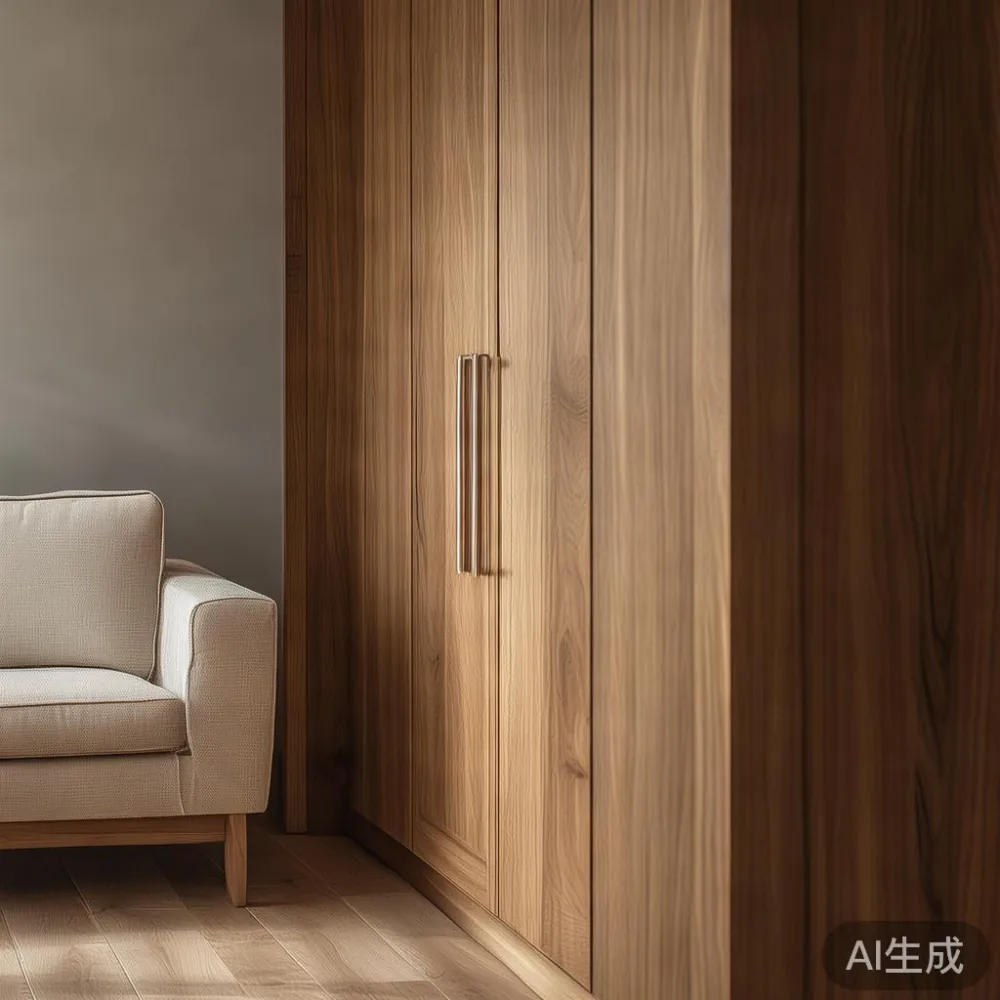
Is a solid wood wardrobe worth the extra money?
For a frequently used bedroom, a well-built wardrobe often justifies a higher price because the carcass, doors, drawers, and load-bearing rails all need to remain stable over many years of opening, closing, and hanging clothes. The question is not whether every solid wood wardrobe deserves a premium, but whether its construction is sound enough to deliver useful life in a humid, tightly measured home.
A typical Singapore bedroom may require a wardrobe between 180 cm and 240 cm wide, with a depth of 55 cm to 65 cm and a height of 210 cm to 240 cm. HDB corridors can restrict the route, while a condo lift may have an internal depth of only 210 cm or 220 cm. A 220 cm-wide wardrobe cannot necessarily be turned upright inside a lift. Its carton length, diagonal clearance, and door openings need to be checked before delivery is scheduled.
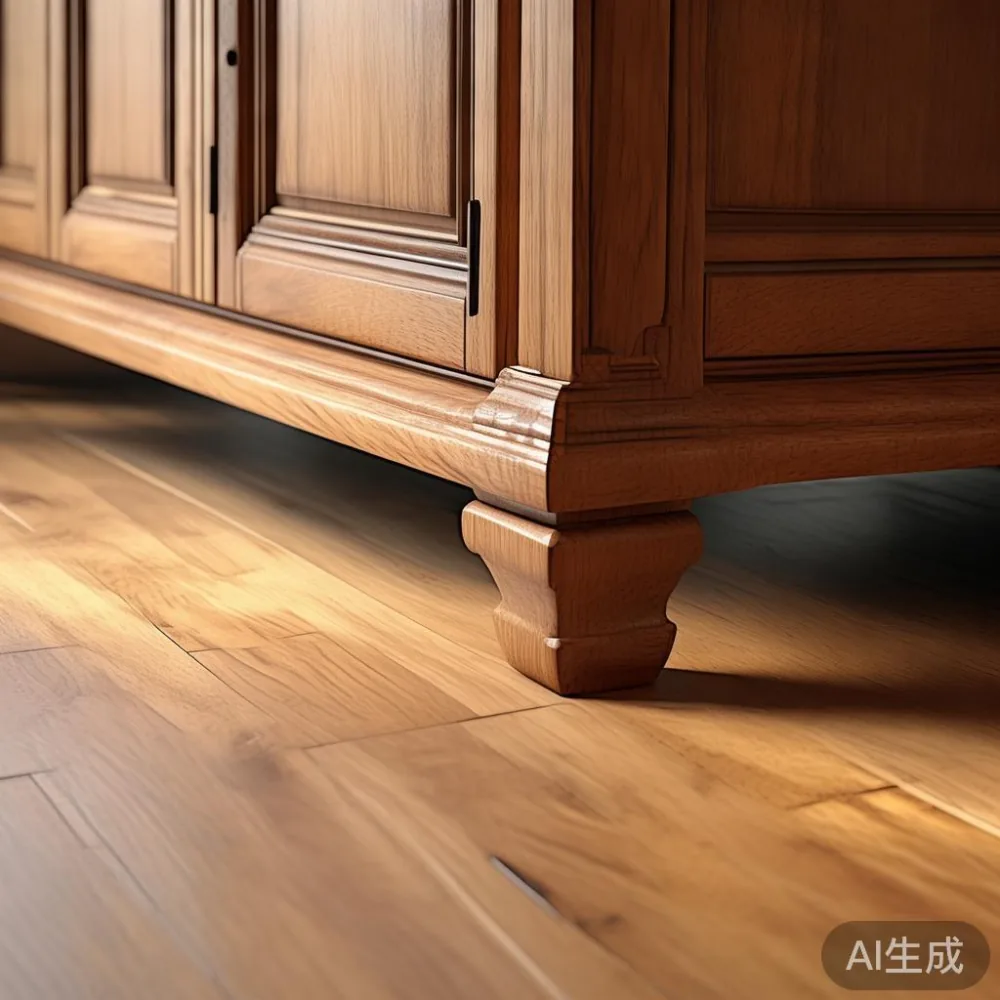
Look for solid timber in the visible frame, drawer sides, and door rails—not only a veneer-faced panel. Some products combine engineered wood with solid timber, which can be entirely reasonable. The price should then reflect the actual material mix rather than an implied all-solid construction.
The phrase is American wardrobe worth it is often used by buyers comparing imported American-style storage with local options. An American wardrobe may use thick face frames, crown mouldings, or broad drawer fronts, but design style does not guarantee better moisture control or hardware quality. For a Singapore bedroom, useful internal width, a smooth-running drawer, and installation access matter more than a decorative profile.
At MIDHILL, a 10-year structural warranty gives buyers a measurable baseline for the frame and construction. A lifetime refinishing policy can add value for a wardrobe whose timber can be sanded and refinished later. These commitments are more meaningful than vague claims about prestige because they define what can happen after year 1, year 5, or year 10.
What does timber species change in the final price?
Wood species affects four costs: raw material, processing time, yield, and demand. Oak, ash, teak, walnut, and rubberwood each behave differently. Dense hardwoods can require slower cutting and finishing, while a premium veneer may cost more than modest solid timber because of sourcing, slicing, and matching.
Consider a dining table measuring 200 cm by 100 cm. If its top is built from 20 mm solid boards rather than a thin veneer over particleboard, the timber cost is higher. Large boards also have more knots, sapwood variation, and movement risk, so furniture makers may select them carefully or use a laminated construction. A 6 cm-thick solid top may weigh roughly 90 kg to 130 kg before the base is added, depending on the species and dimensions.
Teak is valued for stability and naturally oily colour; white oak shows pronounced grain; walnut usually commands a higher price because of its slower growth and scarcity. However, colour alone is not proof of quality. A darker stain can make a lower-cost species resemble walnut, so buyers should request an unstained close-up, timber sample, or clear specification.
Moisture control is especially important in Singapore. A responsible maker should condition timber for the local environment rather than assume a dry factory climate is enough. Expansion gaps, joint movement, and surface checking can develop if moisture content changes too quickly. Good pricing includes time for drying and acclimatisation; an unrealistically low quote may omit that stage.
Buyers searching for wardrobe sg should compare like-for-like specifications: 18 mm or 20 mm panels, solid drawer boxes or plywood boxes, full-extension runners, soft-close hinges, and clear moisture-related warranty terms. A sticker reading “solid wood” is not enough.
How much do dimensions and weight add to a furniture price?
Material price is usually calculated per unit volume or area. A dining table top that is 240 cm by 100 cm contains more timber than one at 180 cm by 90 cm, and a wardrobe with six doors needs more panels, hinges, and alignment work than a two-door version. Oversized designs can also require larger machines and more handling.
Weight creates a second cost. Transporters must allocate suitable vehicles, carry insurance, and use more labour. A 140 kg solid wood dining table may need 4 people and a tail-lift service. A 95 kg wardrobe may need a 3-person team. These are not small differences: in Singapore, a scheduled two-person delivery to an HDB block may cost around SGD 80 to SGD 180 before GST, while a difficult condo delivery can cost more.
Custom dimensions can add 10% to 35% to the base price because standard tooling and assembly steps must change. Semi-custom work is often more economical. A client who needs a wardrobe 196 cm wide instead of 200 cm may pay a moderate adjustment, whereas curved joinery, unusual angles, or fully bespoke internal compartments may cost considerably more.
Compact design does not mean poor design. A bed frame measuring 160 cm by 200 cm may suit a Tampines HDB bedroom better than a queen frame at 160 cm by 200 cm with wide side rails. A solid wood sofa measuring 210 cm to 230 cm can suit a condo living room, while a 260 cm model may compress circulation around a dining zone. Every extra 10 cm can affect both material use and usability.
For Japanese-inspired bedrooms, a low platform bed with a 25 cm to 35 cm height can save visual space. Searches for how to style Japanese bed in apartment often focus on bedding and wall treatment, but delivery access deserves equal attention: lift dimensions and corridor clearance should be checked before a low bed with a thick timber frame is manufactured.
Why do joinery and construction matter so much?
The cost of a piece often lies in how its parts meet. A solid wood dining table may use mortise-and-tenon joints, dowels, or confirmat screws beneath the top. A wardrobe may rely on dowelled or joined carcass panels, while a bed frame may use mortised corners and a bridle joint. These methods resist movement better than a frame made only from screws driven into narrow end pieces.
Drawers reveal construction quality quickly. A solid wood nightstand may have 12 mm to 15 mm sides, dovetailed corners, and a 10 mm bottom held in a groove. A veneer or engineered board may use stronger engineered components and still perform well, but the specification must be honest. Hardware can also shift the price: soft-close hinges, full-extension ball-bearing runners, and reinforced swing-arm mechanisms add cost but improve daily use.
Curves require different labour. A solid wood sofa with a gently curved back, shaped arms, and upholstered padding needs templates, specialised cutting, and more hand fitting than a straight-edged frame. Padded components add fabric, foam density, stitching, and comfort engineering. Upholstery is often quoted separately from the timber frame, so buyers should confirm whether the listed price includes both.
Finishing is another major factor. An oiled surface can be maintained more easily than a thick painted lacquer, but it may need periodic care. Matte lacquer, stain, and clear coat require preparation, sanding, colour matching, and multiple coats. A marble table introduces a separate category of risk: stone slabs vary in thickness, weight, and vein pattern, while edges may need reinforcement or sealing.
Light-luxury styling often uses restrained profiles, pale woods, warm ivory, and slim metal details. French light luxury tends toward mouldings and curved edges; American light luxury often draws on deep, substantial forms; post-modern light luxury uses cleaner lines and selective contrast. These approaches influence labour even when the material quantities look similar.
How much should hardware, upholstery, and finishes change the quote?
Hardware is normally a modest proportion of the cost, but it has an outsized effect on perceived quality. A wardrobe with 8 hinges, 6 drawers, hanging rails, and a pull-out tray may require 20 to 40 working components. Better hinges and runners can add SGD 120 to SGD 500 to a larger wardrobe. Premium branded mechanisms can cost more still, although the brand is less important than fit, durability, and replacement availability.
For a solid wood sofa, the timber frame may account for roughly 25% to 40% of the price, with the remainder going to upholstery, foam, labour, logistics, and margin. A 220 cm three-seat model might be quoted from around SGD 2,800 to SGD 5,500 depending on timber, cushion construction, and finish. A marble table may be quoted from roughly SGD 1,800 to SGD 4,500, with a thick natural slab and complex base at the upper end.
A European light luxury nightstand can command more than a basic version because shaped drawers, detailed pulls, bevelled edges, and layered finishing require extra setup. A European light luxury dressing table similarly benefits from aligned drawers, fine tolerances, and coordinated mirrors or stone surfaces. These terms describe a design direction, not a fixed material standard.
When searching for best American sofa for 2026, compare the frame, cushion density, seat depth, and warranty instead of relying on a model name. An American-style sofa often has a deep seat around 58 cm to 65 cm and a solid visual presence, but apartment circulation should be checked. A 240 cm sofa can dominate a 300 cm-wide living room, leaving only 30 cm per side for circulation.
How does factory location affect what a buyer pays?
Manufacturing location shapes labour rates, tooling, material access, and export procedures, but it does not by itself guarantee value. A Foshan factory benefits from dense supplier networks, experienced joinery workers, and established export logistics. A Singapore workshop may offer easier communication and lower shipping exposure for a small order, yet charge more for labour on a complex production run.
For a large wardrobe shipped from China, packing quality can add meaningful cost. The unit should be protected with corner guards, internal braces, moisture-resistant wrapping, and a rigid outer carton. Container loading and unloading need planning so that panels and corners are not damaged. For a dining table, the top and base may travel separately to reduce carton size, but every joint must be protected.
Customs duties, GST, and local delivery should be shown separately. Singapore GST is 9%. Import duty depends on the product classification and origin, so the final payable amount cannot be inferred from a factory price alone. Buyers should request an all-in landed quotation or a transparent breakdown.
Delivery to a ground-floor HDB home may take 1 to 3 working days after production. A condo with a loading bay and lift reservation often needs 2 to 5 working days because the carrier may need a separate service slot. Standard furniture deliveries in the region commonly take 7 to 30 working days, while custom pieces can take 30 to 60 days. Narrow corridors, stairs, or lift restrictions should be disclosed before fabrication, not after arrival.
At MIDHILL, free shipping over US$350 simplifies the threshold for international orders, although the stated currency does not replace a clear Singapore delivery quote. A 14-day return period provides another practical form of price protection, provided unused items and packaging remain in acceptable condition.
What do light-luxury labels mean for solid wood furniture?
Light luxury is not one measurable material category. It usually describes proportion, finish, restraint, and detail. A French light luxury wardrobe might use slim fluted panels, pale oak, and champagne-coloured pulls. An American light luxury bed frame may use broad rails, deep upholstery, and darker walnut tones. A post-modern light luxury dining table might pair a rectangular solid timber top with sculptural pedestal supports.
These styles can add labour without making a piece inherently more durable. Curved mouldings, shadow gaps, bevelled mirror frames, and carefully aligned drawers take time. Decorative carving can add 5% to 20% to a product’s price, depending on complexity. The relevant question is whether the detail improves the object and can be maintained, rather than whether a label sounds fashionable.
Japandi styling brings another set of considerations. Searches for how to style Japandi sofa in apartment often lead to low profiles, warm neutral fabrics, and simple timber tones. In a compact Punggol or Bedok flat, a 190 cm to 210 cm sofa can preserve a 90 cm circulation path in a 300 cm-wide living room. Large floor cushions and low tables can soften the look, but they should not block a door swing or an emergency exit route.
Similarly, a Japanese-style bed can visually widen a small bedroom. A 140 cm-wide bed with a 200 cm length leaves 25 cm to 35 cm on each side of a typical 190 cm-wide room, before accounting for wardrobes and door clearance. This is where accurate room planning supports better spending: buying the right dimensions avoids modifications, removal, and replacement costs later.
How can Singapore buyers compare quotations fairly?
A useful quotation should state the species, panel thickness, dimensions, construction method, hardware, finish, delivery scope, warranty, and expected timeline. Ask for photographs of the actual frame before upholstery or finishing, and request a timber sample where the visual grain matters. If a seller cannot distinguish solid wood from veneer, the price comparison is not reliable.
For a wardrobe sg purchase, measure the room in 3 places rather than relying only on the longest wall. Include skirting boards, sockets, air-conditioning units, and the wardrobe door’s opening area. A 60 cm-deep wardrobe placed opposite a 45 cm-deep bed can leave only 25 cm in a narrow bedroom, making the room feel compressed.
For a bed frame, check the lift door width and the corridor’s narrowest turn. Many condo lifts have a door around 90 cm wide and an internal depth near 210 cm, while common HDB lift cars vary between about 110 cm and 160 cm in depth. A 200 cm bed frame may enter diagonally, but a solid timber side rail can make the carton wider. Measure the packaged dimensions, not just the assembled frame.
For a dining table, confirm that the top can pass through the route and that the base is designed for assembly. A table weighing 115 kg may need a 4-person delivery team. If the table must be carried up 3 flights of stairs, the quote should include that labour rather than leaving it as an afterthought.
Compare the total cost over expected service life rather than the lowest sticker price. A SGD 2,200 dining table with replaceable hardware and a refinishing option may offer better value than a SGD 1,500 table whose joints cannot be repaired. A wardrobe with 18 mm sides, adjustable rails, and serviceable hinges may prove more economical over 12 years than one with thin panels and a fixed internal layout.
Good pricing is visible in the specification and the operating process. Timber should be traceable, moisture should be managed, corners should be protected, and hardware should be tested. The purchase price includes all of those steps. When buyers understand that solid wood furniture is engineered, finished, packed, and delivered—not simply cut from a board—the quotation becomes much easier to judge.