Wardrobe SG Cost Comparison: Veneer or Solid Wood Over 5 Years?
A wardrobe for a Singapore HDB flat or condo is not simply a place to hang clothes. It occupies floor area, crosses lift doors and corridors, absorbs daily touches, and has to look composed beside a bed frame, sofa, dining table, or nightstand. The visible finish may look similar, yet a veneer wardrobe and a solid wood wardrobe can follow very different spending paths across 5 years. This comparison uses a 240 cm-wide family wardrobe and a 2025 Singapore planning model, including purchase, GST, delivery, installation, maintenance, repair, and refinishing costs in SGD.
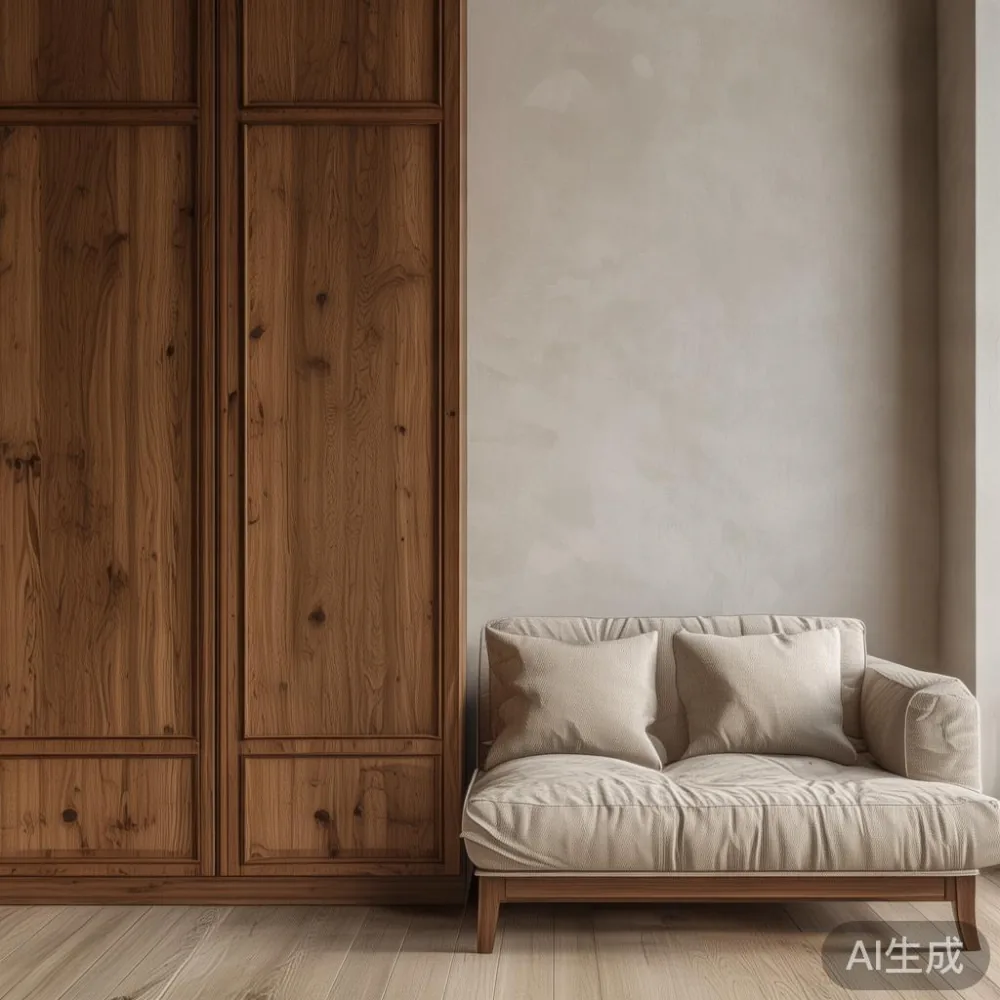
What is the difference between a veneer wardrobe and a solid wood wardrobe?
A veneer wardrobe uses a thin layer of real timber, typically 0.6 mm to 1.2 mm, bonded to an engineered core such as plywood or MDF. In the sample used here, the 240 × 220 × 60 cm carcass has 18 mm birch plywood, 6 mm oak veneer, 15 mm solid timber drawers, and 3 mirrored doors. The oak surface provides convincing grain and colour, but the 58 kg assembled weight does not represent a cabinet made entirely from solid oak.
The solid wood alternative has an 18 mm American white oak carcass, solid oak rails, 12 mm solid oak shelves, 15 mm oak drawers, and 3 timber doors with 2 frosted-glass inserts. It weighs 96 kg. Oak is dense, stable, and repairable, although movement and grain variation must be accepted. A third construction sits between the two: a solid wood frame with veneered panels. That hybrid can reduce weight, but its repair and refinishing prospects depend more on the panel core than the frame alone.
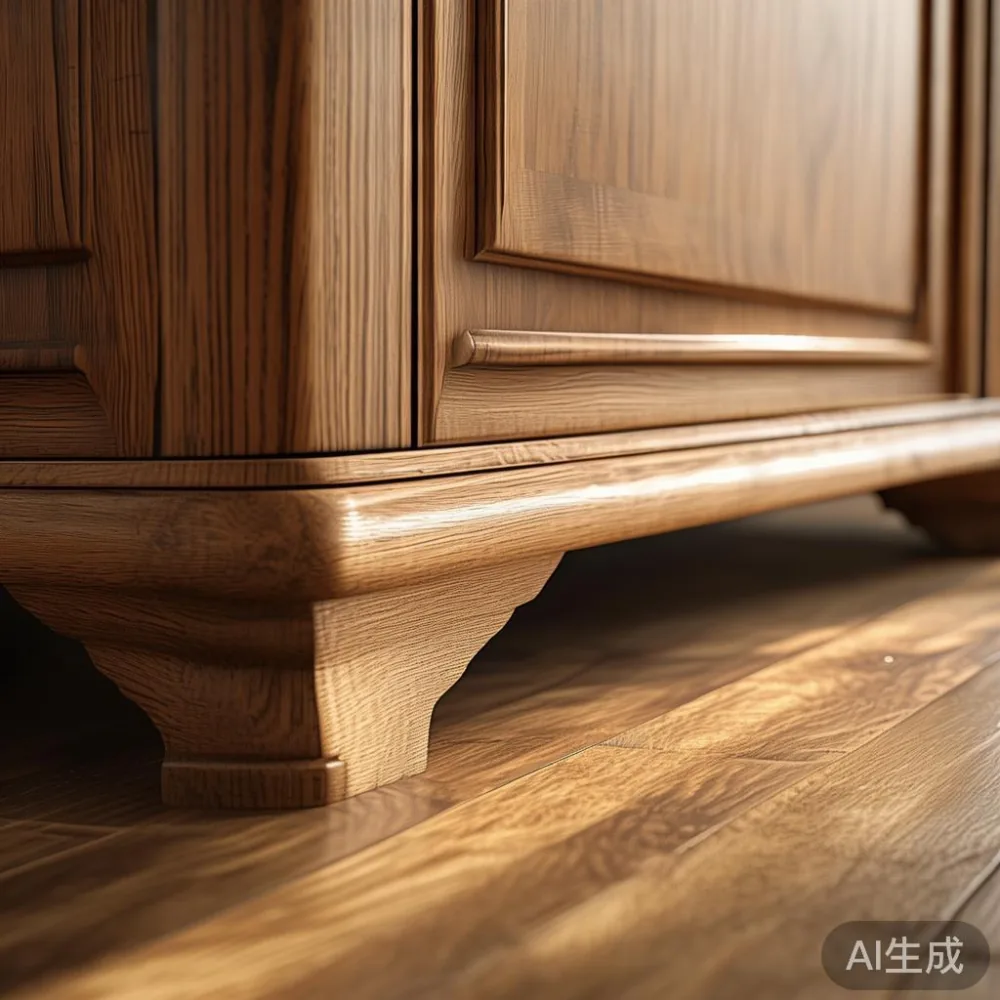
For fair comparison, both wardrobes include 6 hanging sections, 8 adjustable shelves, 3 drawers, 2 LED strips, soft-close runners, and anti-tip brackets. Hardware is brass on the solid model and zinc alloy on the veneer model. The result is a wardrobe sg shopping comparison based on use, not on whether the word “wood” appears on the specification sheet.
How much does each wardrobe cost before use?
At the same nominal size and storage capacity, the veneer wardrobe is priced at SGD 2,400 and the solid wood wardrobe at SGD 4,800. Both figures include Singapore GST at 9%. A more engineered veneer product can exceed SGD 3,200, while a basic particleboard model may sit near SGD 1,500; these figures explain why material description alone is not enough.
| 5-year cost item | Oak veneer wardrobe | Solid white oak wardrobe |
|---|---|---|
| Wardrobe | SGD 2,400 | SGD 4,800 |
| Local delivery | SGD 120 | SGD 200 |
| Installation | SGD 180 | SGD 250 |
| 5 years of maintenance | SGD 220 | SGD 180 |
| Repair allowance | SGD 300 | SGD 120 |
| Refinishing reserve | SGD 0 | SGD 400 |
| Estimated total | SGD 3,220 | SGD 5,950 |
The solid wardrobe begins at SGD 2,400 more. By year 5, the modelled difference has narrowed to SGD 2,730, or approximately SGD 546 per year. This is not a promise that every owner will incur those costs. It is a planning model that allows for one realistic repair in each case and shows where money is likely to move after delivery.
Is a veneer wardrobe cheaper over 5 years?
Yes, in this example the veneer wardrobe remains less expensive over 5 years, but the answer depends on the initial gap and the type of damage. A wardrobe bought for SGD 2,000 with a 20% likelihood of a SGD 500 core repair may have a lower expected 5-year cost than a SGD 4,200 solid model with minimal repair needs. A wardrobe sg buyer should compare the exact panels, drawer boxes, hinges, and finish rather than assigning a universal price penalty to either category.
For light use, the veneer option becomes more financially persuasive. Suppose the family stores fewer than 80 garments, changes layout 1 time, and owns pets that avoid the doors. The SGD 3,220 wardrobe may remain serviceable after 5 years. For heavy use, such as 120 garments, daily luggage handling, and frequent moving between a Tampines rental and a Punggol family unit, the solid option offers more favourable repair economics because a drawer front or door can be sanded and refinished instead of replaced.
Resale value is deliberately left at SGD 0 in the table. A used wardrobe’s value is too site-specific to forecast responsibly. The model instead treats it as a depreciating fixture whose next owner receives no direct financial credit. Including an assumed resale value would improve the veneer figure by perhaps SGD 300 to SGD 500, but that amount should only be recorded after a sale, not treated as guaranteed money.
What maintenance costs appear during years 1 to 5?
Year 1 is usually about installation rather than repair. The sample budget allocates SGD 180 for the veneer wardrobe and SGD 250 for the solid version. These amounts cover levelling 4 adjustable feet, securing 2 anti-tip brackets, adjusting 6 hanging rods, and fitting 3 door alignments. A professional installation can range from SGD 150 to SGD 300 for a flat-pack wardrobe and SGD 250 to SGD 450 for a heavier solid model.
By year 2, veneer owners should budget about SGD 40 per year for edge touch-ups, drawer lubrication, and minor hinge adjustment. Solid wood owners may spend SGD 30 per year on the same tasks. A deep scratch through 0.6 mm veneer cannot usually be sanded back without exposing the core, so repair often means replacing a panel or applying a colour-matched filler. A solid oak scratch can be feathered, stained, and sealed again, provided the affected area is treated while it is still small.
Years 3 and 4 bring the largest uncertainty. Swelling in Singapore humidity can affect door movement, although a stable plywood core and moisture-resistant finish reduce the risk. Budget SGD 300 for one veneer panel replacement or SGD 120 for a solid timber repair. Door catches can cost SGD 18 each, soft-close hinges SGD 25 to SGD 45 per pair, and LED strips SGD 22 to SGD 40. A humid HDB bedroom at 28% to 32% relative humidity still benefits from ventilation and a gap of at least 5 cm from the wall where space permits.
In year 5, the solid model receives a light refinishing allowance of SGD 400 for 4 doors and 3 drawer fronts. Sanding, 2 coats of finish, and labour commonly range from SGD 300 to SGD 600. The veneer model receives no equivalent whole-cabinet refinishing allowance. This difference matters when the finish is the same family of light luxury: both can age gracefully, but only one can repeatedly restore its timber surface.
Can the wardrobe fit through a Singapore lift and corridor?
Access can change the cost before the wardrobe reaches the bedroom. A standard HDB lift landing often measures roughly 90 × 140 cm, while an internal lift car may be 110 × 140 cm and 220 cm deep. Condo service corridors can be only 100 to 130 cm wide. A finished 240 × 220 × 60 cm cabinet cannot turn through some of these spaces, even if its individual doors open.
Flat-pack panels solve the physical problem. Delivered in cartons no longer than 240 cm, they can pass through a 90 cm lift opening and a 100 cm corridor, although the carton still needs to be angled through corners. Larger panels above 210 cm may require a service lift booked at least 3 days in advance, with a contractor charge around SGD 80 to SGD 180. A 96 kg solid wardrobe may also need 2 installers, whereas a 58 kg veneer cabinet can sometimes be moved by 1 installer and 1 helper.
Local delivery generally takes 7 to 14 days for a made-to-order Singapore order, while stock sizes can arrive in 3 to 7 days. The charge rises from SGD 120 to SGD 200 for the heavier solid model because of the second crew member and extra handling. For a Bedok condo with a narrow 105 cm corridor, measure the lift, turning radius, bedroom doorway, skirting board, and wardrobe location before agreeing to a delivery date. A 5 cm planning error at the hinge side can prevent 3 doors from opening fully.
How does each material suit French, American, and post-modern light luxury?
French light luxury favours pale oak, cream lacquer, curved profiles, brass hardware, and softened edges. Consistent rotary-cut veneer can create the calm, continuous grain seen across a 6-door wall, while solid oak brings more natural variation. American light luxury often contrasts pale timber with darker stain, black metal, and clean-lined furniture. Solid oak suits that honest material story; high-quality veneer can also work when the doors, drawers, and carcass share one coordinated sheet.
Post-modern light luxury may combine walnut-toned panels with travertine colours, reeded glass, and geometric profiles. Veneer offers many colour and figure options without the dimensional change of solid timber. The limitation is that matched panels require careful selection from one batch. Ask the supplier for the veneer batch reference and reserve all 6 panels together, rather than accepting pieces sourced over 4 to 6 weeks.
For anyone comparing finish samples, the question of how to choose Italian light luxury wardrobe is broader than an “Italian” label. Inspect grain continuity, corner joints, drawer movement, coating thickness, and the treatment of exposed panel edges. Italian light luxury often refers to restrained proportions and careful finish work, not a mandatory country of timber origin. A clear satin finish of 10 to 20 gloss units can disguise fingerprints; a 5 to 10 unit matte finish may need more care in a humid HDB room.
How should the wardrobe match the rest of the bedroom?
Material matching matters more than exact colour matching. If the bed frame is solid oak and the wardrobe doors are oak veneer, the visual result can still be calm, provided the finish is not pink under 4000 K LEDs. Warm 2700 K to 3000 K lighting suits honey oak, while 3500 K to 4000 K can reveal patches in pale veneer. Keep the dominant wood tone within a 3-step colour range.
A search for how to style light luxury bed in bedroom should begin with the wardrobe wall. A low solid wood bed frame lets tall storage remain the architectural feature, while a high upholstered bed needs a simpler 220 cm-high wardrobe. For Modern light luxury with storage, pair closed oak doors with 2 open niches rather than filling every surface with drawers. That preserves 70% to 80% closed storage and reduces visible clutter.
The same principle applies beyond the bed. A solid wood sofa with tapered oak legs can sit opposite a veneer wardrobe, and a nightstand in the same tone can bridge them. A marble table introduces a cool stone surface, so keep its veining from competing with strongly patterned solid timber. Where to buy coffee table from MIDHILL is a practical secondary check: the table should clear the bed by 40 cm and the wardrobe door by 70 cm in a compact Tampines flat.
For French provincial sofa styling in a bedroom, rounded upholstery and a pale timber frame should meet straight-lined cabinetry without copying every curve. A sofa with a 90 cm seat depth leaves 60 cm for circulation beside a 60 cm-deep wardrobe. For a coordinated dining area, the search for Mid-century modern for dining room layouts should use one wood tone across the dining table, wardrobe, and side pieces. Where to buy coffee table from MIDHILL is also relevant when rounded walnut veneer meets the cabinet wall: verify the 120 cm clearance required for pulling out 4 dining chairs.
Which 5-year cost scenario fits an HDB flat or condo?
The lowest modelled total belongs to the SGD 3,220 veneer wardrobe. A rental flat, temporary family unit, or secondary bedroom with light storage needs can suit that profile. The solid oak wardrobe reaches SGD 5,950 but offers a 96 kg structure, greater panel repairability, and a refinishing route that protects appearance over 5 years. For a primary bedroom in a Punggol or Tampines HDB home, the additional SGD 2,730 may be easier to justify when the cabinet carries daily use.
One benchmark is the Foshan manufacturer established in 2008, which exports to more than 15 countries and offers a 10-year structural warranty, lifetime refinishing, and 14-day returns. Its stated free-shipping threshold of US$350 is approximately SGD 470 at an illustrative rate of SGD 1.34 per US$1. Those policies should be read with their written exclusions, particularly for finish damage, moving, and commercial use. For a furniture decision in Singapore, local installation, access, and after-sales coverage should carry more weight than a distant factory’s production scale.
A practical 5-year budget should also include a 10% contingency: about SGD 320 on the veneer plan and SGD 595 on the solid plan. Use that reserve for a 70 cm LED strip, 6 shelf pins, or a wall anchor after the home layout changes. Photograph the finished installation on delivery day, record every hinge position, and keep the finish batch and care instructions for at least 5 years.
What should a buyer inspect before paying the balance?
Inspect a veneer edge under 10× magnification and look for exposed particleboard beneath the melamine. Confirm whether the back panel is 9 mm MDF, 12 mm plywood, or another material, and check that drawer sides are at least 12 mm thick. For solid wood, look at the end grain and confirm whether the wardrobe means all-solid panels or a solid frame with engineered inserts. A useful specification sheet should state panel thickness, timber species, veneer thickness, finish type, drawer construction, and each moving part’s warranty.
Open and close every drawer 10 times, using the included 6 mm hex key where required. The drawers should remain level within 2 mm, doors should close without scraping, and the wardrobe should remain stable when the anti-tip fitting is engaged. For a finish sample, rub a cloth carrying 2 drops of water across an unseen edge and leave it for 24 hours. A repaired mark can be resanded, but a water mark on untreated veneer may not disappear.
Ask for a delivery plan that states the vehicle type, crew count, access charge, installation scope, and expected window in days. Confirm that returns within 14 days cover unopened or unused stock, and check whether a custom wardrobe has a different policy. Keep the final balance payment until dimensions and access have been approved. A 240 cm wardrobe with 6 doors needs a finished opening of at least 246 cm for alignment and a recommended ceiling height of 230 cm, excluding 30 mm of installation clearance.
Which wardrobe offers the better 5-year value?
The veneer wardrobe is the lower-spend choice in this Singapore model: SGD 3,220 over 5 years compared with SGD 5,950 for solid oak. It can provide the visual language of French light luxury, American light luxury, or post-modern light luxury at a lower entry price, especially in a rental or secondary HDB room. Its main constraint is that deep damage to a veneered panel generally leads to replacement rather than full timber refinishing.
The solid wood wardrobe costs SGD 2,730 more across the same period, but that difference buys greater repairability, a heavier structure, and the ability to sand and restore the finish. For a central wardrobe in a family condo or a frequently used HDB bedroom, that long-term flexibility can outweigh the lower initial price of veneer. The decision is not about which material looks more luxurious; it is about whether the buyer values a lower bill now or a cabinet that can be renewed repeatedly through year 5 and beyond.