Caring for a Lacquered Wardrobe in a Tropical Climate
Last month, while visiting a friend's newly renovated BTO flat in Punggol, I watched her drag her finger across the front panel of a brand-new lacquered wardrobe and frown. A faint whitish bloom had formed along the lower edge, just where the panel meets the kickboard. The flat had been handed over only eight weeks earlier, and the wardrobe was already showing the kind of haze most owners blame on bad paint. It is not bad paint. It is Singapore air, doing exactly what tropical air does to a film finish that nobody taught the owner to maintain.
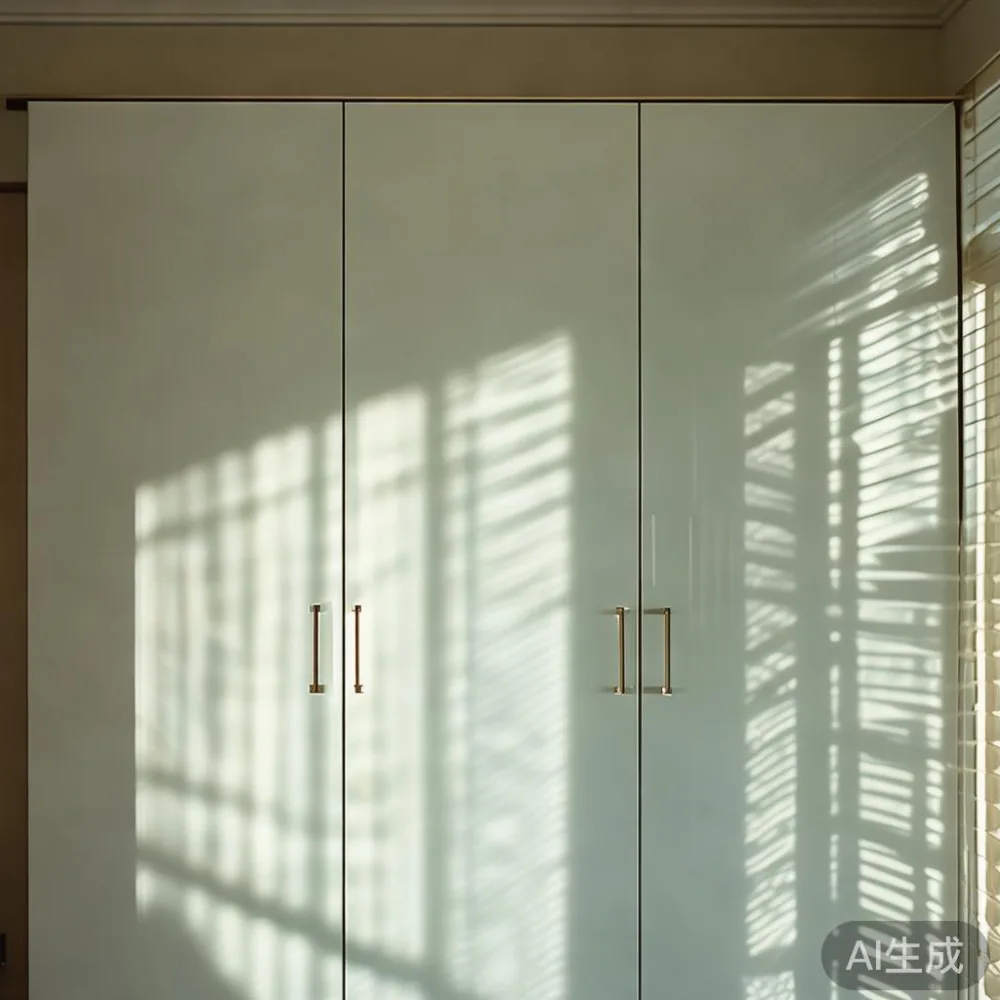
I have spent enough afternoons on factory floors in Foshan to know that a lacquered surface is closer to a living skin than to a coat of colour. Temperature swings between a 28°C afternoon in Tampines and a 23°C night in Bedok, combined with relative humidity that routinely climbs past 85%, will test any finish. A solid wood wardrobe built for a temperate climate can pass the showroom test in a 22°C showroom and still fail the bedroom test six months later in a HDB without daily ventilation. The good news is that a well-made lacquered wardrobe, looked after with a few simple routines, will hold its gloss for ten to fifteen years before any major refinishing is even on the table.
This guide is written for owners of lacquered wardrobes in Singapore, whether the piece was sourced locally or shipped in from a Foshan workshop. The numbers below are real: room dimensions in square metres, panel thickness in millimetres, maintenance intervals in days, and the SGD figures that actually appear on a delivery invoice.
Why Singapore humidity is harder on lacquer than you think
A lacquered surface is a closed film. Unlike an oil finish, which lets wood breathe, lacquer seals the pores and reflects light through a hard, glassy layer roughly 0.04 to 0.08 mm thick. That film is wonderful for showing off the grain beneath, and it is exactly what gives a French light luxury wardrobe its soft sheen. The same film, however, cannot absorb or release moisture, so any water that lands on the panel either sits on top or creeps along the edge into the joint.
Singapore's average relative humidity sits between 70% and 90% for most of the year, and indoor humidity in a non-air-conditioned HDB corner unit can climb to 80% overnight. Lacquer softens slightly above 35°C, and our bedroom air regularly crosses that mark. The finish does not melt, but it loses a small amount of hardness, which is why a stray ring, a wet towel tossed over a door, or a wardrobe pushed against an external wall can leave a mark that simply would not appear in a dry climate. Add the 9% GST on every furniture invoice and the cost of replacing a wardrobe every four years, and the case for proper care becomes a financial one as much as an aesthetic one.
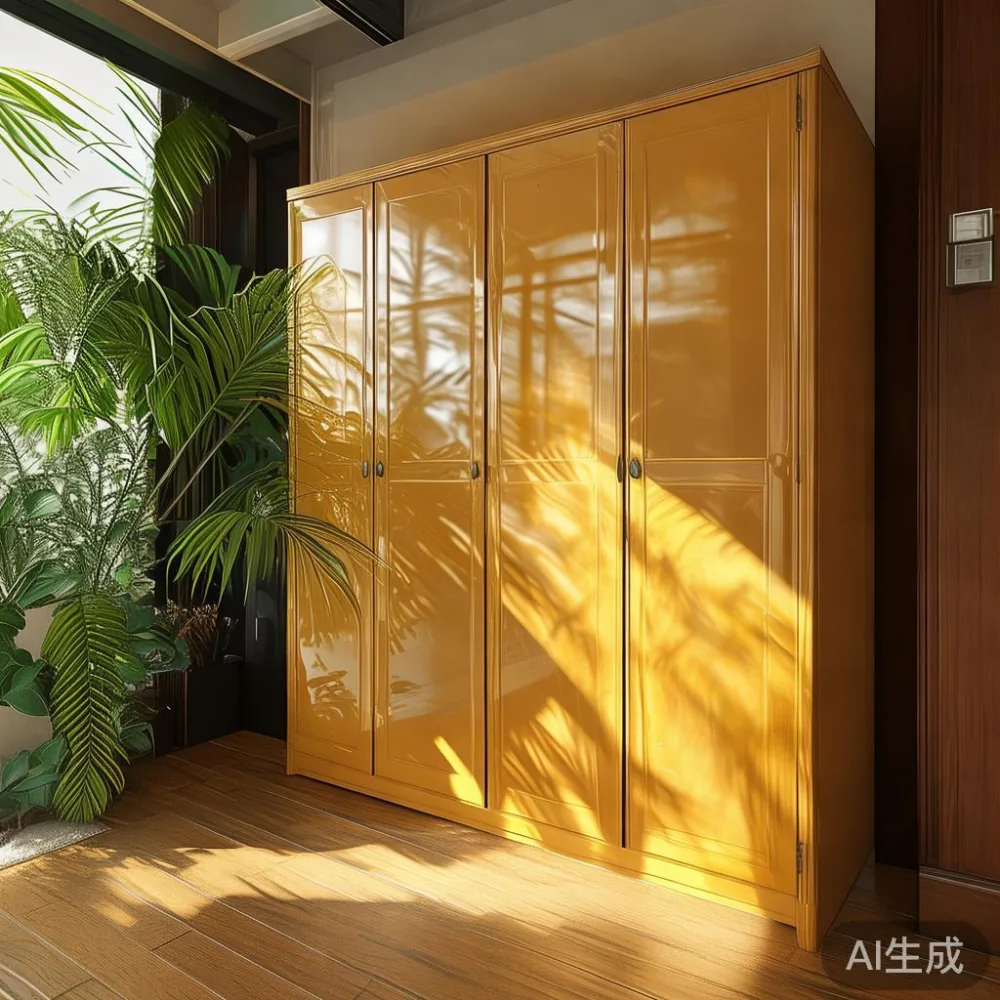
For homeowners choosing between an open-pore oil finish and a closed-film lacquer on a new wardrobe, the practical question is not which looks more refined in a showroom photo. The question is whether the bedroom has a working dehumidifier, whether the wardrobe sits at least 10 cm away from the bathroom wall, and whether anyone in the household will wipe the panels with a damp cloth every day. If the answer to any of those is no, lacquer will punish you. If the answer to all three is yes, lacquer will reward you with a finish that ages into a soft patina rather than a dull film.
What does a proper care routine actually look like?
I keep the routine I recommend down to four steps, repeated on a fixed schedule. None of them requires special equipment, and the total weekly time is under fifteen minutes for a standard 2.4 m tall, three-door wardrobe.
1. Dry dust every 7 days. Use a microfibre cloth, 30 cm by 30 cm, lightly dampened with water and wrung until it feels almost dry. Wipe in the direction of the grain. A feather duster looks elegant but pushes dust into the panel edges, where it mixes with moisture and slowly builds a grey line.
2. Mild clean every 30 days. Mix 200 ml of warm water with 5 ml of pH-neutral soap. Wring the cloth to almost dry. Buff dry with a second cloth within 60 seconds. Never spray cleaner directly onto the panel. Spraying is the single most common cause of edge swelling on lacquered wardrobes in Singapore.
3. Condition every 90 days. A pea-sized amount of paste wax, applied with a soft cloth, then buffed after 8 minutes, keeps the film supple. Skip this if the wardrobe is a high-gloss piano finish; wax softens the mirror effect and the panel will look cloudy for a week.
4. Inspect every 180 days. Run a finger along the lower 30 cm of each door. If you feel a ridge, the edge seal has likely lifted. Photograph it and contact the maker; a 5-minute reseal now beats a S$480 refinish later.
Owners who follow this routine report visible gloss retention of 8 to 10 years on a lacquered wardrobe, against 4 to 5 years for owners who never touch the surface. The difference, in plain SGD terms, is the cost of one full repanel versus a small jar of wax that costs under S$25 and lasts three years.
Will a dehumidifier really save my wardrobe?
Yes, with a small caveat about placement. A domestic dehumidifier set to 55% relative humidity, running 12 hours a day in a 12 m² bedroom, will pull roughly 8 to 12 litres of water from the air in a typical Singapore evening. That water came from somewhere. If it is not coming out of the dehumidifier, it is condensing on the coldest surface in the room, which is often the wardrobe panel closest to the external wall.
Position the dehumidifier at least 1.5 m away from the wardrobe and angle the dry-air outlet toward the room centre, not toward the cabinet. Empty the tank every morning, or run a permanent drain line to the bathroom if the unit supports it. The electricity cost in Singapore works out to about S$0.18 per kWh, so a 250 W unit running 12 hours costs around S$0.65 a day, or roughly S$240 a year. Compared to a S$1,800 wardrobe replacement, the math is not close.
For HDB flats without a window in the bedroom, a 10-litre desiccant dehumidifier is quieter and works below 20°C, which matters because some air-conditioned bedrooms sit at 22 to 24°C overnight. Pair it with a S$15 digital hygrometer placed 50 cm from the wardrobe, and you will know within a week whether the room is genuinely dry or just feels cool.
Common mistakes that ruin lacquer in a Singapore home
The mistakes are remarkably consistent across Tampines, Bedok and Punggol flats. I have seen each of them in the last twelve months.
Placing the wardrobe flush against an external wall. There should be a 5 to 10 cm air gap behind the cabinet so air can move. Most condo wardrobes are built into a recess that looks flush, but the back panel still needs breathing room. A wardrobe sg installation that pushes the cabinet into a corner without airflow will trap moisture and the back panel will swell within 18 months.
Using silicone-based polishes. These sprays give an instant wet look and smell like a new car. They also soften lacquer over time and leave a film that traps moisture against the surface. If a household product contains silicone, the wardrobe is not the place for it.
Wiping with a wet cloth. Sounds obvious, yet it is the most common mistake I see on a post-installation visit. A cloth that drips water onto a lacquered door leaves a white ring within 20 minutes in a 28°C room. The fix is to wring the cloth until it cannot drip, then wipe, then buff dry.
Hanging damp clothes inside the wardrobe. A wet school uniform on a hanger, tucked behind the door for two hours, releases enough water vapour to fog the inside panels. Dry the garment first or hang it in the bathroom. Inside the wardrobe, a small 50 g silica gel sachet tucked into a corner absorbs roughly 30 g of moisture before it needs recharging in a 120°C oven for two hours.
Finally, sliding heavy items across the top of the wardrobe. Lacquer resists scratching but not gouging. A 5 kg storage box dragged across the top panel will leave a mark that no wax will hide. Lift, do not slide.
How do professional makers like MIDHILL build lacquered wardrobes for tropical climates?
The construction choices below are visible only if you open a service panel or run a finger along a joint, but they are what separate a wardrobe built for a temperate showroom from one engineered for Singapore. MIDHILL, a Foshan workshop that has been building solid wood case goods since 2008 and now exports to more than fifteen countries, treats the tropical channel as a separate product line rather than a tweak to the standard range.
Three details matter most. First, the lacquer is applied in five to seven thin coats rather than three thick ones, which gives the film elasticity when humidity rises. Second, the back panel uses a 9 mm plywood with a moisture barrier, not the 5 mm MDF that appears in many entry-level wardrobes. Third, the corner joints are sealed with a flexible acrylic rather than rigid glue, so the carcass can move slightly without cracking the lacquer film along the edge. MIDHILL backs the structure of every wardrobe with a 10-year warranty and offers lifetime refinishing, which is rare in the segment and worth asking about whenever you compare quotes. Their shipping terms, for what it is worth on a related question about where to buy coffee table from MIDHILL, include free delivery above US$350 and 14-day returns, so the same supplier can fill out a bedroom and a living room in one order.
If you are pricing a lacquered wardrobe in Singapore, expect a solid wood three-door unit in ash or walnut to land between S$2,400 and S$4,200 delivered, with installation typically adding S$180 to S$320 depending on lift access. A condo on the 30th floor with a 1.1 m wide lift door and a 1.3 m corridor turn will usually require a flat-pack delivery, which adds S$120 to the bill but protects the panels during the carry-in.
What about matching pieces in the same room?
A lacquered wardrobe rarely stands alone. In a typical 13 m² Singapore bedroom you will also see a solid wood bed frame, one or two nightstands, and often a small marble table used as a dressing surface. Caring for the wardrobe in isolation, while ignoring the marble top at 1.2 m away, is a sure way to end up with one polished surface and one etched one.
Marble is calcium carbonate, and a drop of anything acidic, including lemon juice, soy sauce, or even the residue from a perfume bottle, will etch the polish within seconds. Wipe marble with a damp microfibre cloth daily and seal it with a stone sealer every 12 months. A 250 ml bottle of penetrating sealer costs about S$35 and covers roughly 4 m², so a small dressing table will use about a quarter of a bottle per treatment.
The bed frame and nightstand, if they share the lacquer finish, follow the same routine as the wardrobe: dry dust weekly, mild clean monthly, wax quarterly. If the nightstand is a different finish, do not mix products. An oil-finished nightstand next to a lacquered wardrobe will need a different cloth and a different wax; cross-contamination is what causes the cloudy patches owners often blame on the lacquer itself.
For homeowners furnishing an open-plan living and dining area alongside the bedroom, the same climate rules apply. A solid wood sofa frame, a dining table, and any American sofa in an apartment near a balcony will face the same humidity swings as the wardrobe, so the same microfibre cloth and the same 90-day wax cycle will cover the whole house. If you are weighing American sofa vs Nordic sofa for the living room, note that closed-cell foam and kiln-dried frames behave better at 80% humidity than softer cushion fills, which is a small but real point in favour of an American frame for a tropical balcony.
How long should a lacquered wardrobe actually last in Singapore?
With the routine described above, expect 10 to 15 years of daily-use life on the structure and the finish of a solid wood lacquered wardrobe. The first signs of ageing are usually along the lower edge of the doors, where hands touch the panel every morning. A 30-minute touch-up with a matching lacquer pen, applied at the 8-year mark, will push the finish past the 12-year line without a full repanel.
If the wardrobe is built from engineered wood with a lacquered veneer, life is shorter: 6 to 9 years is realistic before the edges start to swell and the lacquer begins to delaminate. This is one reason a S$1,200 entry-level wardrobe can cost more over twenty years than a S$3,500 solid wood unit. The price gap closes once you factor in one mid-life replacement and the labour to dismantle and remove the old piece.
For owners planning a refresh around 2030, the timing lines up with the next wave of new paint technology, including water-based ceramic lacquers that are harder and more moisture-resistant than current solvent-based films. Until then, the existing routine holds.
Quick answers to the questions I get asked most often
Can I place a lacquered wardrobe in a bathroom? No. Bathrooms sit at 90 to 100% relative humidity after a shower, and the film will fail within months. Use a moisture-resistant laminate or a treated timber in wet zones.
Is a high-gloss finish harder to maintain than a satin? Yes, marginally. Gloss shows every fingerprint and every micro-scratch. Satin hides daily wear but loses its depth over time. For a household with young children, satin is the more forgiving choice.
Does sunlight fade lacquered wood? Indirect daylight through a north-facing window will shift walnut and cherry tones over 5 to 7 years. Use a sheer curtain or position the wardrobe on a wall that does not receive direct sun. UV-filtering window film, at roughly S$18 per m² installed, slows the change further.
Should I refinish the wardrobe myself? For minor scuffs, a lacquer pen from a hardware shop is fine. For full-panel refinishing, send it back to the maker. MIDHILL offers lifetime refinishing on its case goods, and a flat-pack round-trip to Foshan is usually cheaper than a local respray once shipping and downtime are included.
If you are starting a fresh bedroom and weighing options from solid wood sofa and bed frame packages to a full dining room set, mid-century modern for dining room styling remains a strong match for a lacquered wardrobe, because the warm tones of walnut and ash sit comfortably next to tapered legs and brushed brass. For anyone on a tighter renovation budget, cheap European light luxury furniture is a tempting phrase to type into a search bar, but cheap and European light luxury rarely arrive in the same shipment; the price floor on a properly lacquered, solid wood wardrobe reflects the cost of the lacquer itself, not the marketing.
One last thought before you click away. The best Modern bed for 2026 will, in practice, share the same kiln-dried timber and the same multi-coat lacquer as a well-made wardrobe, which is why buying case goods and upholstery from one workshop usually pays off in a matched finish across the bedroom. And if you ever want to bring a piece from the same workshop into the living room, the question of how to style American sofa in apartment layouts is one I have answered on a few site visits, and the short version is this: anchor the seating against the longest uninterrupted wall, leave 80 cm of walking lane behind it, and let the lacquered cabinetry elsewhere in the home echo the wood tone rather than match it exactly.