Styling a Small Singapore Flat Without Making It Feel Crowded
I spent the last three weekends helping my colleague Priya stage her new 624 sq ft two-bedroom in Punggol. She had moved in with two suitcases of clothes, a stack of IKEA cardboard boxes, and one clear instruction from her mother: "Don't buy anything that looks heavy." By the Sunday of week two, the space felt calm, the lift-up corridor was easy to work through with her chosen furniture, and the renovation budget had only risen by SGD 1,850. The lessons from that small project are the backbone of this guide, and they translate directly to anyone furnishing a Tampines five-room, a Bedok resale, or a one-bedroom condo around the city fringe.
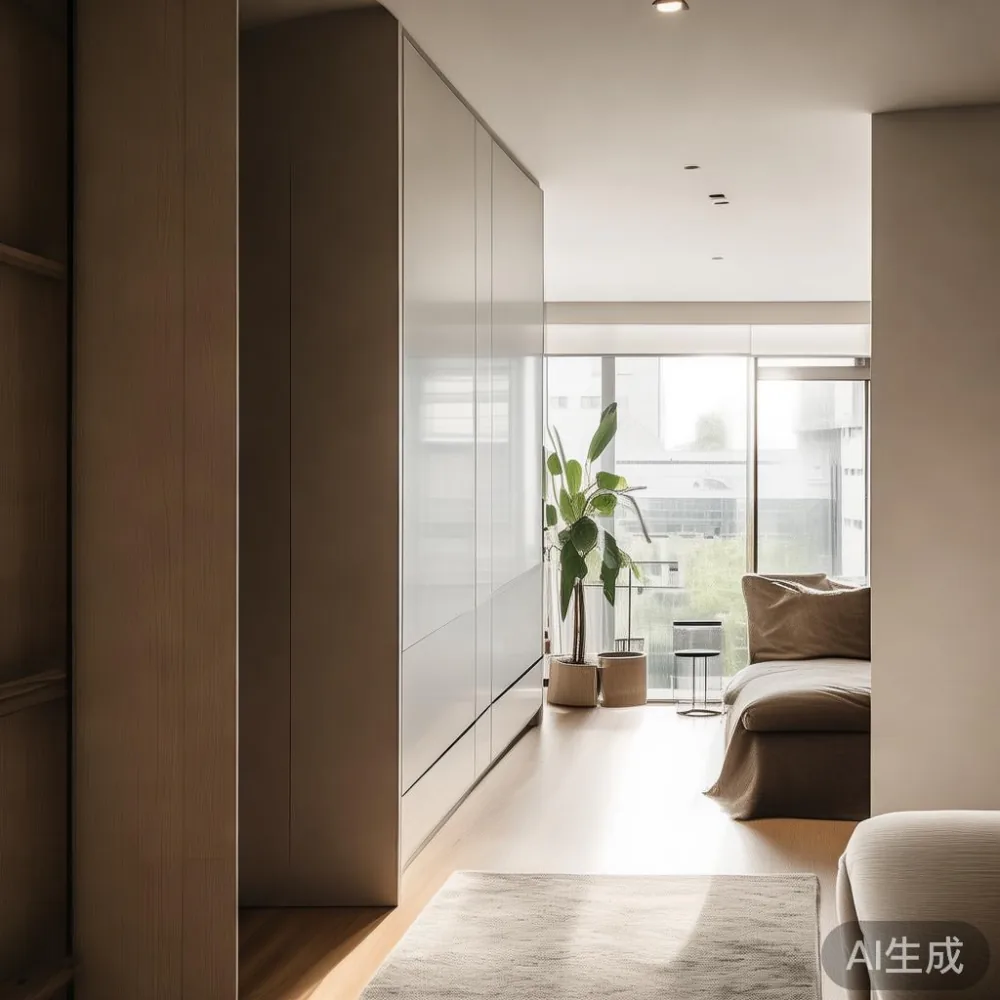
Why Singapore flats punish bulky furniture more than Western homes
The numbers matter. A typical HDB corridor outside your door runs 1.2 m to 1.5 m wide. The lift cab inside most blocks in Tampines and Sengkang is 1.1 m deep by 1.4 m wide, with a door opening of roughly 0.9 m. Any piece you order should fit through that opening unassembled or in two manageable boxes. A 2.4 m American ash wood bed frame, for example, breaks into a headboard panel, a footboard panel, two side rails, and 12 slats, with the heaviest box weighing 28 kg. By contrast, many flat-pack alternatives ship in one 65 kg carton that simply will not fit around the second-floor landing of a walk-up block in Tiong Bahru.
Local humidity is the other silent constraint. The average relative humidity in Singapore sits between 70% and 85% for ten months of the year, and indoor readings inside an air-conditioned unit can swing 30% between day and night. A solid wood wardrobe built with mortise-and-tenon joinery and a kiln-dried moisture content of 8% to 12% will move with these swings. A hollow-board wardrobe with a paper honeycomb core will slowly sag, and the doors will stop closing within a year. This is why every wardrobe sg buyers look at in this climate should be checked for solid back panels, ideally 12 mm to 18 mm thick, and adjustable hinges rated for at least 200,000 cycles.
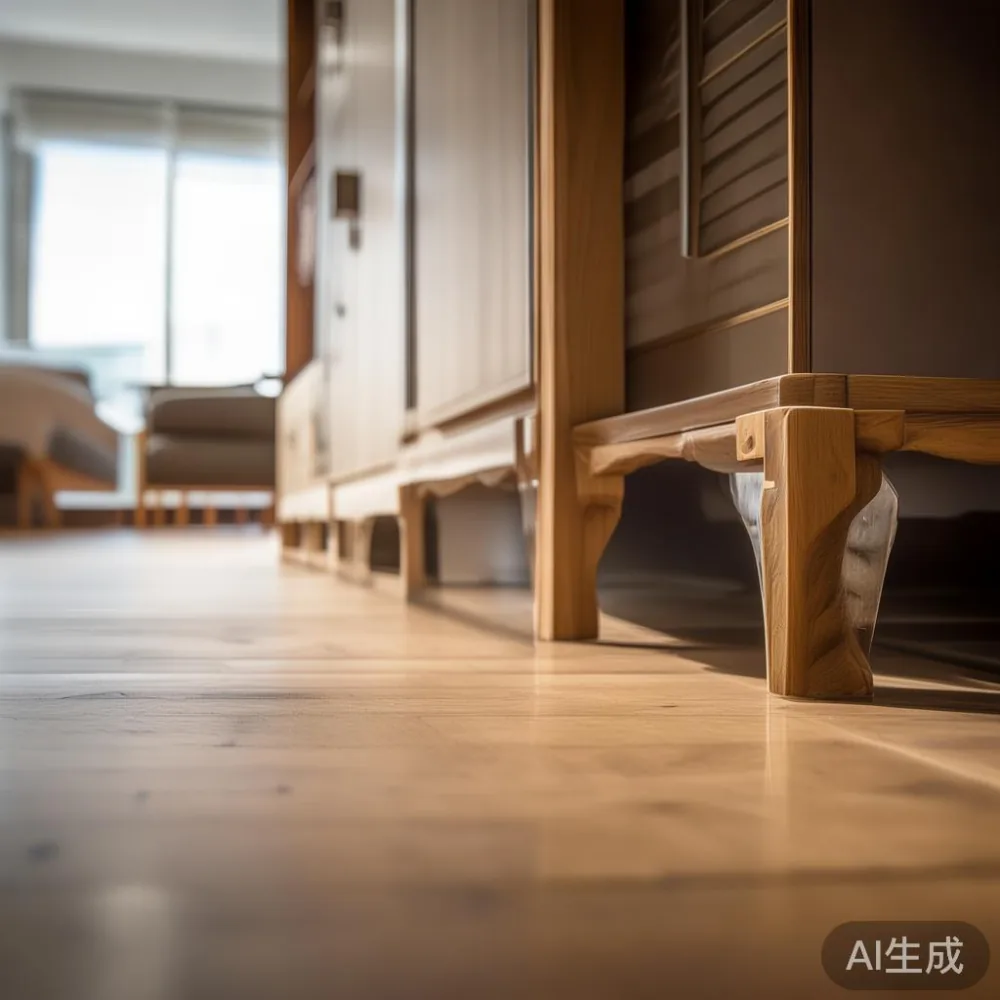
Five pieces, five jobs: the small-apartment kit
Compact living rewards discipline. Instead of ten half-useful items, I recommend this core set, all available in light-luxury French and post-modern light-luxury finishes that read as quiet rather than loud:
1. A 1.8 m solid wood bed frame with a channel-tufted headboard, 145 cm tall. Keep the footboard low or omit it. A bed is the visual anchor of the bedroom, so its size dictates everything else around it.
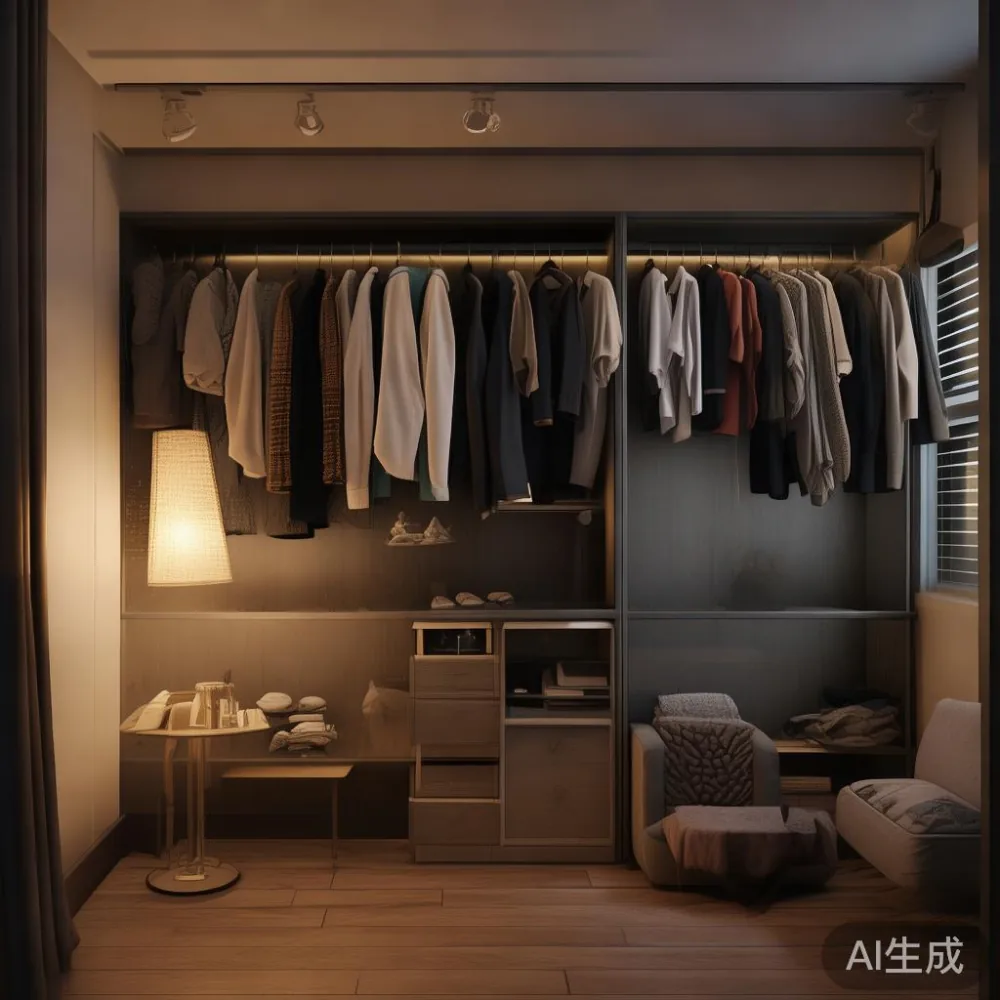
2. One three-door sliding wardrobe at 180 cm wide, 220 cm high, 60 cm deep. Sliding doors save the 60 cm swing clearance a hinged door needs. Inside, plan for 80 cm of hanging height on one side, three shelves at 32 cm spacing, and two drawers at the bottom.
3. A 140 cm to 160 cm solid wood dining table for two to four people, with a 75 cm standard height. Round tables fit corner nooks; rectangular tables sit flatter against a wall. A marble table at this scale is only worth it if you buy a sintered stone top, which resists the acidic sambal and soy sauce spills of daily cooking.
4. A solid wood sofa at 200 cm to 220 cm wide, 85 cm deep, with a 90 cm seat height. Choose feather-wrapped foam cushions at 12 cm thick; they compress to a comfortable 8 cm after a week and keep their shape for six years. Avoid sectional sofas over 240 cm wide unless your living room measures at least 3.2 m on the long wall.
5. One nightstand per sleeper, 45 cm wide, 40 cm deep, 55 cm tall. Anything taller than 60 cm starts to compete with the headboard line.
If you cannot find all five at once, order the wardrobe and bed first. They anchor the two rooms and account for roughly 60% of your furniture budget.
How do I care for a sectional sofa in humid weather?
The shortest answer: keep indoor humidity between 45% and 55%, vacuum the sofa weekly with a soft upholstery tool, rotate the cushions every two weeks, and treat any spill within five minutes using a damp microfiber cloth and a pH-neutral cleaner. Sectional sofas carry more fabric surface area than a standard three-seater, which means more places for moisture to settle, so a small dehumidifier rated for 10 L per day, costing around SGD 280 to SGD 420, pays for itself inside two monsoon seasons by preventing mildew on the underside of the cushions.
For deeper care, lift the seat cushions once a month and wipe the platform with a cloth lightly dampened with white vinegar (one part vinegar to four parts water). Let it air-dry for 30 minutes before replacing the cushions. If your sectional has a down-and-feather wrap, plump the cushions the same way you would a hotel pillow: grab two corners, fold the cushion in half, press down, then release. Repeat five times. This redistributes the fill and prevents the flat sag that makes a new sofa look tired within six months. Leather sectionals need a different routine: a wipe-down with a dry microfiber cloth every three days, and a conditioner made for full-grain leather every four months. Keep the sofa at least 15 cm away from the air-conditioner's direct airflow; constant cold air on one side will dry out the leather and crack the surface within two years.
One more thing worth knowing. Singapore's average home keeps the air-conditioner running 8 to 12 hours a day, which lowers the room's moisture content. A sectional placed against an exterior wall facing west will still feel warmer than the thermostat reads, because the afternoon sun through un-tinted glass pushes surface temperatures to 38°C to 42°C. A simple linen throw, washed every two weeks, does more to extend the life of your sofa than any branded protector spray.
Measure first, spend later: the workflow that saves SGD 1,200
Before you click checkout, spend 90 minutes with a laser measurer, a notebook, and painter's tape. Measure every doorway, every lift opening, every corridor turn, and every stair landing. Write the smallest clear dimension next to each measurement: lift door 0.9 m, corridor turn 1.4 m, bedroom wall 3.05 m. Carry this notebook to the showroom floor and physically test each piece. Priya and I measured her corridor at 1.3 m, then spent an hour at the showroom with a tape to confirm that the largest wardrobe carton at 1.28 m would actually clear the turn into her unit. It did, by 2 cm. Cutting it that close is stressful, so I now recommend leaving at least 8 cm of clearance on every measurement.
Budget next. A realistic five-piece setup in solid wood, finished in a French light-luxury palette (oiled walnut, brushed brass handles, matte travertine-look sintered stone), lands between SGD 5,800 and SGD 9,400 before GST. Add the 9% GST from January 2024 onward and the bill climbs to SGD 6,322 to SGD 10,246. Delivery inside mainland Singapore typically runs SGD 80 to SGD 180 per trip, with a two-man team and a 2-hour window. Free shipping kicks in above SGD 350 on most direct-from-factory orders; the threshold is generous enough that almost any single piece qualifies. Returns within 14 days are workable, but the piece must be unassembled and in its original cartons, so keep the packaging for at least two weeks.
Delivery timing matters because lift reservations are now enforced in many newer blocks. The estate at Priya's place allocates lift slots in two-hour blocks between 9 am and 6 pm, Monday to Saturday. A 30-minute late arrival forfeits the slot, and the next available slot can be three days away. Build a 45-minute buffer into your calendar and confirm with the delivery team the morning of.
What finishes and colours actually work in a small flat?
Light-luxury styling leans on three palettes. The French version pairs cream upholstery (Pantone 11-0907, "Pearl White") with pale oak and brushed champagne hardware. The American version mixes warm honey-toned oak with matte black accents and leather pulls. The post-modern light-luxury version, which is what Priya eventually chose, layers cool grey-washed ash with brass detailing and one statement marble surface, usually on the dining table or a side table.
For walls, keep the colour within 10% of pure white if your flat faces away from direct sun, or a warm off-white (Benjamin Moore OC-17, "White Dove") if your main window catches the western afternoon. A darker wall in a small room shrinks the perceived space by 8% to 12% based on the Furniture and Spatial Perception studies done at NUS in 2019, so even if you love navy, paint it only on one feature wall behind the bed. The remaining three walls stay light.
Mirror placement deserves a paragraph of its own. A single floor mirror at 160 cm by 45 cm, leaning against the longer wall of the living room, doubles the perceived depth and bounces daylight from the window back into the room. Avoid mirrored wardrobe doors in compact bedrooms; they reflect the bed and the clutter above it, which is the opposite of calm. A fluted glass or reeded glass wardrobe door, 8 mm thick, gives the same light-bounce without the harsh reflection.
The wardrobe sg conversation: what to look for in a humid climate
When you shop for a wardrobe sg showrooms will offer, focus on three numbers: back-panel thickness, drawer runner rating, and the gap tolerance on the doors. A solid 12 mm back panel, screwed into a hardwood frame, will not warp. Drawer runners rated for 45 kg per pair (the industry term is "45 kg full-extension") outlast cheaper 25 kg runners by a factor of three. Door gaps of 1.5 mm to 2 mm indicate a well-machined cabinet; gaps above 3 mm usually mean the carcass is already cupping from humidity.
Internally, plan the wardrobe at 60 cm deep for hanging space. Anything shallower than 55 cm will crush shirt shoulders. Anything deeper than 65 cm wastes space at the back. For folded clothes, shelves at 32 cm apart hold standard sweaters, while 28 cm works for T-shirts. Above the hanging zone, a single 40 cm high shelf holds luggage or seasonal bags. Below, two drawers at 18 cm deep handle undergarments and socks. A wardrobe sg buyers often overlook the soft-close hinges rated for 200,000 cycles; that is the equivalent of opening and closing the door 27 times a day for 20 years.
Warranty length is a useful proxy for build quality. A 10-year structural warranty on the frame and joinery tells you the maker expects the piece to outlast a decade of Singapore humidity, and many direct-from-Foshan workshops now offer a lifetime refinishing service that includes re-oiling, re-sanding, and hardware replacement at cost. That kind of aftercare turns a SGD 2,400 wardrobe into a 20-year piece rather than a 7-year piece. Pricing in SGD for a well-built three-door sliding wardrobe typically runs SGD 2,100 to SGD 3,600, depending on the finish and the internal fitments. The same specification from a Singapore showroom with a local reseller markup is often 30% to 45% higher.
Two last checks before you commit to a layout
First, walk the layout at night with the lights off and a torch on the floor. Shadows from a 145 cm tall headboard fall 60 cm to 80 cm across the bed. If that shadow crosses a doorway or a window, the bed is too far from the wall. Second, sit in every chair at the dining table for at least three minutes. A 75 cm table with a 45 cm seat depth leaves 30 cm of knee room, which is the minimum for a comfortable dinner. Any less and your elbows will rest on the table edge by the main course.
Priya's flat, three weeks in, holds a 1.8 m American ash wood bed frame, a three-door sliding wardrobe, a 150 cm solid wood dining table, a 210 cm solid wood sofa, and two nightstands. The walls are White Dove. The corridor outside is wide enough to bring in a new piece whenever she wants. The total spend landed at SGD 7,240 including GST and one delivery trip. The flat does not feel crowded because nothing in it is trying to be bigger than the room allows, and that is the only rule that matters.