Small Apartment Styling in Singapore: Solid Wood Pieces That Save Space, Not Style
Last month I visited a 678 sq ft (about 63 sqm) three-room HDB flat in Punggol with a young couple who had just moved in. The husband is 187 cm tall, the wife works from home at a small desk near the window, and they own a 6 kg Maine Coon cat named Tofu. They had one request: stop the flat from feeling crowded without resorting to flat-pack chipboard that would wobble in two years. We spent an afternoon measuring every corridor, lift, and doorway before sketching a layout on the back of a property brochure. By the time we left, every piece was solid wood, every piece was under 1.95 m so it cleared the lift opening (1.95 m wide standard in most HDB blocks), and the floor still had walking room. The trick was never about owning less. It was about owning better-shaped pieces in the right scales.
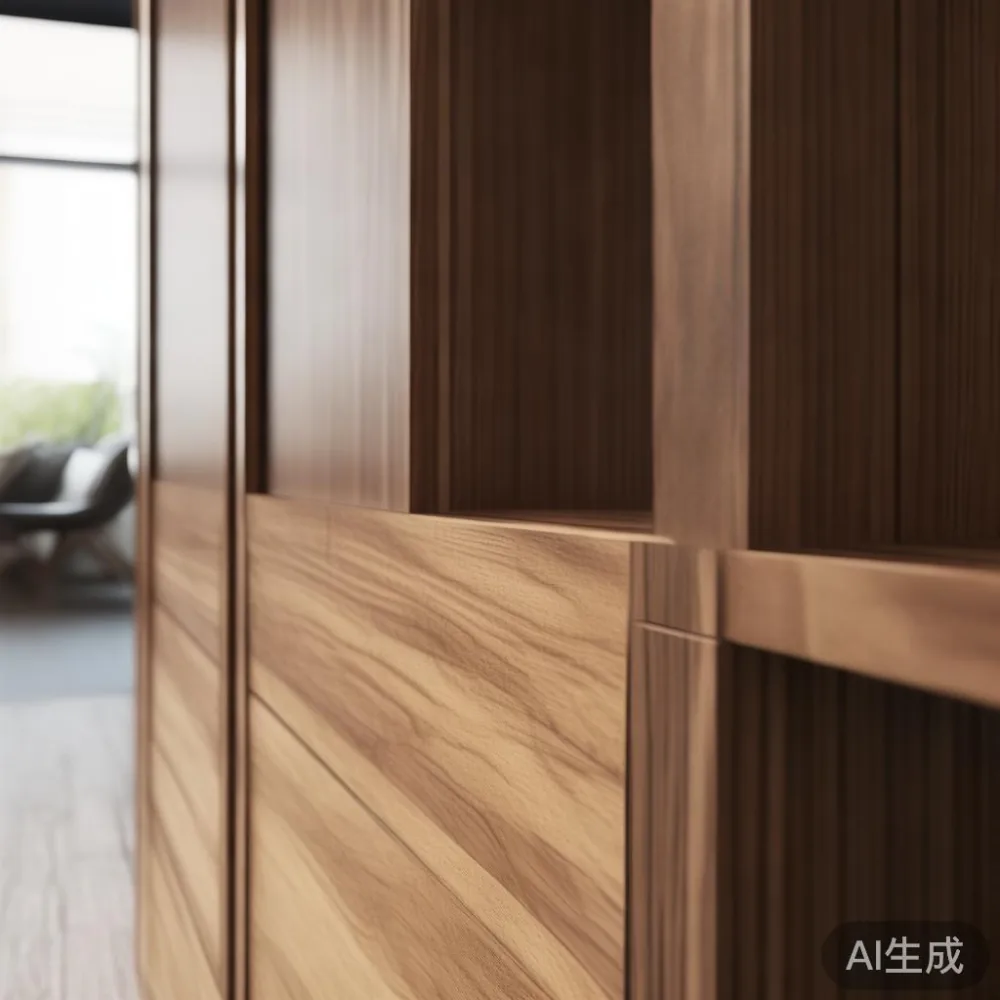
The Singapore constraint list: lifts, corridors, and the GST line
Before picking a single piece of furniture, I always ask clients for three numbers: ceiling height, lift door width, and corridor turning radius. In a typical Tampines or Bedok block built in the last fifteen years, the lift cabin is about 1.4 m deep by 1.1 m wide, the door is 0.9 m wide, and the corridor between flats measures roughly 1.2 m. That corridor number rules out bulky two-door armoires delivered flat. Any wardrobe over 1.1 m wide has to be partially disassembled for the final approach, and most installers charge S$40 to S$80 per trip for that extra handling. I keep a small tape in my bag specifically for this reason.
Ceiling height is the second gatekeeper. Resale HDB ceilings sit at 2.73 m or 2.79 m, while many newer condos reach 3.0 m. A wardrobe over 2.4 m tall swallows visual space in a 2.73 m room unless it is built in or anchored visually to a single wall. Floor-to-ceiling wardrobes in solid wood can be beautiful, but in a small HDB they need a 5 cm shadow gap at the top to read as architecture, not as a wall. This is one of the small details that separates a fitted wardrobe sg solution from a freestanding cabinet pushed against a wall.
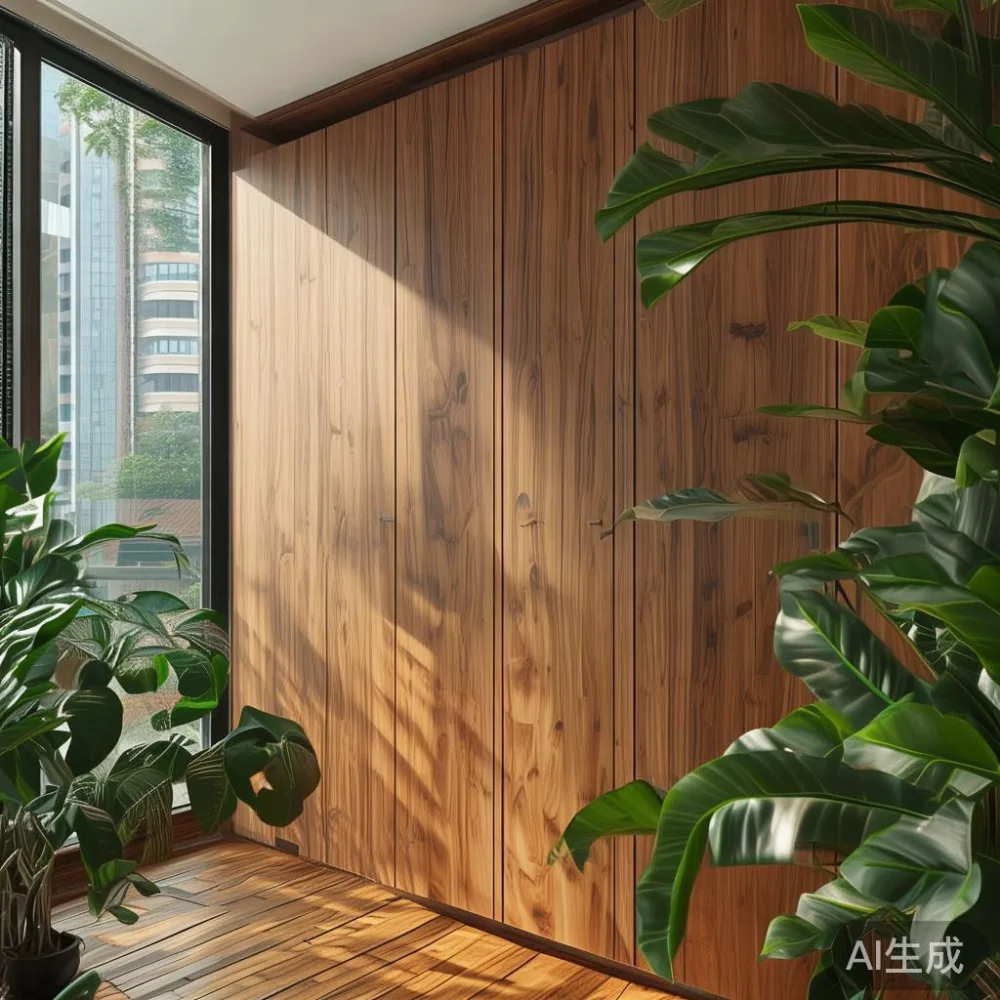
Price reality also matters once you add the 9% GST on the final invoice. A solid oak dining table that costs S$1,890 ex-GST becomes about S$2,060 after tax. Delivery over S$350 is usually free, but only above that threshold, so I plan purchases in clusters rather than one-offs. It is cheaper to ship a bed frame and a nightstand together than separately, even when both are bought the same week. After seventeen years of watching Singaporeans furnish flats, I can tell you the receipts show it.
How do I choose a entryway furniture for a HDB living room?
Choose an entryway furniture piece that is under 35 cm deep, no taller than 90 cm, and made of solid wood with a closed base so shoes and bags disappear from sight. That single sentence is the rule I give every client in a three-room or four-room HDB, and it has not failed yet. The entryway in a Singapore flat is usually a 1.2 m to 1.6 m strip between the main door and the living room, and it doubles as the corridor for groceries, laundry baskets, and the GrabFood rider. Anything deeper than 35 cm eats into the walking lane and forces people to angle past it, which immediately reads as crowded.
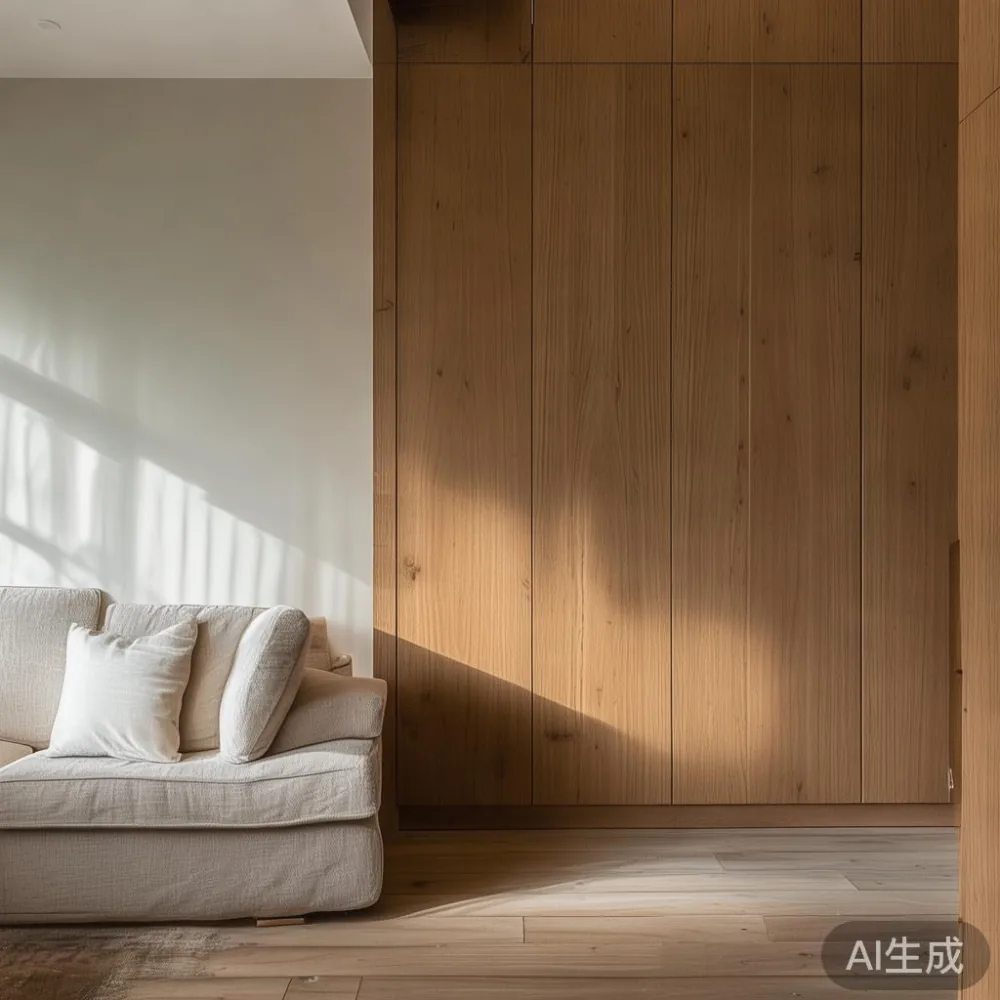
For a Tampines family of four I worked with in March, we chose a 110 cm wide, 32 cm deep solid wood console with two soft-close drawers and an open shelf below. The top holds a single ceramic tray for keys and a 12 cm tall vase. The drawer holds dog leashes, reusable bags, and a small first-aid kit. Below, three pairs of school shoes sit on a washable mat. The whole piece weighs about 28 kg, light enough for one mover to carry, heavy enough to feel substantial when you rest a hand on it. Cost was S$629 ex-GST, and delivery to the 12th floor took four working days.
The mistake I see often is treating the entryway like a hallway in a 2,000 sq ft condo. A hallway bench looks generous in a landed property and suffocating in an HDB. When in doubt, choose the smaller scale and add one warm element, such as a brass hook rail or a small framed print, instead of a bulky storage cabinet. Entryway furniture should greet you, not challenge you.
Wardrobe sg: the three measurements that decide everything
Choosing a wardrobe sg flat dwellers actually live with comfortably comes down to width, internal depth, and door clearance. Width should match the wall it sits against, not spill over by even 5 cm, because spilled-over wardrobes make the room feel like a hallway. Internal depth of 55 cm to 60 cm is the sweet spot for hanging shirts on standard 40 cm hangers without crushing the door panel. Door clearance of 60 cm to 70 cm in front is non-negotiable, otherwise you will not be able to open both doors at once and the room will feel half-blocked.
For my Punggol clients, the bedroom wall was 2.32 m wide, so we selected a 2.28 m three-door wardrobe in white oak veneer over solid rubberwood, with a slim 1.8 cm bronze pull on each door. The piece weighed 112 kg, which sounds heavy until you remember it was delivered in two halves and joined inside the room, sparing the lift entirely. MIDHILL's ten-year structural warranty covers exactly this kind of join, and the lifetime refinishing promise means that in eight years when the kids have drawn on the lower panels with a marker, the surface can be sanded back without replacing the carcass. That is the kind of after-sale story that turns a furniture purchase into a family asset.
One more wardrobe sg point: never place a mirror on the wardrobe door if the door faces the bed. Feng shui consultants in Singapore will tell you to avoid it, but the practical reason is more important. A mirrored door opposite a bed reflects the wardrobe's full bulk back into the room and visually doubles the furniture mass. A side-mounted full-length mirror on a swing arm is a lighter solution and costs about S$120 ex-GST from any decent home store.
Living room: a French light luxury palette in 65 sqm
French light luxury translates, in a small HDB living room, to cream upholstery, slim brass legs, and one marble accent. Not six marble accents. One. A solid wood sofa in oat linen with 18 cm tall tapered beech legs looks airy because you can see the floor beneath it. The visual lift is roughly 15 cm compared to a skirted sofa, and that 15 cm is what makes the room feel like it breathes. For a four-room flat in Bedok we chose a 2.1 m three-seater, 88 cm deep, weighing 54 kg, at S$2,290 ex-GST. The cat, the dog, and the two toddlers have tested it for nine months and the linen has relaxed exactly the way good linen should.
Behind the sofa, a 120 cm round marble table does double duty as a side table and a breakfast nook for two. Marble is cold to the touch in air-conditioned rooms, but a 4 mm felt pad on the base prevents scratches and a small brass tray keeps mugs from sweating. The round shape matters more than the marble itself, because round edges disappear into a rectangular room and rectangular edges create visual corners. A round marble table at S$1,150 ex-GST anchors a seating group that would otherwise float.
For the rest of the palette, I lean American light luxury in the textiles (a soft sage throw, an oatmeal rug) and post-modern light luxury in the shapes (one sculptural floor lamp, one asymmetric mirror). The point is not to label every piece. The point is to give each piece one job and let solid wood carry the structural story while textiles and stone carry the mood.
Bedroom: the bed frame and nightstand that do not crowd
A bed frame should never be wider than 1.8 m in a HDB master bedroom, even when the room is 4 m by 3.2 m. A 2 m king looks generous on the showroom floor and suffocating at home. For most couples in Singapore, a 1.6 m queen in solid ash or rubberwood, with a 12 cm clearance under the side rail for a robot vacuum, is the right call. The frame I specified for a colleague's Punggol condo was a 1.6 m platform bed in white oak, 32 cm tall from floor to top of side rail, weighing 48 kg, at S$1,090 ex-GST. It left 78 cm of walking space on each side, which is the minimum to make a bed without crawling.
The nightstand is the second most under-rated piece in a small bedroom. I see clients buy matching 60 cm wide nightstands and immediately lose 60 cm of usable wall. A single 45 cm wide nightstand with two drawers and an open shelf below, shared between two sides, frees 15 cm of wall and looks deliberately minimal rather than accidentally cheap. Height should match the mattress top, usually 55 cm to 60 cm from the floor, so a phone and a glass of water do not require a reach. Solid rubberwood nightstands at S$320 ex-GST each are an easy way to stay within budget while keeping the material story consistent.
A wardrobe sg solution in the bedroom should not fight the bed for dominance. Choose one tall piece, one low piece, and leave the third wall for a window or a desk. My colleague's flat now has the wardrobe on the left wall, the bed on the back wall, and a 120 cm desk under the window. The desk doubles as a nightstand on his side. That sort of role-sharing is the difference between a room that works and a room that photographs well.
Dining in 1.5 m: the dining table question
Most Singapore couples think they need a four-seater dining table. They do not. A 1.2 m to 1.4 m solid wood dining table seats four comfortably for daily meals and two comfortably for dinner parties, provided the chairs are armless. For the Punggol couple, we chose a 1.3 m rectangular dining table in white oak with rounded corners, weighing 41 kg, at S$1,260 ex-GST. The 75 cm height matches standard chairs, the 75 cm depth fits two place settings plus a centrepiece, and the rounded corners stop bruised hips in the narrow walkway between kitchen and living room.
Chairs matter as much as the table. A solid wood dining chair with a 45 cm wide seat and no arms tucks fully under the table, reclaiming 30 cm of walkway every time everyone stands up. Stackable chairs in the same wood species cost about S$140 ex-GST each, and four of them bring the dining set to roughly S$1,820 ex-GST. For a Japandi leather coastal style sensibility, you can add two leather-strapped chairs at the ends, which soften the room without adding visual mass.
If the flat has a separate dining area, a small bench on one side and two chairs on the other creates the same flexibility as a six-seater in 1.6 m of wall. The bench stores shoes underneath in a covered basket. The chairs slide under the table. The room reads as a dining room for two and a workstation for one, depending on the hour. That is the entire point of light luxury in a small flat: every piece earns its place more than once.
What about warranty, delivery, and returns?
Three questions Singaporean buyers always ask, and the answers should be in writing before you pay a deposit. First, structural warranty: ten years on the frame and joints is the industry benchmark for solid wood, and MIDHILL publishes this clearly because they have been exporting since 2008 and standing behind the joinery is the only way to stay in fifteen-plus countries. Second, delivery: most suppliers in Foshan quote fifteen to twenty-five working days to Singapore by sea, plus seven to ten working days for local delivery and installation. The Punggol wardrobe sg piece took nineteen working days end to end, which is faster than the thirty-day industry average. Third, returns: a fourteen-day return window on stocked items protects against the rare finish mismatch, but custom orders are usually final sale. Always photograph the piece on arrival before the installers leave, so any transit scuff can be claimed.
Final styling rules I give every client
Five rules, written on a small card and taped inside the utility cabinet. One, leave 60 cm of walking lane in every high-traffic zone, no exceptions. Two, choose solid wood for any piece you touch daily, such as the dining table, the bed frame, and the nightstand, because MDF swells in Singapore humidity above 80% RH. Three, anchor each room with one tall piece, one low piece, and one accent of stone or brass. Four, buy in clusters to clear the S$350 free shipping threshold and save the 9% GST on shipping separately. Five, refinish, do not replace. A solid wood wardrobe sg piece that is ten years old can be sanded and re-oiled for under S$400, which is a tenth of a new piece and a fraction of the environmental cost. Small apartments do not need small furniture. They need honest furniture at the correct scale, with materials that age well and suppliers that answer the phone after the warranty card is filed. That is the whole game, and it is one most Singapore flats can win.