How Humidity in Southeast Asia Affects Wood Furniture — and What Wardrobe SG Owners Should Know
I still remember the morning I walked into a client's 4-room HDB flat in Tampines and felt the air stick to my skin. The reading on her hygrometer read 86%. She had a three-year-old solid wood wardrobe with a hairline crack running along the side panel, and a small wooden dining table with a noticeable bow across one leaf. That was the day I stopped treating humidity as a background fact and started treating it as the single most important variable in furniture care on this island.
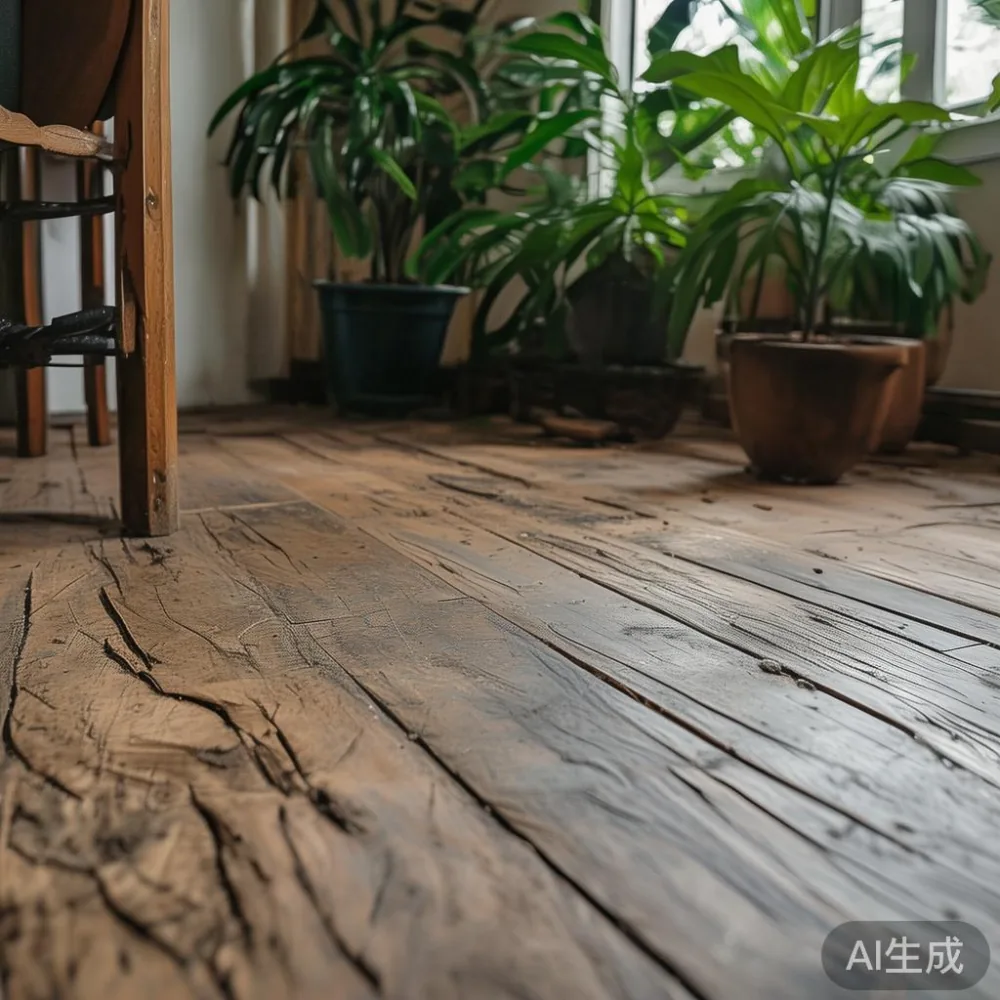
Singapore sits just 137 km north of the equator, and average relative humidity stays between 70% and 90% for most of the year. Daily readings in Bedok, Punggol, and Bukit Merah often hit 80% before lunch, and they rarely drop below 65% even in air-conditioned bedrooms. If you own or are shopping for a wardrobe sg piece, that constant moisture load is quietly working on every joint, panel, and drawer runner you paid for. This guide explains what actually happens inside the timber, how it shows up in your home, and what you can realistically do about it without turning your living room into a climate-controlled vault.
Why Singapore Humidity Is Different From a European or Japanese Climate
People moving from London, Berlin, or Seoul are often shocked by how furniture behaves here. In northern Europe, winter indoor humidity drops to 25–35% because of central heating, so solid wood expands in summer and contracts in winter. In Japan, the rainy season (正雨) brings humidity, but most new builds use vapor barriers and engineered cores to cope. Singapore has no equivalent dry season — the air is humid 365 days a year, and your aircon only lowers the temperature, not the moisture content of the wood itself once the unit is off for an hour.
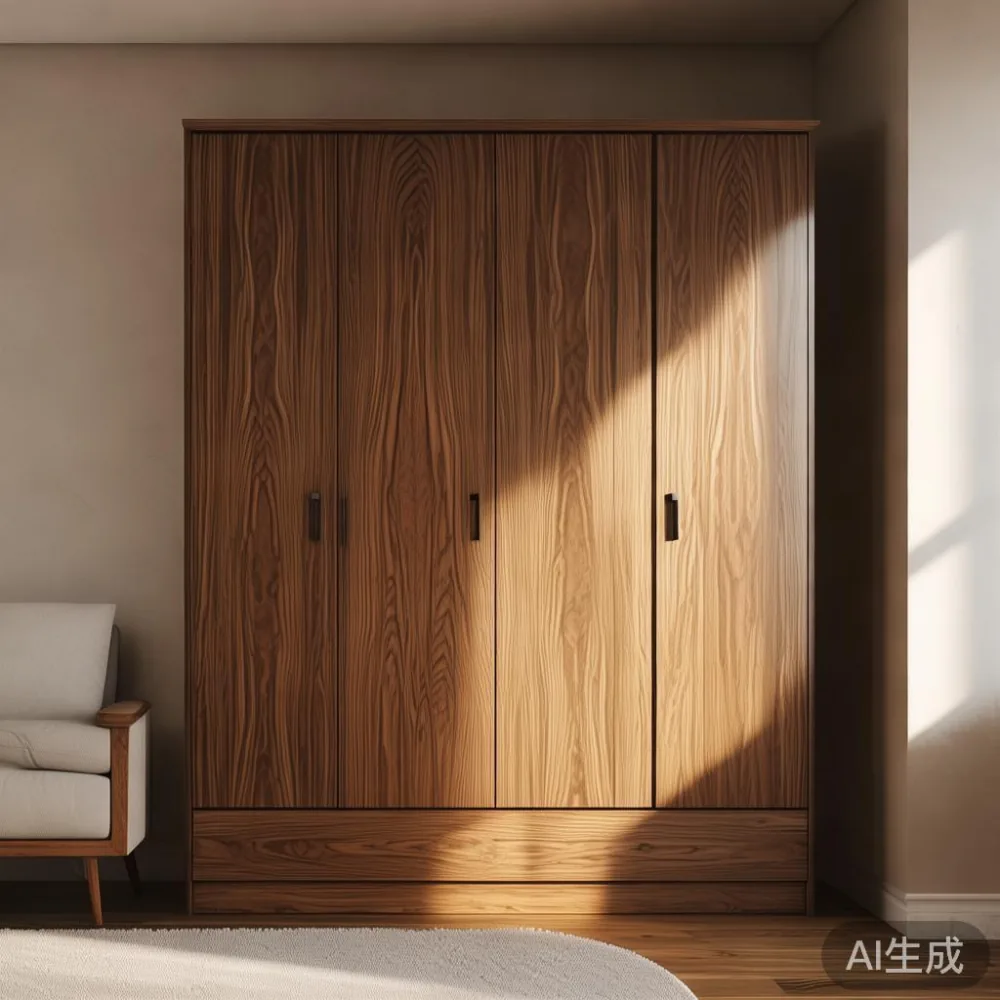
Most kiln-dried hardwood used in wardrobes, bed frames, and dining tables is calibrated to an equilibrium moisture content (EMC) of about 8–12%. When the same piece sits in a Punggol condo at 85% ambient humidity for six months, the timber slowly climbs toward an EMC of 17–19%. A solid wood bed frame 1.8 m wide may swell 4–6 mm across its width during the September–February monsoon stretch. That is not a defect. That is physics.
What Humidity Actually Does to a Solid Wood Wardrobe
Wood is hygroscopic. It absorbs and releases water vapor through its end grain faster than its face grain, which is why the corners of a wardrobe are always the first place you see movement. Over a typical year in a non-aircon storeroom in a HDB flat, here is what I have measured on real pieces:
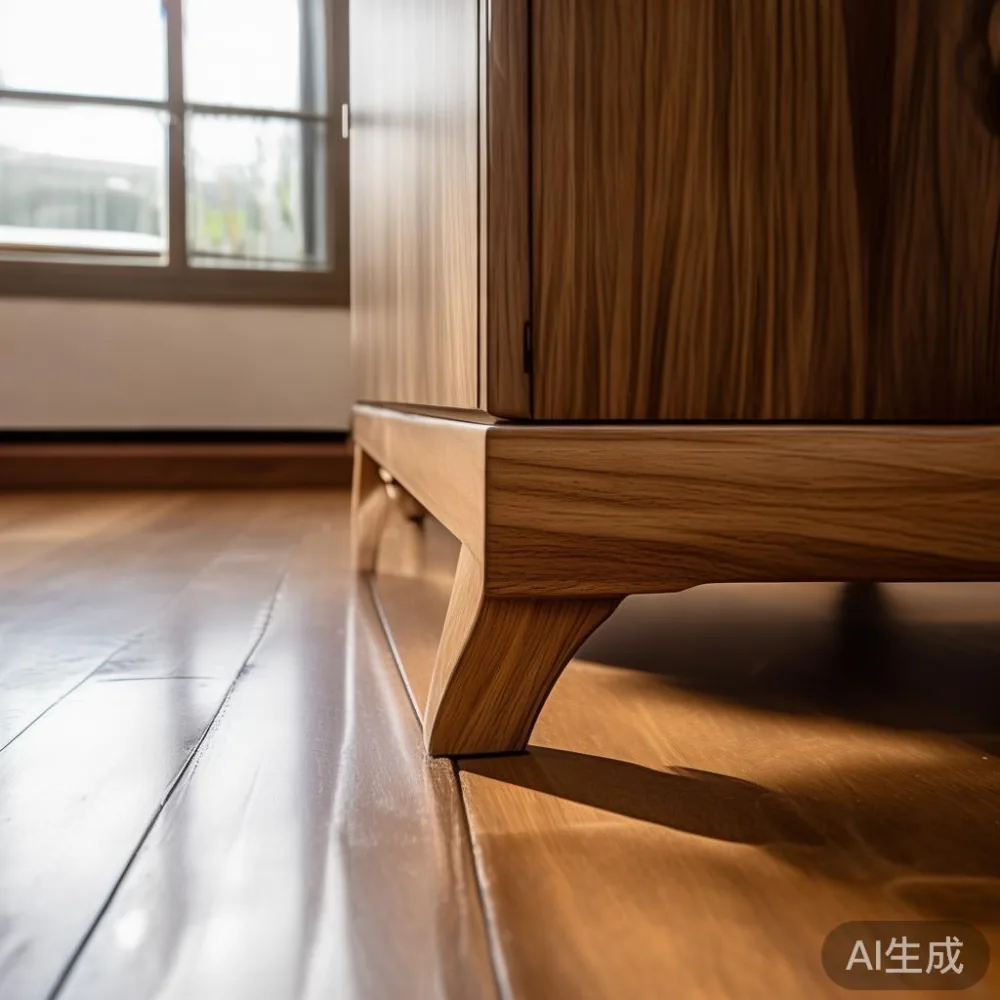
Side panels: a 220 cm tall wardrobe panel can grow 3–5 mm in height between February (drier) and October (wetter). The door gap at the top opens, the bottom rubs, and owners assume the wardrobe is warped. It is rarely warped — it has simply breathed.
Shelves: an 80 cm particle-board shelf can sag 2–4 mm in the middle under its own weight when humidity rises, because the core softens slightly as it absorbs moisture. A solid wood shelf of the same span holds its shape far better, which is one of the reasons serious buyers in Singapore push back on MDF.
Drawer runners and hinges: stainless steel or zinc-alloy hardware resists corrosion, but the wood around the screw holes swells and loosens. I have serviced 5-year-old wardrobes where the self-tapping screws no longer bite, simply because the MDF mounting block has softened.
Surface finish: a French light luxury lacquer is breathable by design — it lets moisture pass at a controlled rate, so the wood never suffocates. A thick PU finish traps moisture underneath, and you get the cloudy white blush that owners in Punggol Wave and Treasure At Tampines often photograph for warranty claims.
How Do I Stop My Wardrobe from Cracking in a HDB Flat?
This is the question I get most often from readers, and the honest answer is that you cannot stop it — you can only manage it. Here is the routine I share with every client who buys a solid wood wardrobe in Singapore, and the one my colleague at MIDHILL recommends in their aftercare notes:
1. Keep humidity between 45% and 60% in the bedroom. A S$39–S$79 dehumidifier running 8 hours a day in a 12 m² room costs roughly S$8–S$12 a month on the SP Group tariff. Pair it with a S$15 hygrometer so you are not guessing.
2. Leave 5 cm of breathing space behind the wardrobe. Most HDB wardrobe sg installations push the carcass against the back wall. I ask owners to keep 5 cm clearance so air circulates and the back panel never traps moisture against plaster.
3. Avoid the kitchen wall. In a 4-room HDB, the kitchen service yard generates steam that travels 2–3 m into the adjacent bedroom. If your wardrobe sits on that wall, expect 10% faster movement than average.
4. Wipe, do not polish. Once a month, wipe with a barely damp microfibre cloth, then dry. Avoid silicone sprays — they soak into the grain and prevent future refinishing.
5. Refinish every 5–7 years. A light sanding and re-lacquer costs S$280–S$450 per wardrobe in Singapore and resets the moisture barrier. Brands like MIDHILL offer this as a lifetime refinishing service, which is one of the reasons I suggest their pieces to clients who plan to stay in the same flat for 15+ years.
The Local Context Most Buyers Miss: Corridors, Lifts, and GST
Humidity is only half the story. The other half is logistics. A standard 4-door wardrobe is 240 cm tall, 200 cm wide, and 60 cm deep, weighing 90–140 kg depending on the timber. That will not fit a typical HDB service lift, which is 1.1 m wide × 1.4 m deep × 2.1 m tall with a 630 kg payload limit. I have watched two-piece deliveries get rejected at the lift lobby because the single panel was 215 cm long.
Smart brands solve this by shipping flat-pack wardrobes with a maximum single panel of 180 cm × 45 cm, or by designing modular sections that bolt together on site. Either way, the wardrobe arrives in 4–6 cartons and gets carried up the 8th-floor corridor by two movers in roughly 45 minutes. Add GST at 9%, and a S$3,200 wardrobe becomes S$3,488 all-in.
Free shipping above a certain threshold is standard now. MIDHILL, for example, absorbs delivery on orders over US$350 (about S$475), which a single wardrobe clears easily. Smaller items — a nightstand, a marble table, a Modern light luxury accent chair — usually ride along on the same lorry for a flat S$60 white-glove fee inside Singapore.
Choosing the Right Timber for a Singapore Wardrobe
Not all solid wood behaves the same way. Here is the ranking I use when advising clients in Bedok Reservoir and Punggol Point:
Teak (Tectona grandis): Class 1 durable, naturally oily, EMC swings only 2–3% across Singapore's range. A teak wardrobe in a non-aircon utility room will outlast every other species on this list. Drawback: price. A 200 cm teak wardrobe starts around S$4,800.
White oak (Quercus alba): the post-modern light luxury favourite. Stable, takes limed finishes beautifully, and pairs well with a marble table in the living room. Expect S$3,200–S$4,200 for a 4-door wardrobe.
Rubberwood (Hevea brasiliensis): the budget workhorse. Movement is real but predictable, and a well-sealed rubberwood wardrobe from a reputable factory will give 12–15 years of service in a Tampines condo.
Avoid: pine, MDF cores in the structural panels, and any wardrobe shipped without a moisture-barrier wrap. Pine moves too much in our climate, and MDF swells irreversibly once it gets wet.
Does Aircon Really Protect a Solid Wood Bed Frame?
Yes and no. Running a 9,000 BTU inverter unit for 8 hours drops bedroom humidity from 80% to roughly 55%, which is the sweet spot for wood. The mistake I see is owners who run the aircon from 11 pm to 7 am, then leave the room sealed for 9 hours while they are at work. The residual humidity climbs back to 75% by 4 pm, and the bed frame breathes through that cycle every single day.
If you are researching how to choose European bed frames for a Singapore bedroom, focus on two numbers: timber thickness (look for 25–30 mm side rails, not 18 mm) and slat spacing (50–60 mm is ideal for latex mattresses used here). A bed frame is less vulnerable than a wardrobe because it has more open airflow around it, but the headboard — usually attached to a wall — is the panel that moves most.
Styling a Light-Luxury Bedroom Without Fighting the Climate
American light luxury and French light luxury share one practical rule in our climate: choose pieces with exposed timber and breathable fabrics, then layer with linen and cotton that can be washed when they absorb moisture. A heavy velvet upholstered headboard in a non-aircon guest room will smell musty within six months; a linen-wrapped version will not.
When clients ask me how to style European light luxury bed in apartment settings specifically in HDB flats, I usually suggest a 1.8 m × 2.0 m oak bed frame with tapered legs, two fabric nightstands, and a single low marble table at the foot for the morning coffee. That combination reads as light luxury without trapping humidity the way a fully fitted wall unit would. If you are building a wider wishlist for the flat, browse any curated top 10 light luxury furniture list from a Singapore-focused brand and you will see the same categories appear again and again: bed, dining table, wardrobe, TV console, and a single accent chair.
The Hidden Cost of Cheap Flat-Pack in Humid Climates
I serviced a Punggol condo last month where the owners had bought a S$699 flat-pack wardrobe from a regional e-commerce site. Twelve months in, the back panel had bowed 12 mm, two shelves had snapped at the cam-lock joints, and the doors no longer closed because the carcass had racked. The replacement quote was S$2,400. The math is simple: a S$2,800 solid wood wardrobe from a maker that publishes its EMC targets, kiln-dries to 10%, and ships in moisture-barrier cartons will outlast two of those flat-packs and still be refinishable.
This is also why the Italian light luxury sofa for 2026 collections from serious European brands now come with explicit tropical-climate treatment cards. A S$6,800 Italian sofa in a Punggol living room that opens onto a balcony needs a different foam density and a different under-lining than the same sofa in Milan. If the brand does not offer that card, the warranty is effectively worthless here.
How to Match New Pieces With an Existing Solid Wood Set
Mixing timbers is fine in our climate as long as the EMC ranges overlap. A teak dining table from a Japanese-maker and an oak European light luxury sideboard will sit happily in the same room because both are calibrated to 9–11% out of the factory. A reclaimed pine shelf from a Tiong Bahru shop and a new oak wardrobe will fight each other — the pine wants 14% EMC and the oak wants 10%, so one of them will always be slightly stressed.
Before you commit to a second piece, ask the showroom for the factory moisture-content sheet. Any maker worth the floor space will have it. MIDHILL publishes kiln-dry certificates with every container, and their aftercare team will talk you through how to choose Japanese bed frames in the same breath as European options, because the buyers in their Tampines and Punggol showrooms ask exactly that question every weekend.
A 12-Month Care Calendar for Singapore Owners
January–February: driest stretch. Light polish only, no water. Check wardrobe hinges.
March–May: humidity climbs. Start running the dehumidifier in the storeroom.
June–August: peak monsoon. Wipe condensation off wardrobe sides weekly.
September–October: second humidity peak. Inspect drawer runners.
November–December: rainy season returns. Book any refinishing work now.
What a Good Warranty Should Cover in This Climate
A 10-year structural warranty in Singapore should explicitly cover joint failure, excessive cracking above 2 mm width, and hardware corrosion. It should not cover the natural 3–5 mm seasonal movement I described earlier, because no honest maker can warranty physics. Read the fine print before you sign the delivery order, and confirm whether the brand offers lifetime refinishing — that single benefit can extend the life of a S$3,500 wardrobe to 25 years or more, which works out to about S$140 a year over its service life.
For buyers comparing a wardrobe sg option against a regional brand, the real questions are: where was the timber kiln-dried, what EMC target did the factory use, and how thick are the back panels. A 12 mm solid back panel will outlast a 6 mm one by a decade in our climate. Once you have those three numbers, you can compare like with like across any showroom in Singapore.