Warranty Wisdom: Decoding Furniture Warranties for Smart Shopping
A furniture warranty can look reassuring on the first page and still leave awkward gaps when a wardrobe door twists, a bed frame loosens, or a dining table develops a movement joint. In Singapore, where many pieces must pass through HDB corridors, apartment lifts, and managed building entrances, the warranty should cover more than a vague promise of “quality”. It should explain who is responsible, how long each type of defect is covered, what evidence is required, and what happens if a repair cannot be completed.

This guide uses wardrobes as the main example, while applying the same reading method to a solid wood sofa, bed frame, dining table, wardrobe, nightstand, and marble table. That focus matters for anyone searching for wardrobe sg options: the product category is broad, but the fine print determines whether a 10-year structural warranty is genuinely useful in a Tampines, Bedok, or Punggol home.
What does a 10-year structural warranty actually mean?
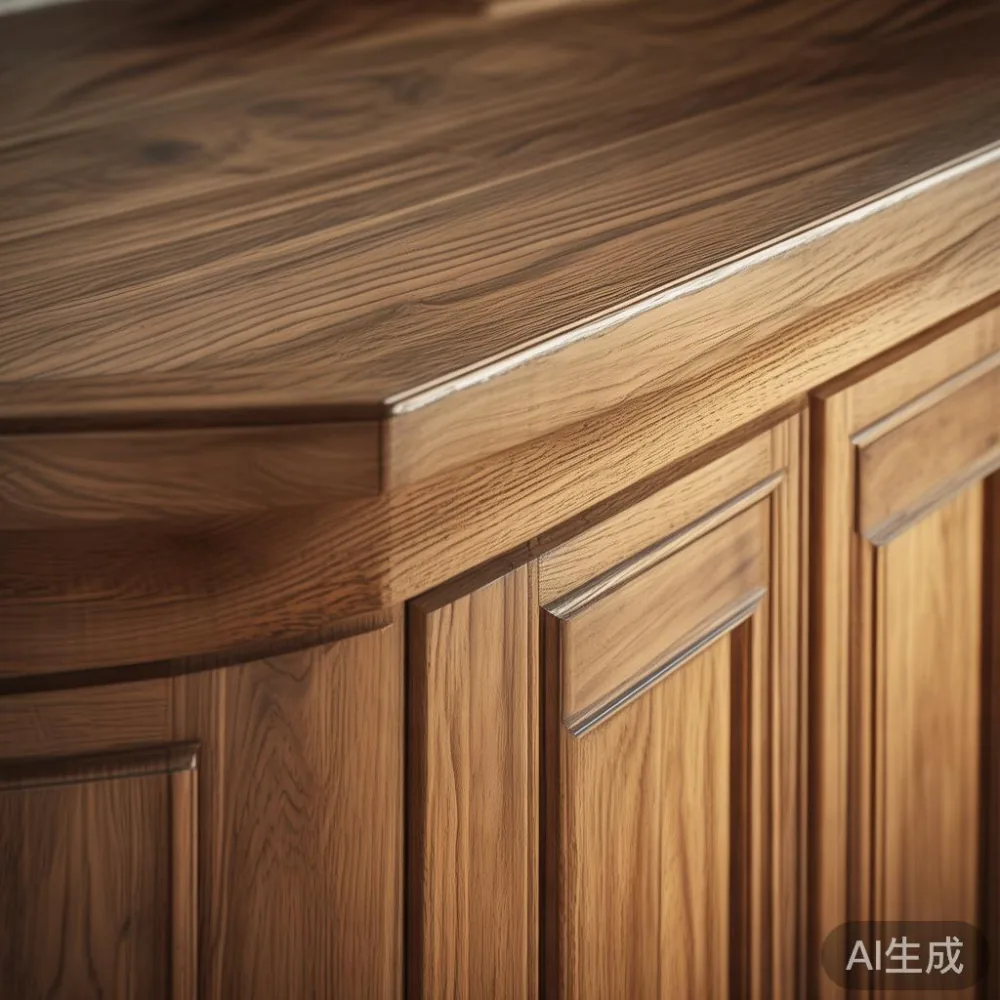
A 10-year structural warranty generally refers to the stability of the main frame or load-bearing construction, not every visible part. For a solid wood bed frame, it may cover the frame and certain structural joints. For a wardrobe, it may cover the carcass and specified frame components. It usually does not mean every hinge, drawer runner, handle, finish, stone panel, or electrical fitting remains defect-free for 10 years.

Read the definition of “structural” before reading the number. Ask whether it includes the frame, panels, joints, and support components; whether drawer boxes and moving hardware are excluded; and whether the warranty applies only to residential use. A table used daily in a condominium dining room and a sofa in a rented flat may have different terms if commercial, institutional, or outdoor use is excluded.
MIDHILL describes a 10-year structural warranty, which is more useful than a decorative finish warranty because it addresses the underlying construction. Even so, the certificate or product page should state the coverage precisely. Confirm that the period begins from purchase or delivery, since a delayed installation date can affect a claim. Ask the seller to clarify the process in writing and retain the invoice, warranty file, product photographs, and delivery record.
Also check whether the warranty is transferable. If a home unit is sold within the first 3 years, does the new owner receive the remaining 7 years? Are claims accepted by the original buyer only? If the answer is unclear, request an example claim form or policy document rather than relying on a salesperson’s summary.
What is covered for defects, finishes, and moving parts?
Separate the product into 3 layers: structural construction, surface finish, and movable components. A sound policy should distinguish them. Structural construction might include frame failure, joint failure, or significant warping. Surface finish might cover manufacturing defects such as an unfinished patch or a finish that peels under normal indoor use. Moving parts might include hinges, drawer runners, and adjustable mechanisms, often under a shorter warranty of 1 year or another stated period.
Normal wear is different from a defect. Scratches caused by moving a wardrobe through a narrow corridor, chips caused by a suitcase wheel, and colour changes from sunlight are not automatically covered. Check whether expected fading, minor colour variation in solid timber, and small surface marks are excluded. A responsible seller should explain the characteristics of wood rather than promise an entirely uniform appearance.
For a marble table, inspect the terms around stone. A 10-year structural warranty may not cover chips, cracks, staining, or damage from an improper base. Find out whether the marble is natural stone, how its thickness is expressed, whether the panel is supported at the manufacturer’s recommended points, and whether the warranty excludes impact or improper installation. If a table is described as a marble table, request care instructions for sealing, wiping, and lifting.
For a solid wood sofa or bed frame, look for terms about timber movement, joint loosening, and finish adhesion. For a nightstand, examine drawer alignment, handle fixing, and the stability of its legs. Claims should not require a component to be completely unusable. A policy may cover a manufacturing fault that compromises function, but it is reasonable to ask how the company assesses a partially defective drawer, sagging support, or uneven wardrobe door.
Can I claim warranty damage after delivery in Singapore?
Yes, if the damage qualifies and the claim follows the policy, but the claim route matters. Start with the retailer or manufacturer named on the invoice. Take clear photographs from several angles, include a close-up of the fault, and record the room, date, and product details. Do not repair or dismantle the item before approval unless safety requires immediate action.
Singapore delivery conditions deserve particular attention. A wardrobe may arrive with damaged packaging because it was compressed or tilted through a common HDB lift. If the outer carton shows a deep dent, split corner, or crushed edge, photograph it before unpacking. Record the item as delivered with visible transit damage and ask for inspection or replacement under the delivery terms. A separate transit claim should not be confused with a manufacturing claim against the 10-year structural warranty.
Check the delivery promise as well. A stated delivery window of 7 to 14 delivery days is not the same as a guarantee that every item arrives within 14 days. A custom wardrobe may need 3 to 6 weeks, and made-to-order finishes can add time. Clarify whether the warranty starts on order date, dispatch date, or arrival date, and whether missed delivery affects the claim period.
Before signing, compare the delivery route with the access dimensions. A 180 cm-wide wardrobe cannot turn through a 100 cm-wide corridor landing despite fitting inside the unit’s lift. Confirm the lift door and cabin dimensions, the corridor turning allowance, doorway width, and whether the building requires a booked delivery slot or protective floor covering. Good claims begin with accurate information.
Does the warranty cover installation, assembly, and removal of old furniture?
Not necessarily. Installation is often where costly damage occurs. A freestanding wardrobe may be safer to assemble inside the bedroom, while a fitted wardrobe may require the carcass to be secured to the wall. Ask whether anti-tip fixing is supplied and whether professional installation is required. A child-resistant installation instruction may also be expected for a tall unit in a family home.
Check the fee and scope of assembly. One quotation might include placement and simple assembly at SGD 80, while another at SGD 150 includes levelling, wall fixing, and removal of packaging. If the old wardrobe must be dismantled, request a separate figure of SGD 60 to SGD 120, depending on the number of doors and the lifting involved. These estimates are not universal market prices; they illustrate why the written quotation should itemise each service.
For a dining table, confirm that assembly, leg attachment, and levelling are covered if a structural joint loosens. For a bed frame, ask whether the centre support leg must be installed, because inadequate support can invalidate a frame claim. For a nightstand, determine whether wall fixing is recommended in a narrow room where the cabinet could be knocked.
Warranty cover can also depend on the installation instructions. If a marble table is assembled without the supplied spacers, a dining table is overloaded with stacked boxes, or a bed frame is altered with unapproved fasteners, coverage may be reduced. Request the manual, hardware list, and care guide in digital form. Keep them with the invoice for at least 12 months.
What should I do before accepting a new wardrobe?
Inspect the item within the stated return period, which is 14 days for many sellers, including MIDHILL under its published returns policy. Do this before disposing of the carton. Photograph the wardrobe inside and out, checking 6 visible areas: the top, both sides, back panels, doors, and base. Open and close every door and drawer 3 times. Look for gaps, rubbing, uneven alignment, loose handles, and unexpected movement.
Use a 30 cm spirit level to check front-to-back and side-to-side alignment where practical. Confirm that doors open through 90 to 110 degrees, depending on the design and available room. Check the plinth and toe-kick for damage because a later scratch can be mistaken for delivery damage. Record the timber grain, finish shade, and panel variation if the product has them; solid wood is a natural material and may not be perfectly uniform.
For heavier pieces, ask for the product weight. A 90 kg wardrobe may require 2 delivery workers, while a 140 kg marble table needs careful handling and the correct lifting equipment. The seller should not ask untrained occupants to carry a loaded frame upstairs. A clear warranty remains important, but safe delivery and proper installation protect both the furniture and the household.
What if the claim is rejected or the item cannot be repaired?
First ask for the reason in writing and identify the exact clause. A rejection might concern transport damage rather than manufacturing, wear rather than a defect, an excluded component, or missing documentation. That is different from a complete refusal. Review photographs, the policy, and the evidence supplied during delivery before deciding whether an appeal is reasonable.
Request a remedy schedule: inspection within 5 business days, repair within 10 business days, or replacement within 15 to 20 business days after approval. Ask whether advance replacement is available for a severe structural failure. If a repair is completed, obtain a record of the replaced component and the new service period. A repair should not reduce the remaining structural cover unnecessarily.
Consumer rights in Singapore operate alongside contract terms and business practices. For a dispute, keep every message, receipt, and repair note, and consider contacting the seller through a formal written channel. If resolution remains disputed, independent advice or relevant Singapore consumer channels can help clarify the next step. A long warranty is not a substitute for a clear claim process.
How does a 10-year warranty compare with a lifetime refinishing promise?
A lifetime refinishing promise and a structural warranty answer different questions. Refinishing addresses the surface, while the warranty addresses covered structural faults. A piece may be refinished because the finish has worn after years of use, yet a warping carcass may remain subject to separate assessment. Read each promise as a distinct service with its own scope, eligibility, and exclusions.
For a solid wood dining table, a refinishing service may restore the surface after normal use but will not repair a split leg caused by impact. For a wardrobe, refinishing may involve doors, drawer fronts, or selected surfaces rather than the interior carcass. Ask which parts qualify, who pays transport, how many refinishing services are included, and whether the cost of a collection is SGD 40 to SGD 90 within Singapore. If the furniture is moved to a workshop, confirm the duration, typically around 14 to 21 days, and whether a loan unit is available.
This distinction also applies to a solid wood sofa, where upholstery may not fall within a timber refinishing service. A nightstand may have a different finish treatment from a bed frame. Clear definitions are more valuable than broad claims, particularly for a wardrobe sg buyer comparing a 10-year structural policy with a lifetime surface-care commitment.
How do I compare a warranty before buying furniture?
Create a short comparison sheet with 8 columns: covered structure, covered finish, hardware period, claim start date, labour charge, delivery responsibility, repair timeframe, and transferability. Enter the exact wording rather than a sales description. Check whether the seller’s online terms and the quotation match. A written document that says “10-year structural warranty” should still explain which components count as structure.
Price is only one part of the decision. A wardrobe at SGD 1,680 may have a stronger policy than a similar unit at SGD 1,190, while a dining table at SGD 1,250 should disclose what happens to the table if its central support joint fails. Use the total cost over 10 years as a practical comparison, including 2 delivery charges, possible assembly at SGD 80, and expected care costs.
Design vocabulary can distract from the contract. A buyer considering an Italian light luxury TV console should check drawer alignment, load limits, cable openings, and structural coverage. Modern light luxury with storage should come with dimensions for internal compartments and a clear moving-hardware term. Mid-century modern for guest room furniture needs usable clearances, not merely a style label. Under 2000 Japandi furniture should still list timber, veneer, stone, and hardware details, and Japanese for small living room layouts should be matched to the actual floor plan.
My colleague last month visited a Punggol HDB flat to assess a 120 cm-wide oak-style wardrobe. The service lift measured 90 cm at the narrowest point, and the landing turned sharply after the lift. A product that fitted the bedroom could not be manoeuvred upstairs, despite its excellent 10-year frame description. The purchase was changed to 2 flat-pack modules, each 60 cm wide. Assembly took 95 minutes, and every hinge, runner, fixing, and wall anchor was included. That experience made one point plain: access planning protects the warranty because a forced or tilted installation can create damage that is not a manufacturing fault.
What information should I keep after buying?
Create a digital folder containing 7 document types: the order confirmation, detailed invoice, warranty certificate, care guide, assembly manual, delivery photograph set, and payment receipt. Record the purchase date, expected delivery date, actual delivery date, and the serial number if supplied. Keep the warranty contact and escalation email in the same folder, along with the seller’s Singapore return and GST treatment details.
Check whether GST is included in the displayed price. A quoted SGD 1,580 plus 9% GST becomes SGD 1,722.20. Free delivery over US$350 may be quoted in an international currency, so confirm the Singapore threshold, any local delivery charge, and the total payable in SGD through the authorised payment route. Never send a bank transfer based only on a message copied into a chat window; verify the business name and payment instructions through its official channels.
Send one pre-delivery message asking the seller to confirm the 10-year structural coverage, moving-part period, claim document list, and whether the warranty follows the unit or the owner. If the answer differs from the product page, ask for the current written policy. Saving 1 PDF with these answers is more useful than retaining 15 screenshots.
Which questions should I ask before paying?
Ask: “Does the 10-year structural warranty cover the complete carcass, or only selected frame parts?” Ask: “How long do hinges and drawer runners cover defects?” Ask: “Does coverage begin on the order, dispatch, or delivery date?” Ask: “What evidence is required, and how long does a claim usually take?” Ask: “Is transit damage handled separately from a manufacturing claim?”
Also ask about the product’s country of manufacture, applicable care instructions, and whether replacement parts will be supplied in Singapore. For a solid wood sofa, check the frame and suspension terms. For a bed frame, confirm centre-support requirements. For a dining table or marble table, ask about stone, base, and surface coverage. For a nightstand, check drawer hardware and wall anchorage. For a wardrobe, ask about door alignment, hanging rails, shelf load limits, and wall fixing.
A seller that answers these questions plainly is more likely to administer the warranty consistently. MIDHILL’s published commitments—10-year structural coverage, lifetime refinishing, 14-day returns, and delivery terms above US$350—provide a useful starting point, but the buyer should still save the version of the policy that applies to the transaction. That is how a warranty becomes practical protection rather than a decorative sentence on a product page.