Preserving Singapore’s Lacquered Wardrobe Surfaces
Singapore’s humidity can be kind to solid wood and unkind to careless lacquer care. In an HDB flat in Tampines, a lacquered wardrobe may face 75–90% relative humidity, warm air from an air-conditioned bedroom, and daily traces of skin oil, perspiration, and dust. A tall unit also has to survive narrow lift doors, corridor turns, and a 10-year structural warranty without looking tired after only 2 years.
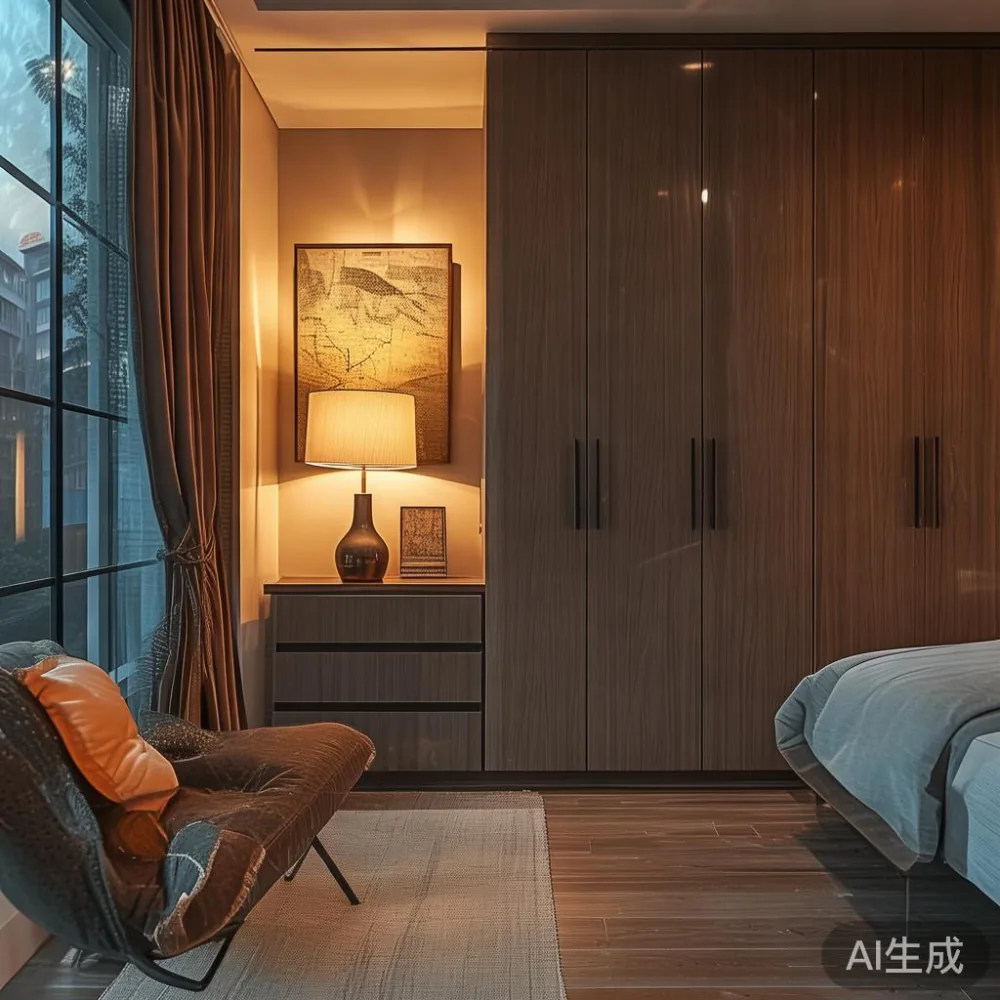
This guide explains how to maintain lacquered surfaces while keeping a Singapore home comfortable and refined. The same discipline applies to a solid wood sofa, bed frame, dining table, wardrobe, nightstand, or marble table, although stone and wood should never be treated with the same cleaner.
MIDHILL makes lacquered storage for urban interiors, where French light luxury can feel restrained rather than heavily ornamented. In 2025, my colleague and I visited a client’s Bedok condominium to inspect a wardrobe with a satin lacquer finish. One panel had picked up fingerprints around the handle zone. We cleaned it with a dry microfibre cloth, then used a lightly dampened cloth and a pH-neutral lacquer cleaner. After buffing, the mark disappeared without disturbing the sheen. The episode confirmed that regular, mild care is more sensible than allowing a small stain to become abrasive or sticky.
What makes lacquer different in Singapore?
Lacquer is a cured surface coating. Depending on the product, it may be solvent-based, water-based, polyurethane, or another resin system. A high-gloss finish tends to show dust and fingerprints more readily, while satin or matte lacquer can disguise fine marks but may show rubbing if cleaned aggressively.
Heat and moisture accelerate the everyday work of a wardrobe. Sunlight entering through a Tampines or Punggol window can raise a panel’s surface temperature by 10–20°C in the afternoon. Near a bathroom doorway, condensation may settle around the edge of a door. Inside a closed run of cupboards, airflow can be poor, so clothing remains close to panels that have already absorbed humidity.
The aim is not to make the surface chemically inert. It is to control four practical factors: moisture, heat, abrasion, and residue. A soft cloth, controlled ventilation, sensible spacing, and a cleaner approved by the furniture maker will usually protect a lacquered finish for 10 years or longer.
For readers comparing bedroom design directions, the phrase American bed vs Japandi bed can be misleading. A lacquered wardrobe can support either approach, but a pale Japandi palette often shows dust on a pale lacquer panel, while a dark American-style bed frame can create a stronger visual contrast. The care method remains the same.
How should I clean a lacquered wardrobe sg without damaging the finish?
Start with the least aggressive action. For routine cleaning, place a clean microfibre cloth over your hand and dust with light strokes. Work from top to bottom so loosened particles do not fall onto cleaner panels below. Vacuum the wardrobe interior with a brush attachment and a low suction setting; a brush roll should not be pressed against lacquered doors.
For marks, mix about 5 mL of mild, pH-neutral dish soap with 500 mL of lukewarm water. The water should feel comfortably lukewarm, around 30–35°C, not hot. Dip a second microfibre cloth into the mixture, wring it until it is only damp, and test a concealed 5 cm × 5 cm area for 10 minutes. Wipe once, then dry with a separate clean cloth.
Do not flood the base or run moisture into seams. Lacquer can look glassy while remaining sensitive to water edges, solvent cleaners, silicone, and abrasive pads. Avoid bleach, ammonia, alcohol-based glass cleaner, degreaser, toothpaste, bicarbonate of soda, and scouring powder. If a proprietary lacquer cleaner is used, follow its dilution instructions exactly; more product does not mean more protection.
For sticky areas, do not rub hard. Hold a clean white cloth lightly against the patch for 30–60 seconds to soften it, then make one gentle pass with the diluted solution. Persistent sticky residue should be referred to the supplier, because aggressive home treatment may permanently dull the sheen.
How much humidity and heat should a lacquered wardrobe sg avoid?
Keep the relative humidity of the bedroom in a sensible range, ideally about 45–65%. Singapore households may experience 75–90% humidity outdoors and during monsoon periods. Indoor cabinetry does not need a laboratory environment, but it benefits from stable conditions and airflow.
Use a dehumidifier when the room remains above 65% for several hours. A model rated for 20–30 L per day is suitable for many HDB bedrooms, subject to the room size and ventilation. Position it at least 30 cm from walls and leave 20–30 cm around vents. Empty the tank before odour or microbial growth develops and clean the filter every 2–4 weeks.
Do not place a wardrobe immediately beside a window that receives direct afternoon sun. If direct sun is unavoidable, use a breathable curtain or blind with a visible light transmission of 40–60%. Maintain at least 5 cm between the cabinet and a wall where possible, and 10–15 cm from a floor-standing dehumidifier’s outlet. Avoid heating the air directly toward the panels.
For coated wardrobe doors, inspect them every 3 months. Look for haze, tackiness, swelling, tiny bubbles, or a door that no longer closes squarely. A 2 mm gap or a 1 mm edge change deserves attention because repeated movement can put pressure on hinges and lacquered edges.
How can condensation and HDB living conditions affect a lacquered finish?
In a compact HDB flat, the kitchen, bathroom, and bedroom can exchange moisture quickly. Running a shower for 15 minutes may raise humidity near the bedroom door. Cooking and drying laundry add further moisture. A lacquered wardrobe in a corridor position may also collect dust from shoes, renovation residue, and frequently touched edges.
Ventilate the bathroom and bedroom after use. If the bedroom door has no transfer grille, leave it open for 15–20 minutes after a shower. Clean the return-air grille every 2 months because blocked airflow increases humidity around furniture. A small moisture absorber can help in a closed wardrobe, but replace it every 2–3 months rather than leaving it saturated.
During delivery, check the lift dimensions before the wardrobe reaches the corridor. A common HDB lift door is about 900 mm wide and 2,100 mm high, while an internal lift car can be around 1,400 mm deep; exact measurements vary by block. A tall wardrobe should be transported upright where possible, with protective blankets and corner guards. Never drag it across a corridor or lift threshold.
Remove the unit’s packaging after installation, not before. Keep any silica gel packets for 7 days if the maker recommends them, and retain the care instructions. The packaging may protect the finish during delivery, but prolonged wrapping traps moisture.
Can Singapore sunlight fade or discolour lacquer?
Yes. Ultraviolet light can fade coloured pigments and weaken some resin systems over time. Direct exposure can also create an uneven finish, especially on a run of wardrobe doors. Curtains, blinds, and careful furniture placement are inexpensive forms of protection.
Rotate decorative objects and colour-match samples, not fitted cabinet doors, to avoid obvious colour differences. If a room faces west, close the blind between 2 p.m. and 5 p.m. during peak sun. A curtain may hang 10–15 cm beyond the glass to reduce heat build-up, while remaining clear of wardrobe hinges and handles.
When inspecting a second-hand or display unit, ask for the finish type and cleaning guidance. Lacquer should be smooth under normal light, without a tacky feel at 20°C. A faint orange-peel texture can be normal in a satin finish, but deep cracks, lifting edges, or sticky patches indicate a different issue.
For whole-home planning, the comparison European light luxury bed vs Japandi bed often focuses on shape and tone rather than maintenance. French light luxury may use warm creams, muted woods, curved details, and reflective finishes; post-modern light luxury can pair clean lines with softer textures. A satin lacquer wardrobe can sit comfortably in either setting without looking overly formal.
What should I do if fingerprints, scuffs, or stains appear?
Fingerprints generally require mild soap rather than pressure. On a smooth high-gloss panel, a dry microfibre cloth may already remove light marks. If residue remains, use the diluted pH-neutral solution described earlier. Wipe in the direction of the grain or door edge and buff with a clean cloth for 60 seconds.
Scuff marks can be superficial or expose the base coat. Press a clean white cloth lightly against the mark to identify texture: if it feels flat and the mark transfers to the cloth, continue gently. If the line feels recessed, feels rough, or catches a fingernail, stop. Repeated rubbing can turn a 3 cm scuff into a larger dull patch.
For paint or transfer marks, let the area dry for 24 hours before using a cleaner. Isopropyl alcohol may be suitable on some lacquers, but it can soften or dull others, so never apply it without the supplier’s written approval. Test a 2 cm area and wait 24 hours before treating the whole panel.
Ballpoint ink, dye from clothing, crayon, and lipstick need particular caution. Do not use a blade, eraser, nail-polish remover, or magic eraser. Contact the furniture supplier for a finish-specific recommendation. This matters for a wardrobe sg used as a dressing area, where a transfer mark may occur beside a frequently handled door.
Nearby accessories should be stable too. Use felt pads beneath a nightstand and coasters beneath items on a dining table. A marble table should receive its own stone-safe treatment, and a solid wood sofa should be vacuumed rather than sprayed. Avoid assuming one cleaner belongs across all surfaces.
How do French light luxury wardrobes fit into a Singapore apartment?
French light luxury draws on proportion, crafted details, and a sense of calm rather than dense decoration. In an HDB bedroom measuring 3.0 m × 4.0 m, a 2.4 m-wide, 2.3 m-tall wardrobe can provide substantial storage while leaving a 30 cm passage if positioned properly. In a condo bedroom of 3.5 m × 4.2 m, the same unit can be paired with a bed frame and a compact nightstand without crowding the lift route.
The phrase MIDHILL French provincial sofa naturally belongs in a living room rather than this wardrobe-care topic, but it illustrates the brand’s broader light-luxury vocabulary. If a sofa shares a room with a lacquered cabinet, keep household sprays away from both and vacuum the upholstery every week.
French provincial styling can include curved furniture edges, muted cream tones, and timber framing. For a bedroom, the practical question in how to style French bed in apartment is how the bed meets the surrounding storage. Push the bed 20–30 cm from the wardrobe face, allow the drawer or door swing to open without striking the frame, and use warm 2700K lighting to flatter both wood and lacquer.
A post-modern light luxury approach may use cleaner geometry, bronze accents, and a restrained mix of textures. A satin lacquer wardrobe works well here because it introduces a controlled reflection without the visual weight of high gloss. Keep the doors aligned, the handles clean, and the surrounding floor clear; visual order magnifies the finish.
For online specifications, m.midhill.co provides a practical way to review product dimensions and support information before ordering. Delivery to Singapore commonly takes 7–14 working days for standard items, while made-to-measure pieces may take 4–8 weeks. Confirm the lift and corridor measurements with the supplier, and ask whether GST is included before placing the order.
What maintenance routine should I follow each month and each year?
Each week, dust lacquered doors with a dry microfibre cloth and clean the handles. Each month, inspect the wardrobe for fingerprints, sticky patches, edge lifting, hinge movement, and moisture marks. Clean the top edge and corners every 4–8 weeks, as airborne dust often settle there. Vacuum the interior every 2–4 weeks with a soft brush and low suction.
Every 3 months in humid weather, check the bedroom with a hygrometer. Place it near the wardrobe rather than against an exterior wall, and record readings at morning and night. Clean any dehumidifier filter and check the bathroom ventilation grille. Every year, tighten loose hinges only if the maker’s instructions permit, and inspect the door gaps with a ruler. Gaps that change by more than 2 mm may indicate movement, moisture stress, or an alignment issue.
Do not apply wax, oil, or polish unless the lacquer supplier recommends it. An extra coat can change the sheen and make future repairs difficult. Nor should a mild cleaner be used on a lacquered panel marked as untreated, distressed, or intentionally textured.
Singapore’s GST is normally 9%, and furniture pricing may or may not include it depending on the listing and checkout terms. For a piece valued at SGD 2,400 before GST, the tax is SGD 216, producing SGD 2,616. Delivery above US$350 is stated as free, although any local Singapore charge should be confirmed in writing. Return windows of 14 days allow an item to be checked in its original packaging after delivery.
Reliable care preserves more than appearance. It protects the movement of hinged doors, keeps fittings aligned, and supports the 10-year structural warranty while allowing a lacquered wardrobe to retain its light-luxury character. A 2-minute weekly wipe, a 5-minute monthly inspection, and careful control of humidity will do more for the surface than aggressive cleaning.