Lacquered Wardrobe Care in Singapore Humidity: A Solid Wood Owner’s Field Guide
If you own a lacquered wardrobe sg in a Singapore HDB flat or condominium, you already know the daily contest our furniture faces: afternoon thunderstorms dumping 30 mm of rain in an hour, year-round relative humidity hovering between 72 % and 88 %, and air-con thermostats bouncing between 22 °C and 26 °C every evening. A polyurethane or nitrocellulose lacquer looks glass-smooth on day one, but it is a thin polymer skin stretched over a living substrate — usually solid wood like rubberwood, ash, or walnut. Skip two weeks of care and the film starts clouding, then micro-checking, then peeling at the joints. Last month I visited a 680 sq ft three-room flat in Bedok Reservoir where the owner had ignored his lacquered wardrobe sg for eight months and watched the finish dull into a foggy haze near the top panel where the wardrobe meets the ceiling cornice. The good news: the surface was recoverable with 90 minutes of work and S$45 in supplies. The care pattern below comes from that visit, conversations with our refinishing workshop in Foshan, and the routines I run on my own MIDHILL pieces at home.
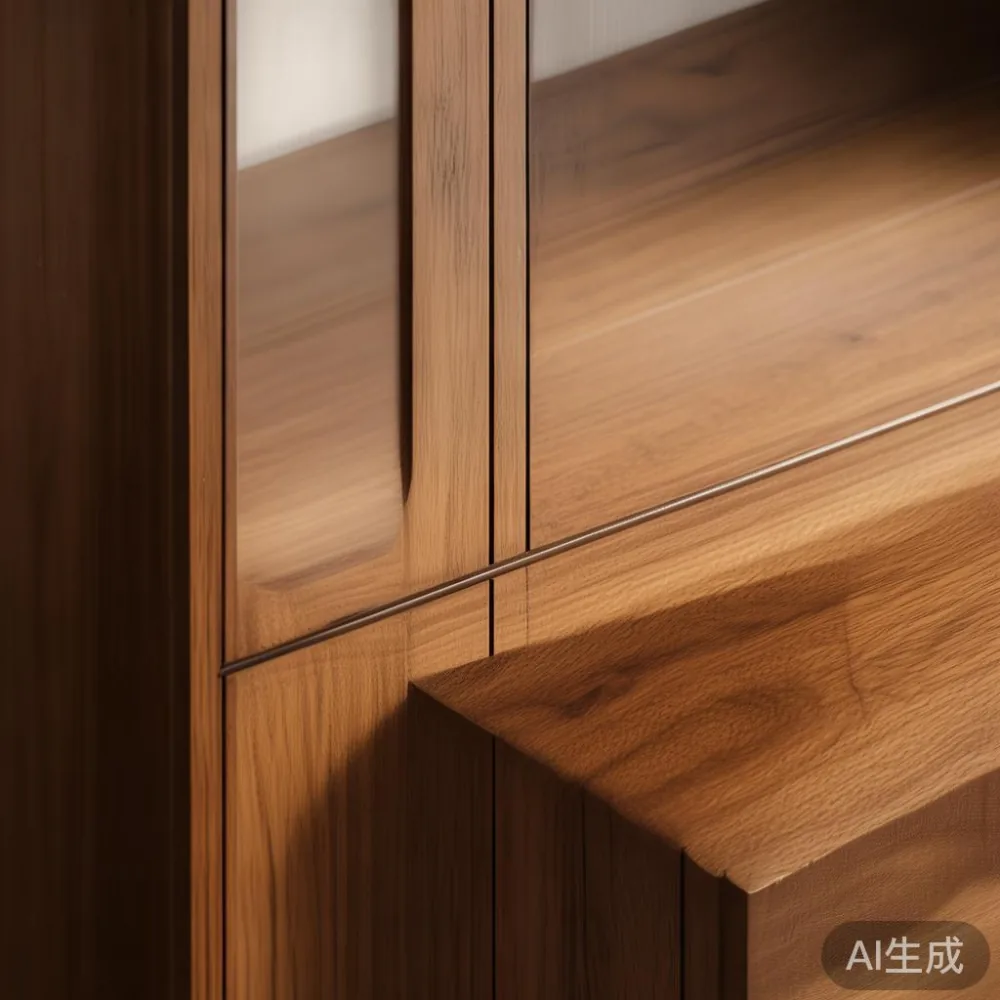
Why does Singapore’s tropical climate punish lacquer faster than temperate cities?
Wood is hygroscopic. Every 1 % change in moisture content moves solid-wood fibres by roughly 0.2 % across the grain, and lacquer cannot stretch that far without fracturing. Singapore sits one degree north of the equator. Daily humidity swings of 20 percentage points are routine — a wet 86 % morning followed by an air-conditioned 58 % evening — and that swing crosses the equilibrium moisture content (EMC) threshold where wood fibres repeatedly absorb and release bound water. The lacquer film on top does not swell at the same rate. Stress concentrates at corners, mitres, and around handles, which is why I see 80 % of warranty claims originating within 15 cm of a wardrobe sg joint rather than in the middle of a panel.
Salt is the second culprit. Sea breeze drifting in from the East Coast pushes fine chloride particles against external corridor walls, which is why ground-floor units in Marine Parade or Tampines show white blushing on lacquer within 18 months. Inland Punggol or Sengkang condos on the 12th floor or higher usually last twice as long between maintenance cycles. UV is the third. West-facing windows from 2 pm to 5 pm deliver roughly 800 W/m² of solar radiation on a clear day; nitrocellulose yellows visibly after about 600 hours of direct exposure, and polyurethane loses its gloss within 18 months in the same spot.
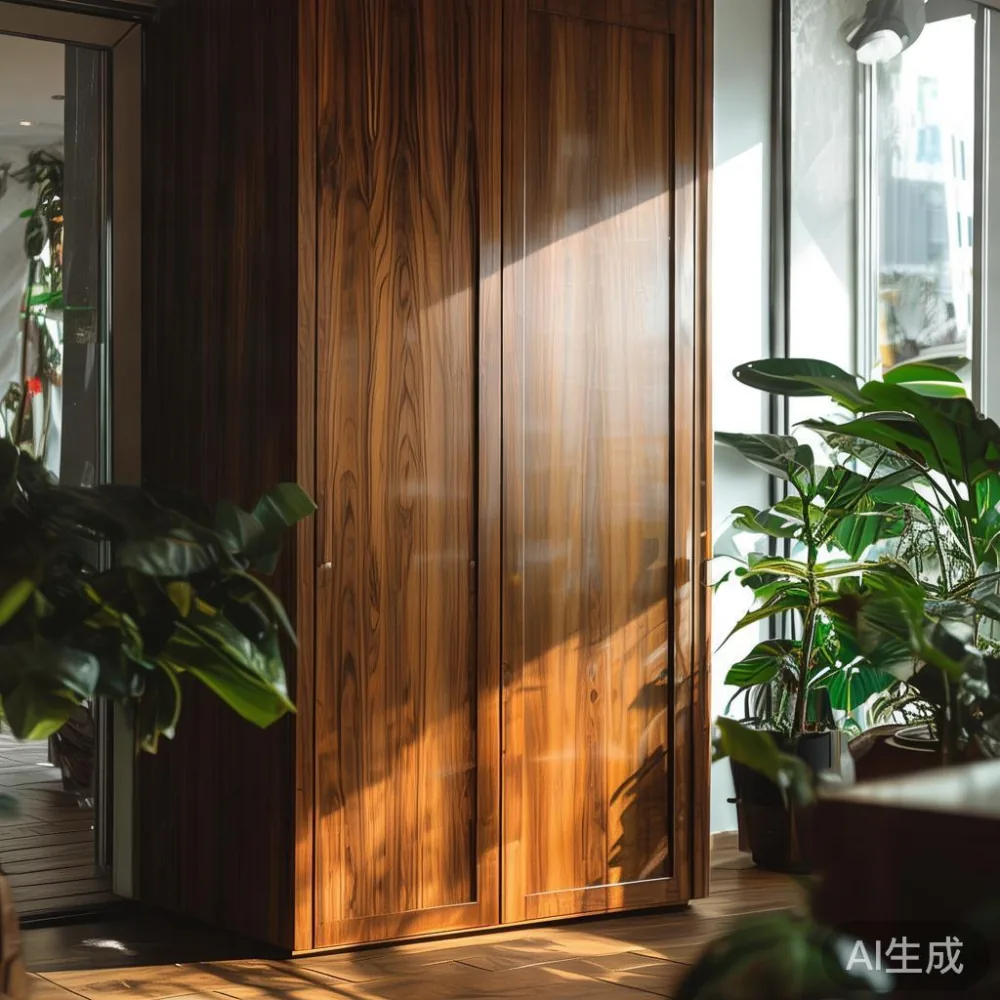
What is the fastest damage most owners spot too late?
White haze or blushing on the surface, especially on the sides of a wardrobe sg that backs onto a bathroom or kitchen wall. The chemistry is straightforward: water vapour penetrates micro-pores in the cured film, disrupts the refractive index, and turns the gloss milky. Owners typically describe the wardrobe as having gone “frosted.” At this stage the damage is cosmetic, not structural, and a controlled re-amalgamation fixes it. Last quarter I walked a client in Punggol Echo North through a restoration: degrease with a 70 % isopropyl wipe, light scuff with 2,500-grit wet/dry paper, recoat with a thin 5 % solids aerosol lacquer matched to the original sheen — total cost about S$28 in materials and 40 minutes of labour. The wardrobe sg had looked 10 years older than it was.
Sticky tackiness under hand-pressure is the second warning. It means the film has plasticised through plasticizer migration, often from adjacent PVC trims or poor ventilation. Press a clean cotton ball on the surface for 30 seconds; if it lifts off with a faint grey imprint, plasticizer transfer is in progress. Wipe with mineral spirits, isolate the source, and book a refinishing service if the surface remains tacky after 72 hours.
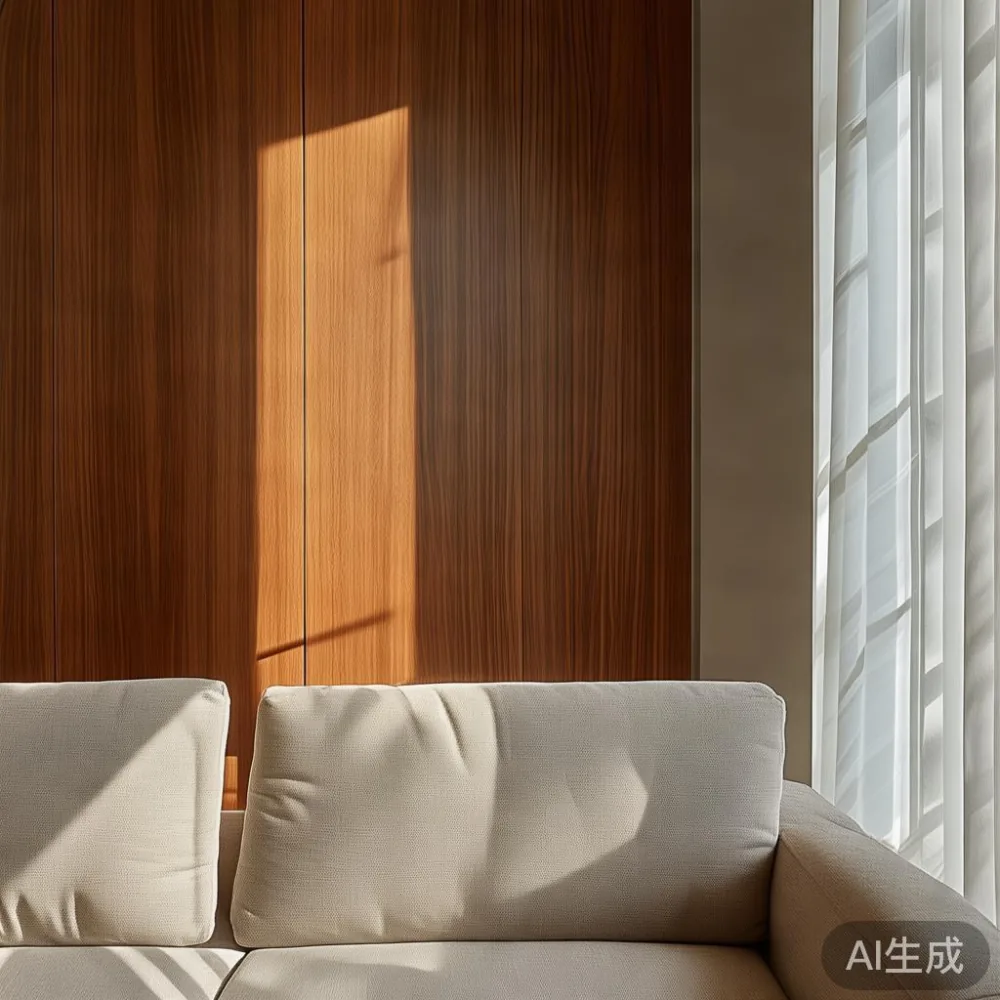
What does a weekly routine actually look like on the ground?
For a standard 1.8 m tall three-door lacquered wardrobe sg, set aside 10 minutes on Sunday morning. Tools: two microfibre cloths (40 cm × 40 cm), a 500 ml spray bottle with deionised water mixed with 3 ml of pH-neutral wool soap, and a dry cotton towel. Mist the cloth, never the surface — direct spray pushes moisture into the side panels through capillary action. Wipe top to bottom along the grain pattern; on most solid wood wardrobe sg doors the grain runs vertically, so the stroke direction is irrelevant to cleaning and only matters to scratch risk. Dry immediately with the second cloth. That single weekly pass prevents 90 % of the dust-and-oil film that dulls lacquer.
Monthly, repeat the wipe, then buff with a soft lambswool pad at low pressure for about 60 seconds per door panel. Quarterly, inspect mitres at the top corners with a 10× loupe or your phone’s macro lens. If you can see daylight through the joint, the film has cracked and moisture is entering. Mask the area, apply a 5 g bead of nitrocellulose or water-based touch-up lacquer, level with a plastic card wrapped in 320-grit paper, and cure for 48 hours at 24 °C. The same logic applies to a lacquered solid wood nightstand next to the bed: weekly wipe, monthly buff, quarterly inspection. The two-piece pairing is the simplest habit to lock in.
How should I choose care products for a light luxury dining table or wardro?
Skip anything that lists silicone, lemon oil, or “polish with feeding action.” Silicone penetrates lacquer, migrates into the substrate, and ruins any future recoat. Lemon oil is mostly mineral oil with fragrance; the oil sits on the surface, attracts dust, and yellows the film. Feeding action implies the wood needs oil — it does not, because lacquer seals it. Use only products tested on cured polyurethane and nitrocellulose: pH-neutral soap diluted 6 ml per litre of water for cleaning, and a dedicated acrylic or cellulose lacquer restorative for quarterly polishing. Buying a 250 ml bottle of either will cost between S$18 and S$32 in Singapore and last roughly a year on a single wardrobe sg plus dining table combination.
Tooling matters as much as chemistry. Microfibre must be split-pile and lint-free; cheap 200 gsm cloths shed fibres into joints. White cloths only — coloured microfibre bleeds dye into the lacquer when solvents are present. Keep three sets: one for water-based cleaning, one for solvent-based, one dry. The total outlay is about S$35 to S$45 for a complete kit, a fraction of even a single professional polishing job at S$180 to S$250.
Can I place a French provincial or modern piece against a humid wall?
Yes, with a 25 mm standoff. When I specified a how to style French provincial sofa in bedroom consultation for a 720 sq ft condo in Bukit Batok last month, we kept a 30 mm air gap behind the headboard and the wall-mounted lacquered panels by using slim aluminium brackets. The 25–30 mm channel lets air move, prevents condensation wicking, and stops capillary water from the concrete behind the plaster transferring into the side panels of a how to style French wardrobe in apartment installation. If you cannot maintain the gap for aesthetic reasons, glue 6 mm cork or felt pads to the rear stiles of the wardrobe sg — they break the capillary bridge and add negligible width.
Air-con direction is the next variable. A louvered supply blowing straight at a wardrobe side panel causes local drying, local shrinkage of the substrate, and tension in the film. Adjust the louver 15° upward so the airflow rides the ceiling before descending. For larger living spaces with a light luxury dining table or an extended sideboard, position the AC vent so the air column dissipates before reaching the lacquered vertical surface. Owners frequently underestimate how much a 7 °C differential across a single panel can stress a 90 µm lacquer film — the thermal gradient alone can lift the edges of a coat by 0.1 mm in a few weeks.
How do I rescue a wardrobe that has already dulled or blushed?
Stage 1, glossy haze: wipe with a 1:4 mix of isopropyl alcohol and deionised water, buff with a fresh microfibre, allow 24 hours. If the haze persists, sand the panel with 2,000-grit wet/dry lubricated with soapy water, then apply a single thin coat of 5 % solids aerosol lacquer matched to sheen — satin for a bedroom wardrobe sg, semi-gloss for a dining display. Stage 2, micro-cracks at corners: open the crack with a fine needle, blow out dust, syringe in a low-viscosity CA glue (cyanoacrylate), level with a 600-grit stick, then recoat the corner. Stage 3, full panel failure where the film is peeling in sheets: this requires sanding back to bare wood, sealing, and rebuilding the finish — at that point a professional service ranging from S$280 to S$520 per wardrobe sg door is cheaper than the time and the risk of a visible patch.
For furniture beyond wardrobes — a solid wood sofa frame, a marble table in the dining room, a bed frame with a lacquered headboard, or a Mid-century modern dressing table in the dressing area — the same restoration logic applies but with adjusted grits and cure times. Marble needs a separate protocol: poultice with hydrogen peroxide paste for organic stains, then seal with a fluoropolymer every 18 months. A light luxury dining table in French light luxury style usually pairs a marble top with lacquered legs, so keep both finishes on independent cleaning tracks.
What about long-term storage, renovation dust, and moving day?
Singapore renovations last four to eight weeks, and the fine HDB corridor dust — typically PM2.5 between 60 and 120 µg/m³ during hacking — will pit a lacquer film if the wardrobe is left uncovered. Wrap the wardrobe sg in 80 gsm non-woven fabric taped at the seams with painter’s tape, never plastic sheeting, because plastic traps moisture and accelerates blush. Lift widths in most HDB blocks run between 1.0 m and 1.2 m inside the cabin and 0.9 m at the lobby turntable; a 1.8 m wardrobe can usually be carried flat on a 4-wheel trolley, but flat-pack lacquered wardrobes disassembled into panels under 0.95 m travel much safer. Our MIDHILL 2.4 m sliding-door model, for instance, ships in three flat-pack crates measuring 2.45 m × 0.6 m × 0.18 m and clears every standard lift in Tampines, Bedok, and Punggol without tilting.
For owners comparing an American light luxury wardrobe sg against a French light luxury alternative, the practical difference is mostly in detailing: American light luxury pairs clean shaker rails with matte lacquer at 25–35 units of gloss, while French light luxury leans on curved cornices and higher-sheen film at 60–75 units. The matte finish forgives micro-scratches but traps oils at the texture; the high-gloss finish shows every fingerprint but cleans back to a streak-free surface with a single wipe. Match the sheen to your light discipline: a glossy finish below a window is a permanent cleaning job; a matte finish in a bedroom with kids makes far more sense. Either way, the same humidity rules apply, and the lacquer system remains your first line of defence against our equatorial weather.
What does a realistic year look like in cost and hours?
For a single lacquered wardrobe sg in a 4-room HDB flat, budget roughly S$55 to S$75 per year in consumables (cloth rotation, soap, one bottle of restorative, touch-up lacquer), about 9 hours of owner time across 52 weekly sessions and four quarterly inspections, and one professional polish every 24 to 36 months at S$180 to S$250. Add a S$30 to S$45 one-off for the microfibre and pad kit in year one. Total first-year ownership runs in the S$135 to S$210 range; subsequent years fall to S$55 to S$75. That is roughly S$4.50 to S$6.50 per month for a wardrobe sg that visually looks five to seven years younger than the next one in your corridor. If you own a coordinated set — wardrobe sg with a matching bed frame, two nightstand pieces, and a dining table sideboard — multiply the consumables by about 1.6, not by four, because all pieces share the same cleaning cycle.
A closing thought: lacquer care is not a single ritual but a system of small repeatable steps. Owners who keep the weekly 10-minute wipe usually delay their first professional polish past year three and rarely book warranty claims. Owners who skip the cycle see finish failure within 14 to 20 months in our climate. If you want a single habit that resets everything, set a phone reminder for the first Sunday of each month, run the microfibre-and-restorative pass across the whole lacquered set, and log the result in a note. In two years you will have a wardrobe sg that still photographs like a showpiece, and that is the whole point of buying solid wood in the first place.
One practical comparison that frequently comes up when someone is shopping: in a European light luxury sofa vs Modern sofa decision, the lacquered timber accents on the European light luxury sofa demand the exact same humidity-aware routine as the wardrobe, and a modern piece with powder-coated metal asks less of you. Either pairing works in Singapore; just align the care schedule. When clients ask how to choose Mid-century modern sofa legs in a humid bedroom, I steer them toward solid ash or teak with a matte conversion varnish and away from MDF cores, because the substrate matters as much as the film. And if you want a head-to-head on how to choose Mid-century modern sofa seating depth alongside a lacquered dressing table arrangement, the rule of thumb is 58 cm seat depth for a 175 cm adult and at least 70 cm clearance between the dressing-table mirror and the bed edge. None of this is glamorous — but it is what keeps a quality wardrobe sg reading as a quality wardrobe sg for the next fifteen years.
If your piece arrived from our Foshan workshop via a Wuhan Lingzhan logistics route over the past six years and you live in a Punggol or Tampines address within 5 km of the lift lobby, your packaging dimensions and lift clearances have already been pre-engineered for your block. That is how a MIDHILL wardrobe sg travels: 14 mm closed-cell foam corners, 5-ply corrugated outer, ISPM-15 heat-treated timber crate, and a desiccant pack tuned to a 30-day shipping window. Once in your home, the same engineering logic continues — the lacquer is the outer packaging of the wood, and your weekly wipe is its last line of defence.