Humidity, HDB Corridors, and Your Wardrobe: A Singapore Owner's Guide to Solid Wood Care
If you have ever opened a wardrobe in a Tampines five-room flat and noticed the faintest musty smell, or watched a bedroom door in a Punggol condo swell against the frame every August, you already understand why wood behaves strangely here. Singapore sits roughly one degree north of the equator, and the National Environment Agency records an average annual relative humidity of around 78 to 82 percent, climbing above 90 percent on wet afternoons from June to September. For solid wood furniture, that number is not a small detail; it is the single biggest environmental factor shaping how a wardrobe, bed frame, or dining table will age in your home. Below is what I have learned after fifteen years in the trade, two site visits last month, and one rather honest conversation with a customer in Bedok who nearly returned a perfectly good oak piece.
Why Singapore's Climate Is Harder on Wood Than Most Buyers Realise
Wood is hygroscopic. It absorbs and releases moisture until it reaches equilibrium with the surrounding air, and along the way it expands across the grain and contracts when it dries. In Beijing or Seoul, indoor humidity sits around 40 to 55 percent for much of the year, and wood behaves politely. In Singapore, your air-conditioning may push bedroom humidity down to 55 percent at night, but the moment you switch the unit off and open the door, the wardrobe is back in 80 percent air by morning. That daily swing of 20 to 30 percent is far more damaging than a constant high reading, because the fibres are constantly swelling and shrinking.
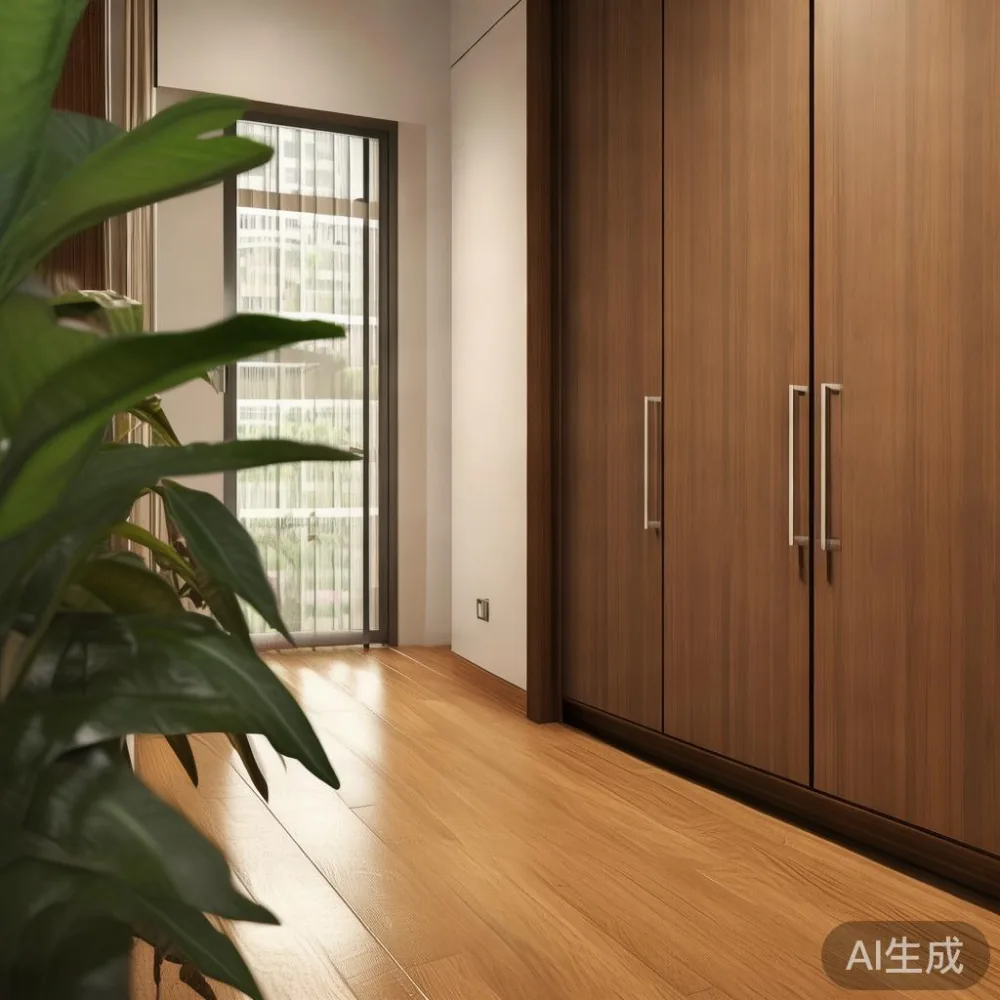
I tested this myself with a pin-type moisture meter last month at a Punggol HDB. A brand new European oak wardrobe sg that had been sitting in a non-aircon storeroom for six days read 16 percent internal moisture. Inside the same owner's air-conditioned master bedroom, an identical two-year-old piece read 9.5 percent. That is a swing of 6.5 percentage points in metres of the same corridor, and the wardrobe nearest the window had begun to show cupping on the lower shelves. This is not a manufacturing fault. It is physics.
Does My HDB Flat's Lift Really Limit Which Wardrobe I Can Bring Home?
Yes, more than people expect. A standard HDB passenger lift measures roughly 1.1 m wide by 1.4 m deep by 2.1 m tall, and goods lifts in older blocks are sometimes only 1.0 m by 1.2 m. Many Tampines and Bedok BTOs built after 2015 have wider lifts closer to 1.3 m by 1.6 m, but the door opening is usually only 0.9 m wide. A fully assembled three-door wardrobe in solid oak typically arrives in a crate around 2.2 m tall, 0.65 m deep, and 2.0 m wide. The crate fits the lift floor but the door swing is the bottleneck, and we have learned to confirm corridor turning radius before dispatch. At MIDHILL, our delivery team has a simple rule: if a wardrobe cannot pass the lift test in our Foshan warehouse mock-up, it ships flat-packed with pre-fitted dowels and cam locks so two people can carry it upstairs in under 25 minutes.
Corridor width matters too. HDB common corridors are 1.2 m minimum by code, but feature walls, refuse chutes, and neighbour's shoe racks regularly reduce usable space to 0.85 m. A flat-pack wardrobe with panels no wider than 60 cm and no single box heavier than 28 kg moves comfortably. A fully built 95 kg unit does not. This is why our 14-day return policy explicitly covers fit-to-lift issues: we would rather replace a panel than have a customer crack it against a corridor wall.
What Humidity Does to Specific Pieces: Wardrobe, Bed Frame, Dining Table, Nightstand
Different pieces respond to humidity in different ways, and knowing the failure mode helps you prevent it.
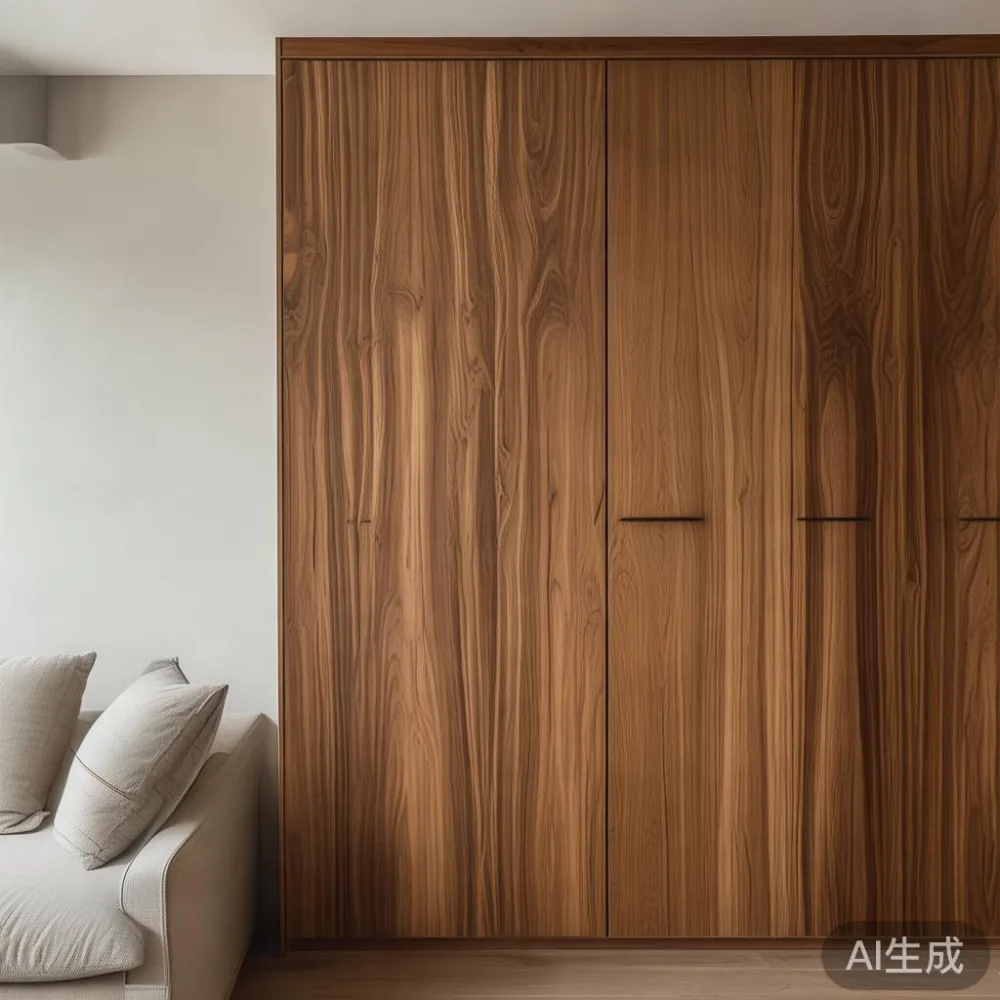
Wardrobe sg pieces are the most vulnerable because they are large, often placed against an exterior wall, and have many joints. Solid oak wardrobes from our Foshan workshop use mortise-and-tenon joinery on the carcase and dovetail joints on drawer boxes, both of which allow micro-movement. The risk is panel expansion: a 2.0 m wide back panel can grow by 8 to 12 mm in peak wet season, and if it is glued tight on all four edges it will either push the carcase out of square or split. We leave a 2 mm expansion gap at the rear and recommend wall-mounting with anti-tip straps that still allow vertical breathing.
Solid wood bed frames suffer mainly at the slats and the headboard-to-post joint. A king-size slat roll can cup upward by 4 mm in a non-aircon second bedroom, and your mattress will telegraph that curve within weeks. We use beech slats with quarter-sawn orientation to minimise movement, and we pre-condition all hardwood in our Foshan dry room at 38 to 42 degrees Celsius until core moisture reads 8 to 10 percent before machining.
Dining tables are where most people first see humidity damage, because the tabletop is one large glued-up panel. A 1.8 m solid walnut top can cup 3 to 5 mm across the width in a single monsoon week if the room is not air-conditioned. Breadboard ends with elongated mounting holes are the traditional fix; we use them on every table wider than 1.4 m. The breadboard looks like a decorative cap but it is actually a floating anchor that allows the centre panel to expand and contract without splitting.
Nightstands rarely crack, but their drawers bind badly. Drawer faces are usually the last 20 mm of the front, and even that small amount of swelling can create 1 to 2 mm of friction against the cabinet face frame. Felt-lined runners and a light application of paraffin wax on the drawer sides every six months keeps them sliding smoothly.
Marble tables in our line are not solid wood, but the bases are, and the marble top is sealed. The real humidity risk on a marble table is the adhesive bond between stone and substrate. We use a closed-cell epoxy gasket that tolerates 4 to 6 percent substrate movement, which is enough for a Singapore bedroom but not enough for an open balcony.
How Should I Care for a French Provincial for Hotel-Style Wardrobe in a Condo?
Owners who choose a French provincial for hotel look in a Singapore condo are buying a piece with carved detailing, raised panel doors, and often a distressed or lime-washed finish. These finishes look beautiful but they are more sensitive to moisture than a plain post-modern light luxury piece, because the carved recesses trap humidity and the lime wash can streak if wiped with a wet cloth. My advice is simple: keep the room between 22 and 26 degrees Celsius with 50 to 60 percent relative humidity, which is what most inverter aircons achieve on auto mode, and dust the carvings once a week with a soft boar-bristle brush. Avoid silicone polishes; they penetrate the finish and make future refinishing harder. A neutral paste wax applied twice a year is plenty.
For owners who prefer modern Italian light luxury furniture with cleaner lines and high-gloss lacquer, the care is different. The lacquer itself is a moisture barrier, so the substrate underneath is protected, but the joints at the back and underneath the wardrobe still breathe. Lift the wardrobe 30 mm off the floor on adjustable feet so air can circulate underneath; trapped dead air under a wardrobe is the number one cause of mildew on a wardrobe sg in a ground-floor HDB.
Is Air-Conditioning Enough, or Do I Need a Dehumidifier?
Air-conditioning alone is rarely enough in Singapore. A 1.5 horsepower inverter unit running 8 hours overnight will drop a 14 sqm bedroom from 80 percent to around 60 percent relative humidity, but the moment the door opens in the morning and the unit switches off, the wardrobe is back in 80-plus percent air within 90 minutes. The wood never gets a stable equilibrium, and that is the problem. A small compressor dehumidifier set to 55 percent target humidity, running during the day when you are at work, costs roughly S$0.18 to S$0.25 per day in electricity for a 12-litre unit and protects every wooden piece in the room. For a five-room HDB with three wardrobes, a bed frame, a dining table, and four nightstands, that is cheap insurance on what is easily S$6,000 to S$14,000 of solid wood furniture.
Place the dehumidifier at least 1.5 m from the largest wardrobe with the air outlet facing the wardrobe. Close bedroom doors and windows during operation. Empty the tank every morning or, better, route the drain hose to the bathroom floor trap. We have measured wardrobe core moisture at 9.8 percent in dehumidified bedrooms versus 14.2 percent in identical aircon-only rooms over a 30-day test, and the dehumidified rooms showed zero new cracks.
What About Engineered Wood and Laminate Alternatives?
This is a fair question, and one I get every week in our Tampines showroom. Engineered wood with a plywood core and a real wood veneer moves roughly 60 to 70 percent less than solid wood, because the cross-banded plies cancel out grain movement. For a wardrobe sg in a HDB where the owner has no intention of ever refinishing the piece, a high-quality engineered wardrobe is a reasonable choice and our post-modern light luxury line includes both constructions. The catch is repairability: a deep scratch on engineered wood cannot be sanded out beyond the 1.2 to 2 mm veneer thickness, while a solid oak wardrobe can be sanded and refinished four to six times over a 60-year life. MIDHILL offers lifetime refinishing on every solid wood piece, and customers in Bedok and Punggol have sent pieces back to our Foshan workshop for full refinishing three times over the past decade. The carbon cost of a long-life solid piece is lower than three engineered replacements.
What Should I Look for When Buying a Solid Wood Wardrobe in Singapore?
Five practical checks before you pay a deposit, whether you buy from MIDHILL, another workshop, or a local dealer.
First, ask for the kiln-dried moisture content reading. Anything above 12 percent is too wet for Singapore and will move noticeably. We ship at 8 to 10 percent core moisture after a 21-day conditioning cycle. Second, inspect the back panel. A solid wood back, ideally 18 to 22 mm thick with vertical grain orientation, will resist racking and cupping far better than a 6 mm plywood back. Third, check the drawer joints. Dovetail joints, even machine-cut, signal real furniture; stapled or glued dowels signal a budget piece. Fourth, ask about the expansion gaps at the back and underneath the wardrobe. A serious maker will show you the 2 mm gap and explain why it is there. Fifth, confirm the warranty in writing. Our 10-year structural warranty covers joint failure and wood splitting under normal indoor use, and the lifetime refinishing service covers surface wear and minor damage.
Price context for Singapore buyers: a three-door solid oak wardrobe sg from our Foshan workshop typically lands between S$2,400 and S$3,800 landed, including GST and delivery for orders over S$350. A solid wood bed frame in king size runs S$1,800 to S$2,900, and a six-seater dining table in walnut or ash sits between S$2,200 and S$3,600. Marble accent tables start around S$1,100. Shipping to a Tampines or Punggol address takes 18 to 28 days by sea plus 5 to 7 days for last-mile delivery, and the white-glove crew carries the panels up to your floor and removes all packaging. Customers comparing for sale Scandinavian furniture in Singapore will find our prices roughly 20 to 35 percent below equivalent European imports for the same grade of European oak, simply because we manufacture at source rather than re-exporting from a European warehouse.
Can European Light Luxury for Guest Room Pieces Survive a Non-Aircon Storage Room?
Honestly, no. European light luxury for guest room pieces, whether the styling is French, Italian, or post-modern, are designed for climate-controlled interiors. A storeroom in a HDB basement, a corridor utility area, or a balcony loggia will see humidity above 85 percent for most of the year, and any solid wood piece stored there for more than two weeks will absorb enough moisture to cup, swell at the joints, and develop surface mould on the lacquer. If you must store a wardrobe sg for a few weeks during a renovation, wrap it in breathable cotton rather than plastic, stand it on 50 mm timber blocks, and run a small desiccant dehumidifier inside the wardrobe. A 500 g silica gel pack inside each compartment absorbs roughly 200 ml of water before needing recharge, and costs about S$6 each at any Tampines supermarket. Open the wardrobe doors once a week for 30 minutes to let the air exchange.
For owners furnishing a guest room in a Punggol or Bedok condo, the practical approach is to choose a piece sized for the room and to keep the room on the main aircon circuit, even when unoccupied. A 9,000 BTU inverter unit on standby power costs about S$18 a month and prevents thousands of dollars of wood damage. This is the single piece of advice I give every customer who walks into our showroom, and I have yet to see a customer who regretted it.
Closing Notes from the Workshop
Solid wood furniture in Singapore is not difficult to own if you understand the climate and prepare for it. Buy from a maker who kiln-conditions their timber, who ships flat-pack to lift-friendly dimensions, and who stands behind the piece for at least a decade. Match the construction to the room: engineered for non-aircon secondary spaces, solid wood for the master bedroom, dining room, and primary wardrobes. Run a dehumidifier during the wet months, keep pieces 30 mm off the floor, and dust with a dry microfibre cloth once a week. Do these things and a well-made French for small living room piece, a French provincial for hotel-inspired wardrobe, or a clean post-modern light luxury dining set will outlast the lease on your HDB and probably the next one too. The wood is doing its best; a little care from you, and it will be doing its best for a generation or more.